


Zkratka: Likviditní sweep je, když cena dosáhne zjevného maxima nebo minima, prověří zdržení, která tam jsou, a pak odmítá a vrací se. naše Alpha Capital hodnocení, na která se čeká a odmítnutí. Žhavý konec, který se stále pohybuje, je často porušení struktury...nevymazání. Pokud stop po skutečném vymazání je stále příliš široký pro zbytek denní ztráty, neprojděte. Raději nechceme, abyste minuli Londýn, než abyste den darovali "to bylo stop hunt."
Krátký popis: Co je likvidita Sweep?Tato stránka je pro delší plán.
Obecná vzdělávací informace, nikoliv signál ani osobní finanční poradenství. Naše hodnocení a kvalifikované účty používají simulované prostředkySimulované výsledky neodrážejí skutečné výsledky obchodování. Poplatky za výkonnost jsou výkonnostně orientované. Nic není zaručeno.
Nevyžadujeme žádné sweepy, ICT ani žádný značkové playboook. Můžete projít s rozsahem jedné seance a tvrdou pravidlem 1%. To je pro obchodníky, kteří již loví stejné maxima a kupují každý pokles pod Asii.
Také: Co je to obchodní evaluace? · Co jsou simulované fondy?
Co ve skutečnosti sledujete
Stop se hromadí na nudných místech:
- pod rovnými minimy / zjevná podpora
- nad sebou stejné maxima / zjevná rezistence
- za hranicemi Asie
- za předchozí denní maximum nebo minimum
- za čistým dvojitým vrcholem nebo dno, které je vidět z celé místnosti
Cena může prolétnout touto úrovní, vyplnit ty příkazy a pak se otočit. Lidé to nazývají sweep nebo stop hunt.
Zde je ne romantická část. Graf to nemůže dokázat záměrNelze tím prokázat, že to banka udělala. Může ukázat: úroveň dosažená, poté odmítnuta. Vaším úkolem je určit vzato a odmítnuto tak dva lidé poznačí stejný graf stejně.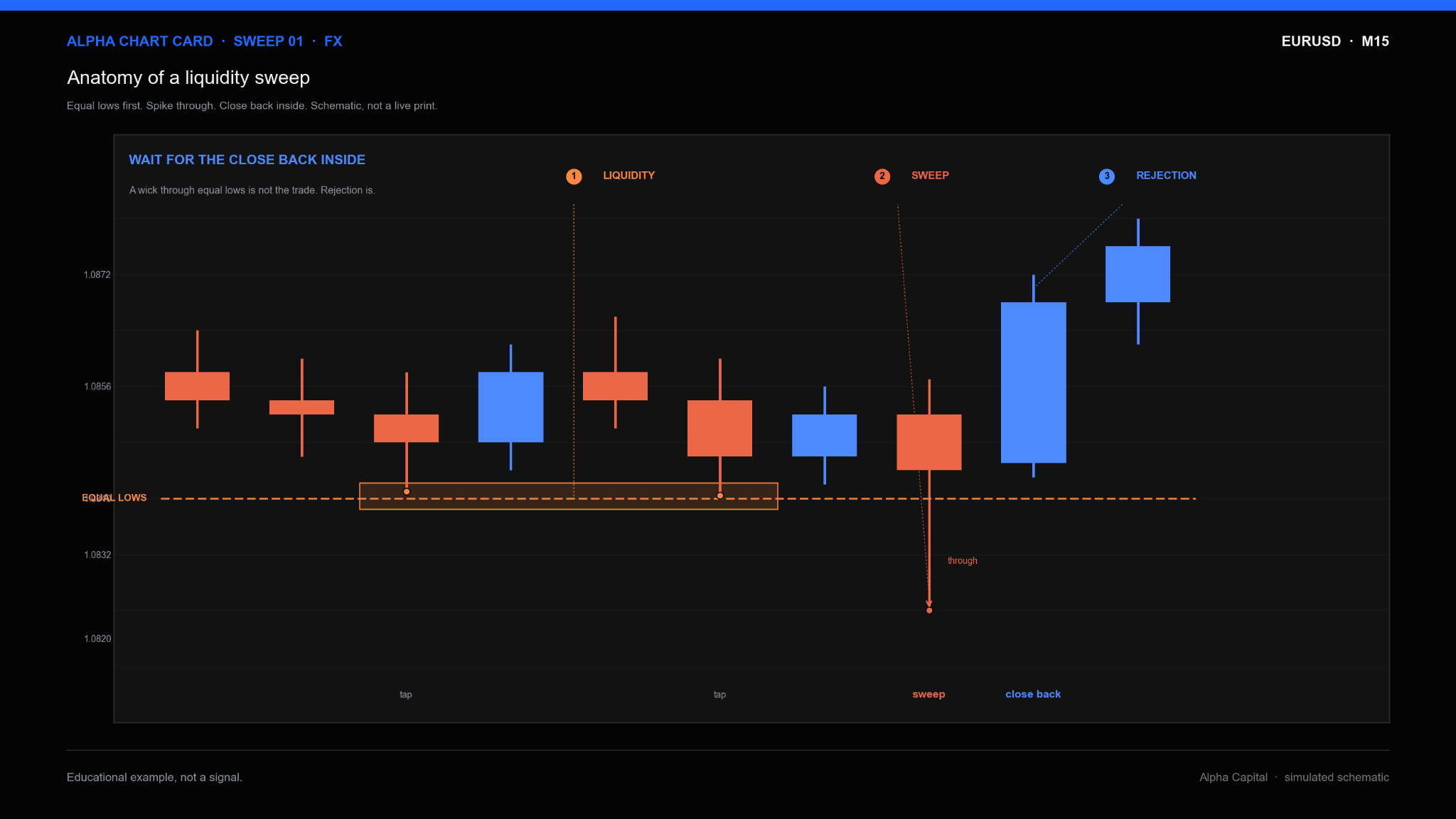
Proti proudu vs. protržení struktury (to je celé tajemství)
Pokud si zapamatujete jen jednu tabulku z této stránky, zapamatujte si tuto.
Co ti vytiskne | Jak to vypadá | Jak bychom to přečetli >>> Překlad: |
|---|---|---|
Prohánění | Zápich nebo krátký obchod mimo úroveň, poté uzavření zpět uvnitř. | Možná past, pak otočení |
BOS | Tělo uzavře se za úrovní, která drží | Pokračování, nikoliv past |
Pokud kupujete každý pokles pod rovnocenné minima bez uzavření zpět dovnitř, nazýváte to fading breakouts a označujete to za chytré peníze. To může být strategie. To ale není tato strategie. Napíšte, kterou strategií testujete.
Plný vysvětlení BOS: Co je Break of Structure (BOS)?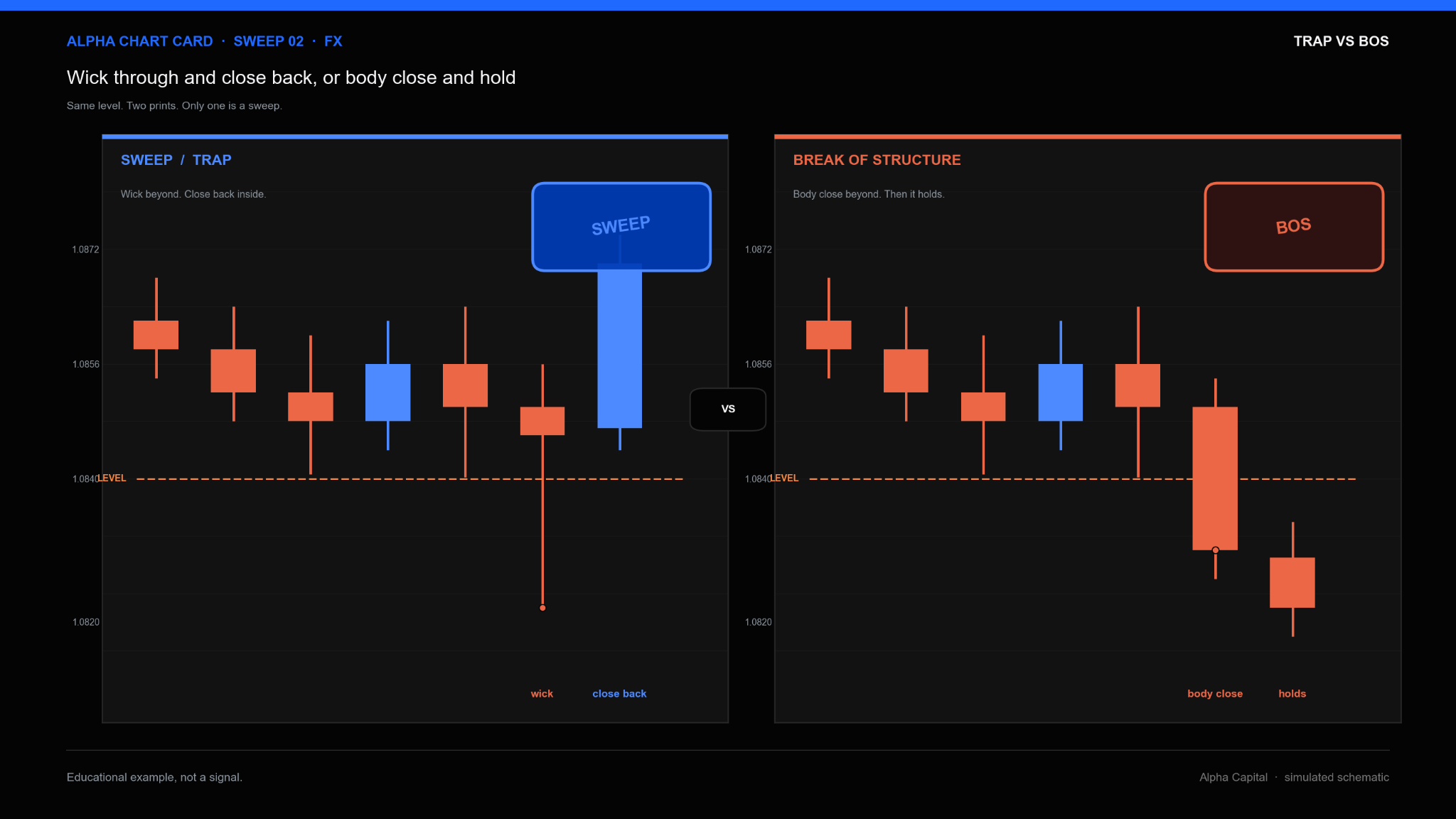
Zhodnoťte likviditu před zahájením obchodní sezóny, nikoli po výkyvu.
Pokud si úroveň nakreslíte až poté, co cena již prolomila, najdete sweep v každé svíčce. To je zpětný pohled.
Před londýnskou (nebo před jakoukoli další obchodní relací)
- včerejší vysoká a nízká
- Asijský vysoký a nízký rozsah
- rovné maxima / rovné minima, které jsou zřejmé na H1 nebo M15
- Zaokrouhlujte jenom čísla, pokud jste je už použili minulý týden, ne proto, že toto je 1.1000 a cítíte se zvláštní.
Pak je nechte v klidu. Počkejte, až cena dosáhne úrovně, která vás zajímala.
Plán pro záznam do deníku
Filtr relace
Obvyklá varianta FX: čekat na Londýn (nebo překrytí Londýn/NY) pro zúžení extrémů z Asie.
To není magie. Je to filtr, abyste neobchodovali s každým pohybem v Tokiu. Pokud je váš ověřený plán zaměřený na Asii, tak dobře. Zapište ho. Nevytvářejte po ztrátě nový "zónu likvidace".
2. Co se počítá jako zisk
Vyberte si jeden a držte ho:
- křídla mimo úroveň, nebo
- obchod přes úroveň na vašem časovém rozhraní
"Kind of went through" není pravidlem.
3. Co se považuje za odmítnutí (vyberte jedno)
- zavřít zpět uvnitř rozsahu na M15
- silné odchylení od hladiny, která byla prošla
- volitelné extra: a hodnota dle spravedlnosti zbylé z posunutí, použité jako vstup při zpětném pohybu
Změna bez uzavření zpět dovnitř může být stále BOS. Nedělejte si z toho mýtus, protože chcete být uvnitř.
4. Neplatnost
Často:
- zavírání zpět za dosaženou extrémní hodnotu, nebo
- zavření pod/nad vzdálenou hranicí vstupní zóny (FVG nebo obnověná úroveň)
Ne: "mohou to zkusit znovu, dám mu prostor."
5. Velikost na našich testech
Distanční pip k zneplatnění × hodnota pipu × kontrakty musí odpovídat osobnímu limitu uvnitř denní ztráta ve vašem programu.
Vstupy sweep vypadají chirurgicky, dokud nezavrhnete stop na místo, kde se teorie skutečně zhroutila. To je často strana opačná od svíčky, nikoliv kulaté číslo, které používá každý ostatní.
Pokud je stop 28 pipů a vaše 1R dovoluje jen 14 pipů při požadovaném objemu, projitNe schovávejte stop-loss uvnitř sweepu "aby to pasovalo". To je jiný obchod s falešnou invalidací.
Vydáváme pravidla programu samostatně. Mohou se změnit. Tento návod není vaším živým seznamem pravidel. Zkontrolujte čísla pro vaše hodnocení
Cíl předtím, než vstoupíte
Proti směru rozsahu, opačné rovné maxima/minima nebo úroveň zasedání, kterou jste označili tento ráno. Pokud je cíl 8 pipů a stop 28, možná dnes bude propuštěno i když je sweep "textbook".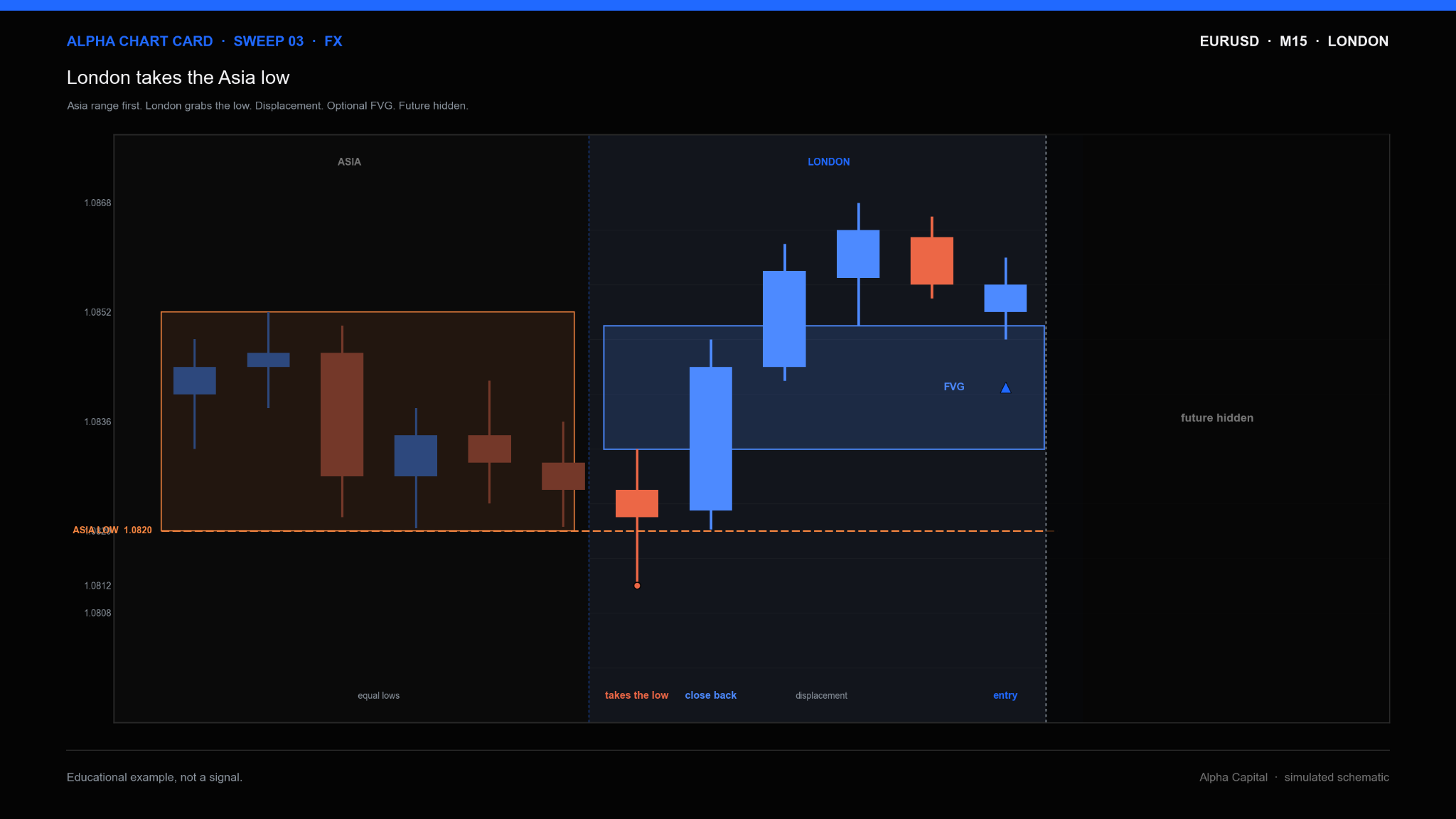
Příklad z Londýna, pak úspěch
Pouze ilustrativní.
EURUSD se zastavil na stejných minimách na úrovni 1,0820 během asijského obchodování. Otevření londýnské burzy, výpad do 1,0812, poté uzavření M15 nad 1,0820 silným bullish candle. V tomto plánu je tato zpětná uzavření potvrzením sweepu.
Konzervativní vstup: čekejte na návrat do oblasti FVG. Stop pod 1.0808. Cíl: maximum z Asie.
Pokud je zastávka 28 pipů a limit obchodníka pokrývá pouze 14 pipů povolenou velikostí, projit.
Obrácení se může ještě dostat do asijského maxima bez vás. Naše evaluace vám neudělí zlatou hvězdu. Udělí vám propad, pokud budete nuceně nastavovat ztráty na 28 pipů, dokud denní ztráta nezmizí.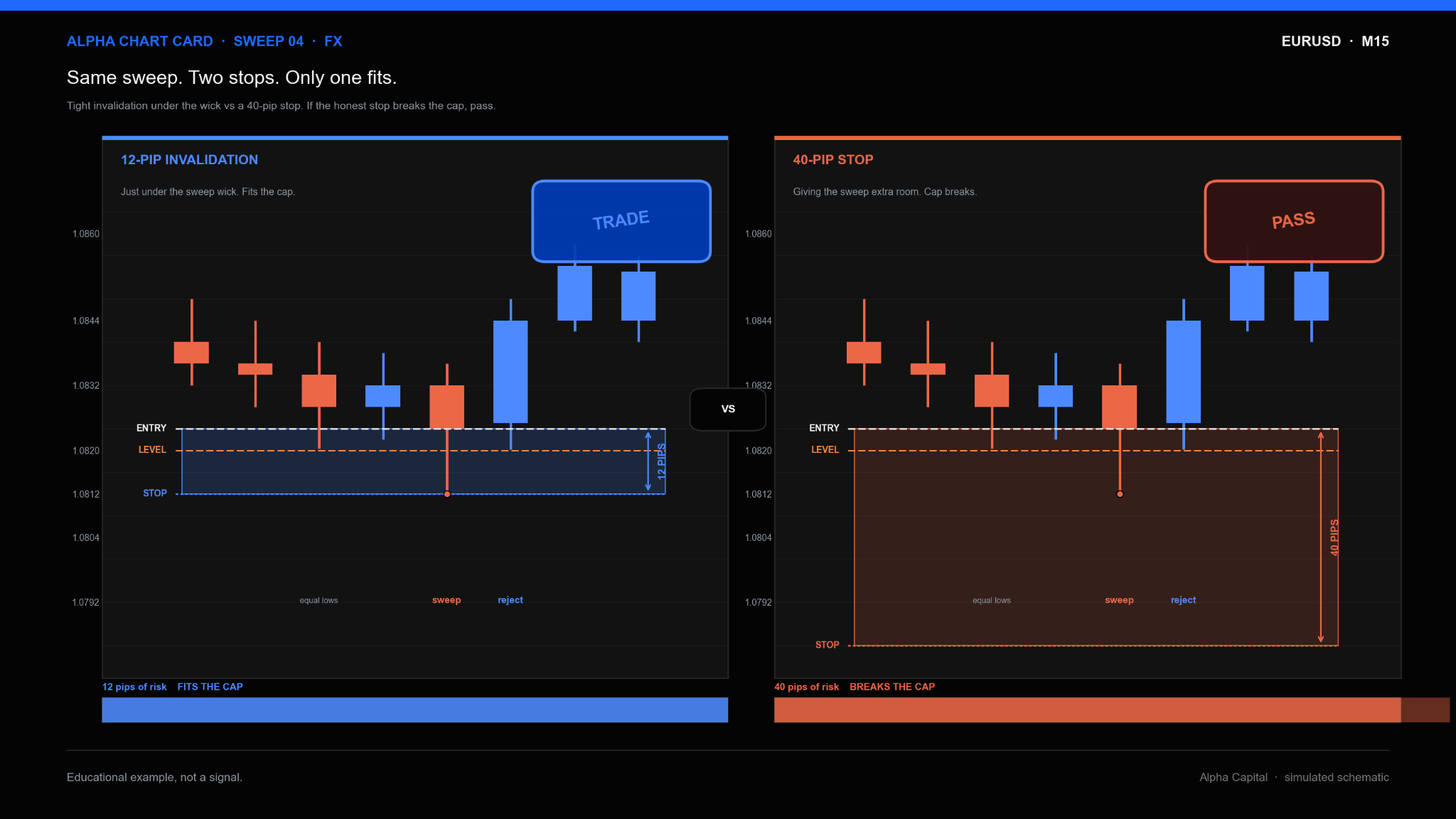
Filtry, abyste přestali obchodovat s každým pohybem ceny.
Použijte tyto body jako kontrolní seznam, nikoli jako mluvenou řeč:
- Úroveň byla na grafu před Bylo to vzato
- Byly to stejné extrémy (výšky/hloubky) nebo skutečný extrém sezení, nikoli náhodný intra-bar spike.
- Po zmáčknutí došlo k posunutí, nikoli k pomalému úbytku na úrovni
- Směr vyšších časových období souhlasí, nebo Máte psanou pravidlo pro protitrendové obchodování s menším objemem (většina lidí při hodnocení by to neměla).
- Spread je normální pro tu pár a tu relaci.
- Žádné ztráty v příštích minutách, pokud zprávy nejsou explicitní a ověřenou součástí plánu.
Pokud nemůžete zaškrtnout tyhle body, nemáte obchod s prosvícením. Máte jen svíčku.
Poznámky k páru a relaci
- EURUSD / GBPUSD: Londýn stále provádí mnoho zřejmých rozsahů. To neznamená, že každá otevření Londýna je obchodovatelné.
- XAUUSD: Zisků je obrovské a stejně tak i odchylky. Pokud je "uzké" zamykání zlata 40 dolarů, obchodujte s velikostí jako zlato nebo ne. Neimportujte plán EUR s 10 pipy na zlato.
- NY sezóna: US data může změnit sweep na BOS jedním tiskovým sdělením. Vaše pravidlo pro zpravodajství je strategií.
Zaznamenejte časy v jednom časovém pásmu. Není nám jedno, zda je to Londýn nebo NY. Důležité je, abyste nekonvertovali pod tlakem.
Testujte selhání, nikoliv monáže
Zamknout:
- jedna pár
- kterou likviditu označíte (Asie, PDH/PDL, rovnoměrné H/L)
- wick vs. close pro "získané"
- co se považuje za odmítnutí
- model vstupu
- stop a cíl
- pravidlo zpráv
- max pokusů
Spočtěte, kolikrát cena zasáhla úroveň a PokračovalTo jsou ty drahé. Pokud nejsou v tabulce, je vaše výhernost jako krátký trailer, nikoli jako film.
Podívejte se:
- výhra vs. ztráta
- série (hodnocení končí na sérii, nikoli na poměru výher)
- vynechané obchody
- Výsledky Londýn vs NY zvlášť
Pakliže si ho chcete vyzkoušet, můžete to provést v simulaci, než se přihlásíte k placené evaluaci.
Chyby, které stále vidíme
Každý svislý tah je sběr likvidity
Žádné. Některé tyčinky jsou prostě tyčinky.
Vstup při běhu cen za zamykací úrovně
Jsi likviditou. Čeká se na odmítnutí.
Zavírání těla těsně u úrovně sweep
To je často BOS. Jiný obchod.
Používání sweepu k zdůvodnění stop-lossu, který porušuje denní ztrátu
Vzorec nemá přednost před našimi pravidly. Nic jiného nemá.
Pět ICT štíteků na jednom sloupci
Pokud lze každý výsledek popsat jako vítězství, nemůžete v deníku prohrát. Zkoušku si ale stále můžete pokazit.
Pomsta na stejných rovných minimách
Jedna neúspěšná kontrola neznamená, že další pokus bude "ještě tekutější". Definujte, zda se vrátíte nebo se vzdáte.
Změna časového rozhraní po vstupu
M1 vám vždy ukáže malý důvod, proč zůstat. Spravujte na časové ose podle plánu.
Často kladené otázky
Je likviditní sweep stejné jako breakout?
Ne. Prolomení, které se udrží, je pokračování struktury. Sweep je běh na zjevné stop-lossy, který pak selže.
Potřebuji jazyk ICT?
Potřebujete úroveň, záchyt, odmítnutí, stop a velikost. Slovní zásoba je volitelná.
Nejlepší časový rámec?
Ten, který jste testovali. H1 k označení úrovní, M15 k potvrzení, je běžné rozdělení. Není to pravidlo.
Můžu to použít na... Alpha Capital hodnocení?
Ano, jako metodu na základě vlastního uvážení, pokud zůstává v rámci zveřejněných pravidel na simulované prostředkyNehodnocujeme vaše zápasy. Hodnocujeme účet. hodnocení cíle
Měl by to nahradit stránku s glossářem?
Ne. Slovník = "co to je." Tato stránka = "jak bychom to skutečně obchodovali během hodnocení." Spojte je. Ne sloučte je.
Další krok
Přečtěte si Co je likvidita Sweep? pokud si stále mícháš s BOS.
Pak jeden pár, jedna sezóna, jedno definice chycení a odmítnutí. Zaznamenejte každý kandidát pro blok obchodů, včetně těch, které odmítnete. Udělejte to v simulaci, než zaplatíte za vyhodnocení s námi.
→ Začni Alpha Capital hodnocení · Co je likvidita sweep?
Obecné informace, nefinanční poradenství. Simulované výsledky obchodování neodrážejí skutečné výsledky obchodování. Potvrďte pravidla živého programu před obchodováním.


