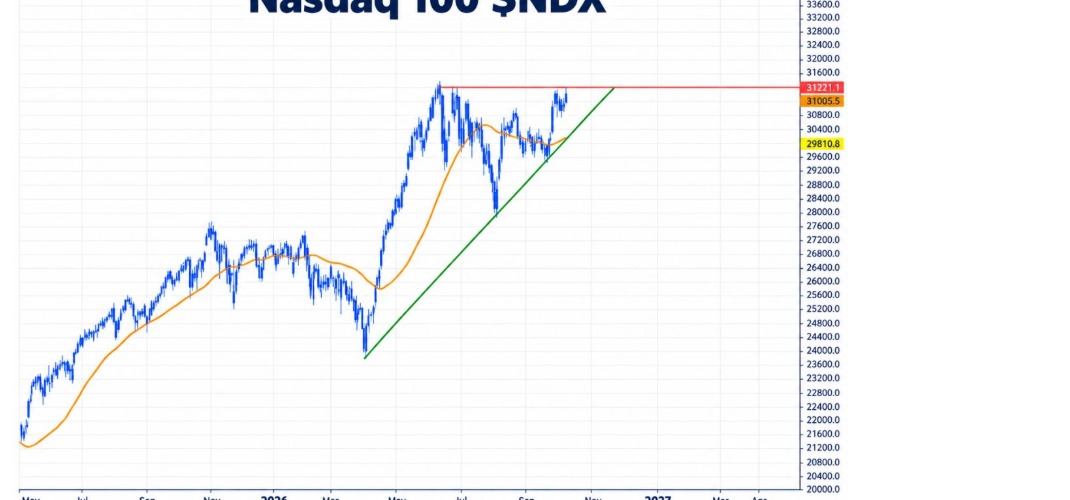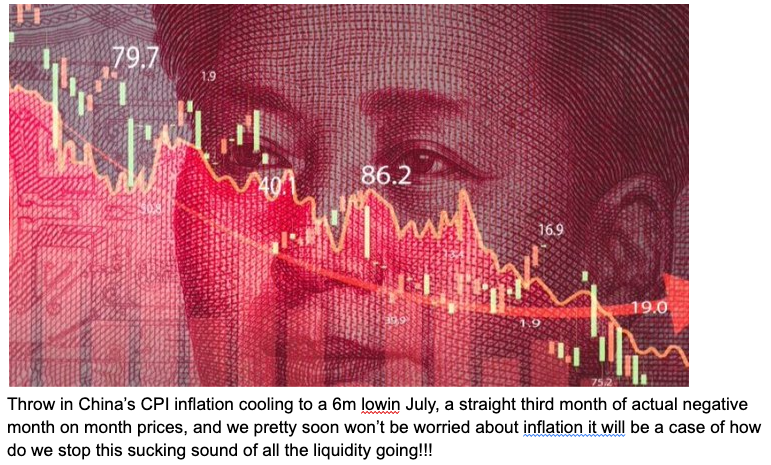
A Narrow Rally Finds Its Footing, but Defensive Leadership Tells Its Own Story
Last week rewarded caution without ever punishing it. Global markets ground higher over 5 to 9 October through a volatile tug-of-war between bond-market stress, shifting central-bank expectations and geopolitical risk, with the S&P 500 up about 1.2%, the Dow 0.9% and the Nasdaq 0.6%. The indices held close to their previous highs even as the US 10-year Treasury yield briefly touched its highest level since 2002, and the focus moved from the prior week's payroll and inflation data toward central-bank communication and the September FOMC minutes.
Then the cracks beneath the surface showed themselves. Small caps slipped roughly 0.9% as high borrowing costs weighed on rate-sensitive names, and an AI-related scare triggered a sharp semiconductor sell-off on Thursday before a partial rebound on Friday. Mega-cap technology carried the headline indices, yet it was the defensives, utilities and consumer staples, that outperformed on the week, while French fiscal concerns, wider sovereign spreads and firm energy prices kept the backdrop unsettled. The macro leaned the bulls' way, but the message underneath was one of caution, not confidence.
Market Overview: A Mixed Week With Something for Everyone
It was a mixed week, with enough evidence to satisfy bull and bear alike. Breadth appeared to improve, and prices rose, but volume stayed conspicuously light.
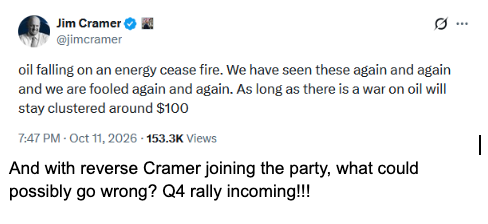
That is the central question hanging over this rally: does sustained momentum pull fresh money off the sidelines, or does the lack of commitment expose a structure more fragile than it looks? The reverse-indicator alarms are flashing once more, and as the contrarians like to remind us, that may be the most bullish signal of all.
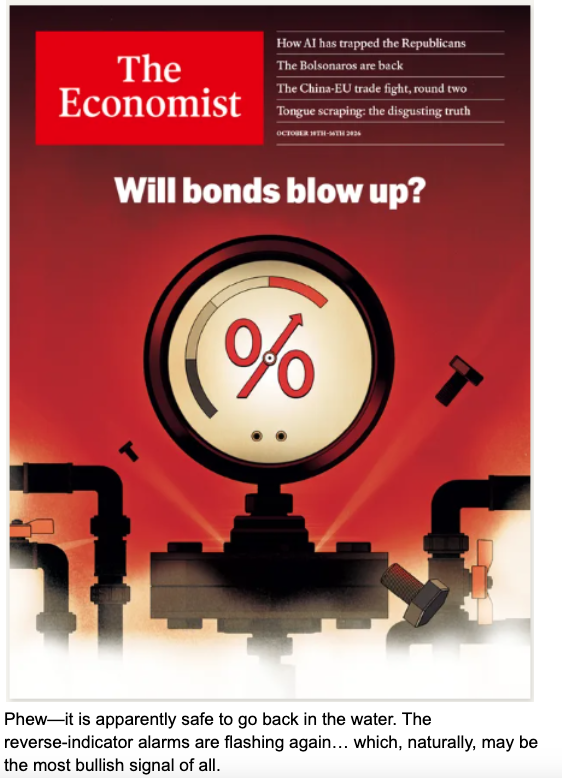
The Economist cover: Will bonds blow up?
A mixed week: prices up, volume still light.
The flow picture captures the ambivalence perfectly. Institutions appear to be fading the move, while retail investors and hedge funds are the ones stepping back in, hunting a breakout. That is supportive at the margin, but hardly the broad institutional endorsement the bulls would prefer.
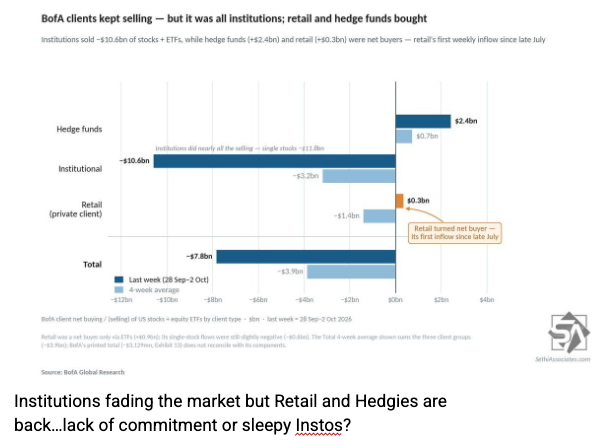
Institutions fading the rally while retail and hedge funds step in.
The leadership question remains uncomfortable. On one reading, this is healthy broadening, with support spreading from one sector to nine. On another, the market is simply hiding. Energy, Staples and Utilities led, the sectors people buy when they are worried, while Technology and Industrials, the two most tied to the AI buildout, fell.
Breadth may not have improved because investors turned brave. It may have improved because they moved into shelter, and shelter happened to span a lot of different stocks.
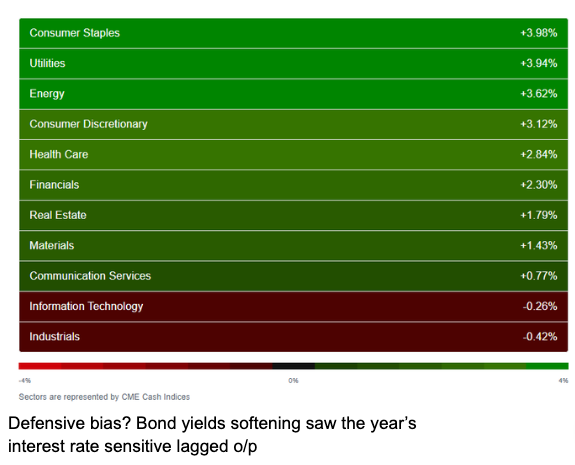
Energy, staples and utilities led; technology and industrials lagged.
The deeper structural tell is concentration, and the starkest illustration of how far sentiment has travelled sits in credit: who would you rather lend to, France or Nvidia? Their credit-default swaps are trading at roughly the same level, a comparison that would once have read as satire and now simply reads as a Tuesday.
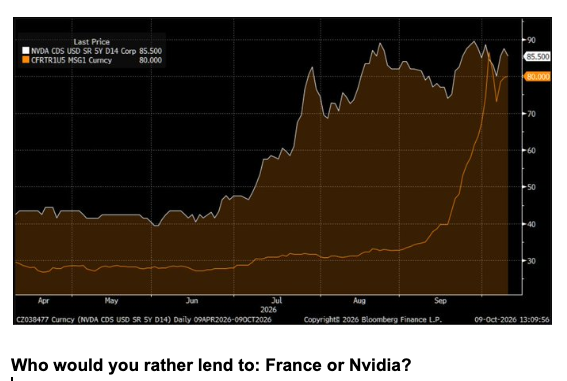
France and Nvidia credit-default swaps trading at similar levels.
Macro & Policy Watch: Central Banks Hold the Line as Europe Frays
The central-bank chorus leaned firmly against the idea that the inflation fight is over. Governor Waller was explicit that the US economy strengthened noticeably through the second half of 2026 with a solid labour market, but warned that inflation remained persistently too high, driven in part by the AI infrastructure buildout and ongoing energy shocks.
More hikes are needed, in his view, even if not at consecutive meetings. On balance, a December move still looks more plausible than an October one.
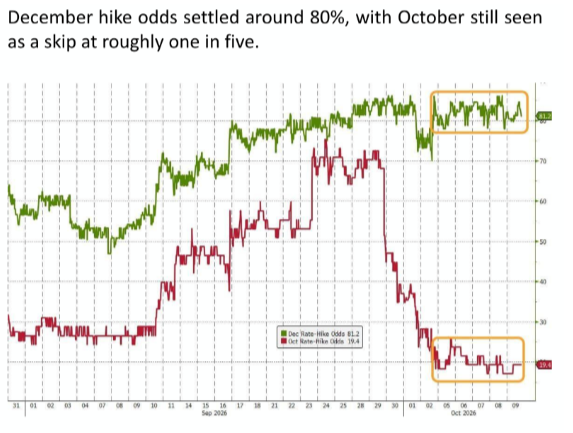
Waller: inflation still too high, more hikes needed but not consecutive.
The provocative framing doing the rounds is Hartnett's: the most bullish thing the Fed can do now is hike. The argument is about credibility and staying ahead of the curve; that decisive action, not hesitation, is what reassures markets wrestling with sticky inflation and a repricing of term premium.
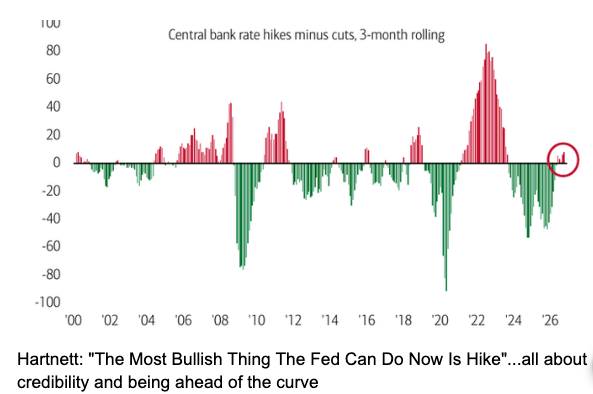
Hartnett: the most bullish thing the Fed can do now is hike.
Elsewhere, the tone rhymed. The Bank of England stressed that repeated supply shocks and lower potential growth mean systemic resilience can no longer be taken for granted. The ECB flagged that higher global long-term yields are tightening financial conditions, and the BIS cautioned that high government debt, the expanding footprint of non-bank finance and AI tools used for trading and risk management could amplify herding when shocks hit.
On the supply side, the US Treasury signalled it will cut coupon sales and lean more on bills from next month. The Franco-German spread recovered somewhat into this week, but the moves of the prior week were genuinely historic, and the stress has paused rather than passed.
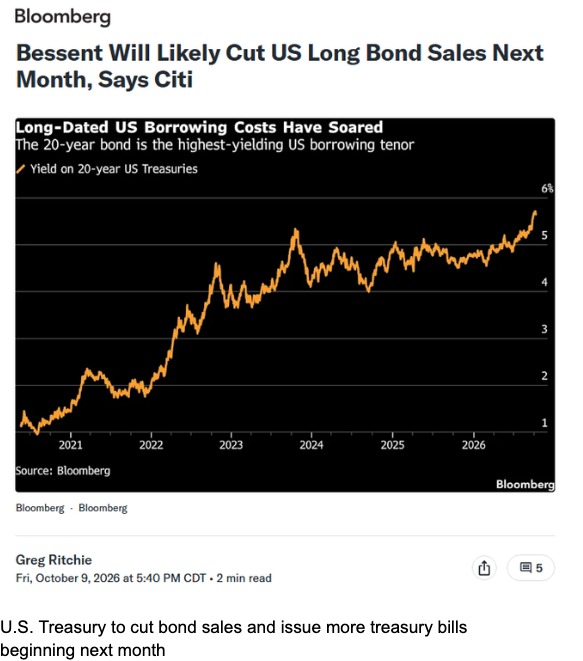
The Franco-German spread paused after a historic move.
Europe remains the fault line. France's fiscal problem is now both a public and a private one, with the 2027 budget battle feeding directly into sovereign risk. The newest twist is a proposed exit tax on crypto holders leaving with more than €800,000, alongside a plan to treat crypto-to-stablecoin swaps as taxable sales from January 2027. Both passed the National Assembly's finance committee and must be re-tabled when the full budget debate opens on October 13.
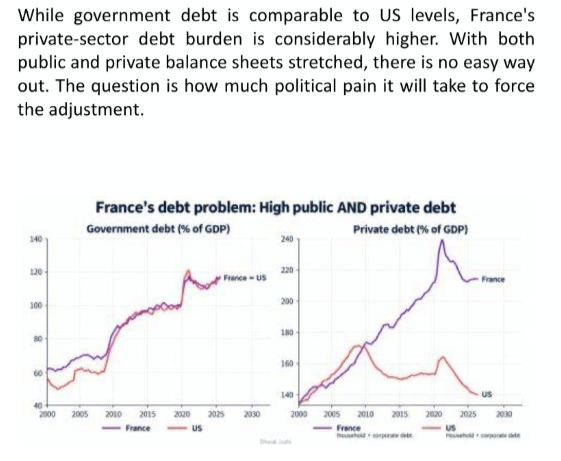
France's 2027 budget fight and the proposed crypto exit tax.
Geopolitics kept energy on edge. Iran struck another crude supertanker now burning in the Strait of Hormuz, the third tanker hit over the weekend, while Riyadh's airport was struck again a day after a Houthi attack. The crude itself looks manageable, with no shortage of proposed measures to ease the distillate squeeze. The harder problem is refinery capacity: you can have ample oil and still struggle to turn it into the products people actually need.

Hormuz tanker strikes and a distillate squeeze, not a crude shortage.
Technical & Sentiment Breakdown: Supportive, but Increasingly Fragile
Structure intact, internals doing the arguing. Bond volatility remains the more important risk signal, even while a benign VIX keeps systematic sellers on the sidelines. The welcome development is that MOVE slipped back last week, a hint that the bond market may be lowering its voice, if not yet leaving the room.
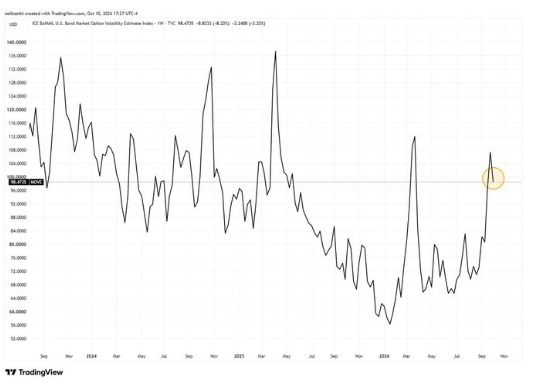
Bond volatility is still the risk signal; the VIX stayed benign.
The breadth signals, for all the complaining, are tilting constructive. When the percentage of S&P 500 stocks above their 50-day average drops below 25% and then cycles back above 30%, it has historically triggered a significant buy signal, with the index higher one week and six months later 91% of the time. The McClellan Oscillator crossing above +35 near all-time highs tells a similar story: higher five trading days later in 10 of 11 prior cases, an argument for fading weakness rather than chasing strength.
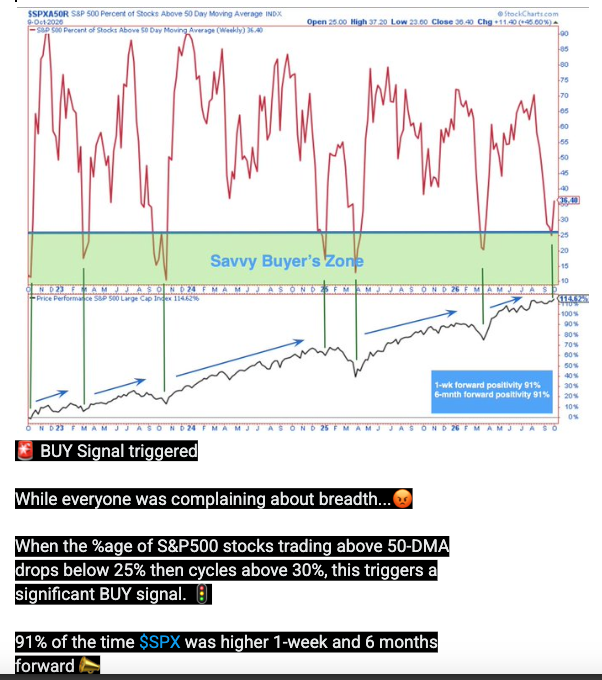
S&P stocks above the 50-day average cycling back above 30%.
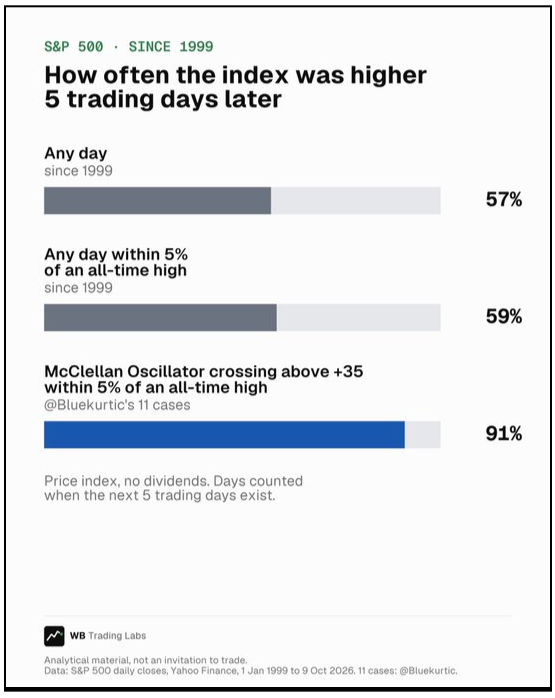
McClellan Oscillator crossing above +35 near the highs.
The summation index, a broader read on whether the typical stock is doing better or worse than the index, has finally turned up. History suggests that when it does rebound, the rallies that follow tend to be fairly powerful. Friday also saw the breadth disconnect begin to ease, with new lows still appearing but at a slowing pace.
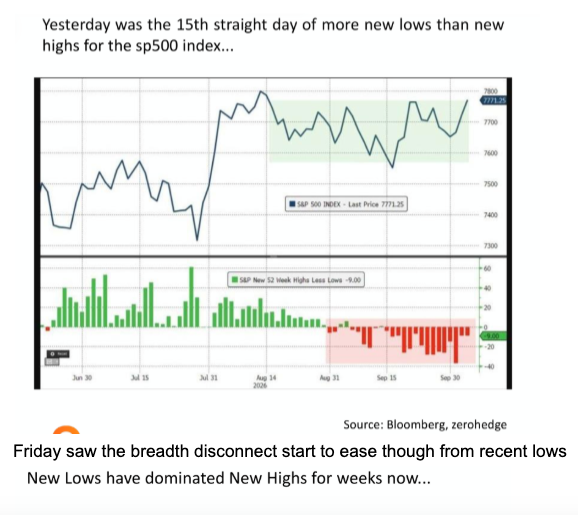
The summation index has finally turned up.
The consensus-risk flags are harder to ignore. Realised volatility is extraordinarily low, the 9-day reading near 7.4 and the 21-day near 10, which means the index needs daily moves of less than roughly 46 and 63 basis points simply to keep volatility from rising. That leaves little room for the VIX to fall and sets up an uncomfortable mismatch against a calendar packed with CPI, PPI, retail sales, Warsh, bank earnings and the approaching midterms.
Stock correlations, meanwhile, are back toward levels seen fewer than 1% of days since 2006, and cash and bond allocations are sitting worryingly low. That kind of uniformity, paired with so little dry powder, is as easily read as a warning as a justification.
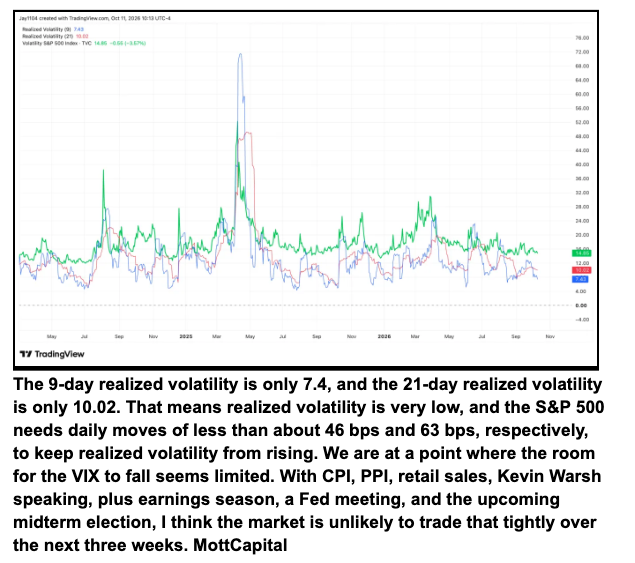
Realised volatility is extraordinarily low.
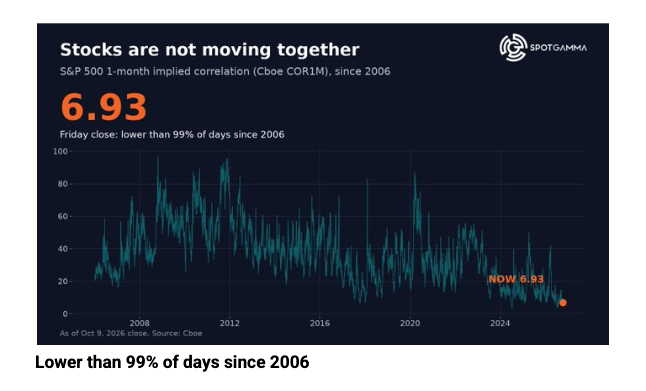
Correlations and cash allocations leave little spare powder.
Concentration is the quiet risk underneath it all. Some 84% of S&P 500 stocks now trade at least 10% below their highs, with Real Estate the worst at 97% and Energy holding up best at 62%, while 59% are down at least 20% and 17% are off more than 50%. Yet the index itself sits a whisker from records, carried by a very short list of names whose continued good behaviour the whole tape now depends on.
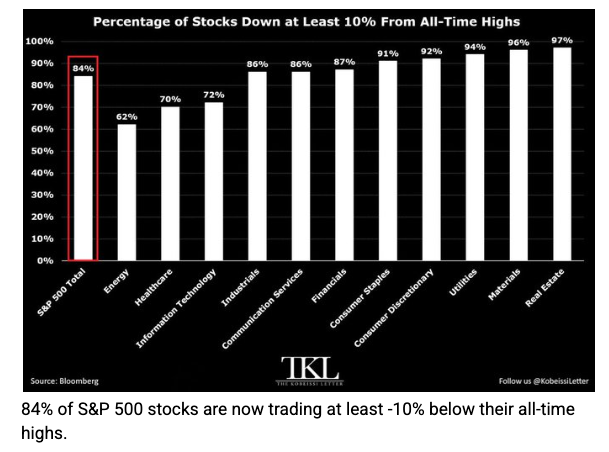
Most S&P names sit well below their highs while the index does not.
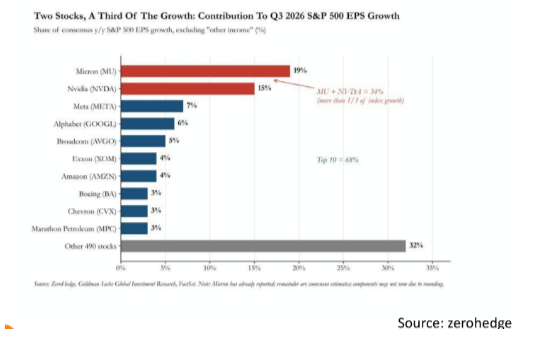
Concentration: a short list of names is carrying the tape.
Last Week's Recap: Resilient Indices, Defensive Leadership and an Energy Edge
A mixed but ultimately higher week, where the headline gains masked a defensive rotation, a semiconductor wobble and a steady drumbeat of geopolitical risk.
Key Highlights
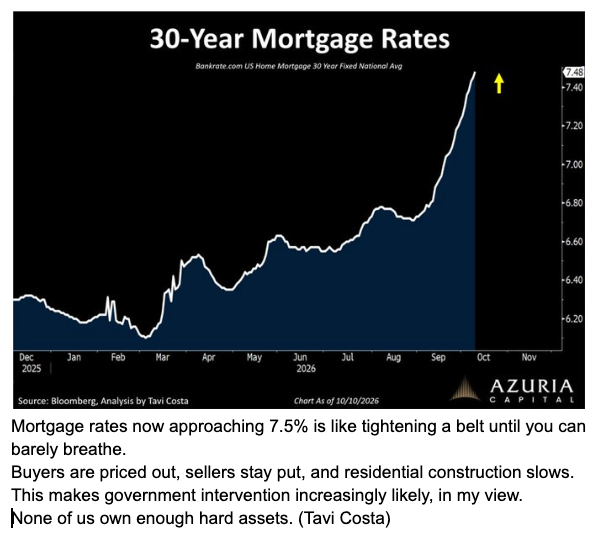
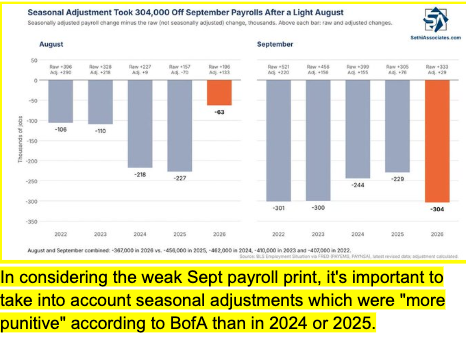
Macro: The soft September payroll print deserves context. The seasonal adjustment was unusually punitive, subtracting far more jobs than a year earlier, so underlying job growth looked steadier than the headline implied. Beneath the surface, the picture is uneven, with only around 20% of US states growing faster than the national average, close to the lowest since 1979, even as technology's share of GDP growth has climbed from near zero in 2022 to roughly a third today. With mortgage rates pushing toward 7.5%, buyers are priced out, and construction slows.
The seasonal adjustment behind the soft September payroll print.
Technology's share of US GDP growth has climbed sharply.
China: Beijing kept buying gold at pace, adding 740,000 ounces in September, its largest monthly purchase in three years and a 23rd consecutive month of accumulation, lifting holdings to a record 2,410 tonnes. It is now the second-largest official buyer year-to-date behind Poland. With 45% of surveyed central banks planning to add gold and only one intending to cut, official demand remains a powerful structural bid.
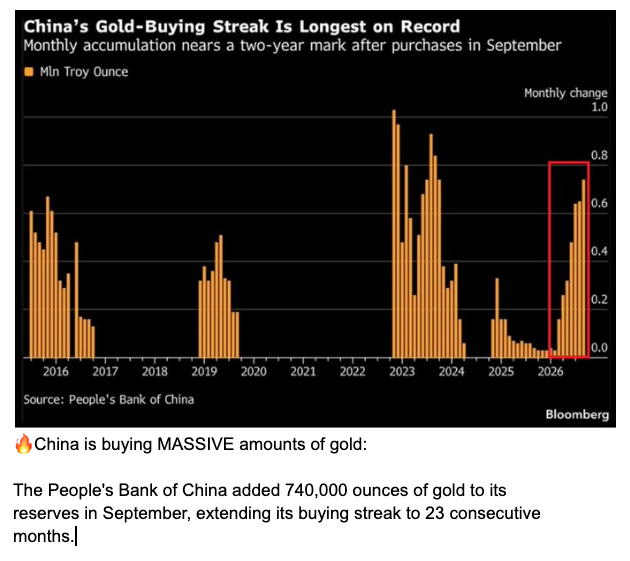
China's 23rd consecutive month of official gold buying.
Earnings: Results split neatly between a pressured consumer and an accelerating AI cycle. PepsiCo beat but trimmed its full-year outlook as snacks and drinks stayed soft. Levi Strauss beat, though sales were light and the outlook leaned on a one-off tariff refund. The strongest numbers came from AI suppliers like Penguin Solutions and Applied Digital, but the common thread was capital intensity, leaving cash conversion as important as order growth. Headline beats often concealed a less convincing underlying picture.
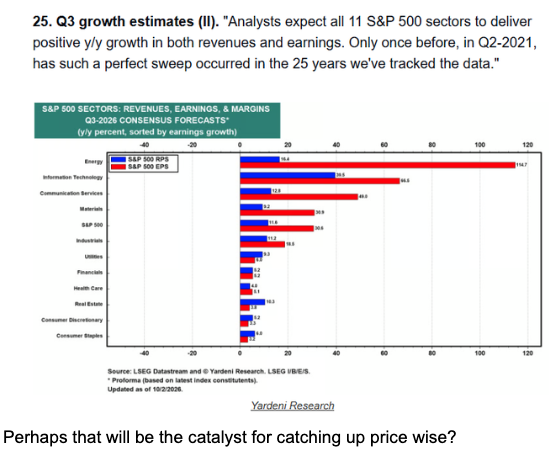
Earnings split: a pressured consumer against an accelerating AI cycle.
Commodities: Gold kept its footing as yields stabilised, underpinned by that relentless central-bank bid, while silver sits at a decision point with key technical levels in play. The broader metals complex stayed firm on the same debasement-and-reserves narrative that has defined the year.
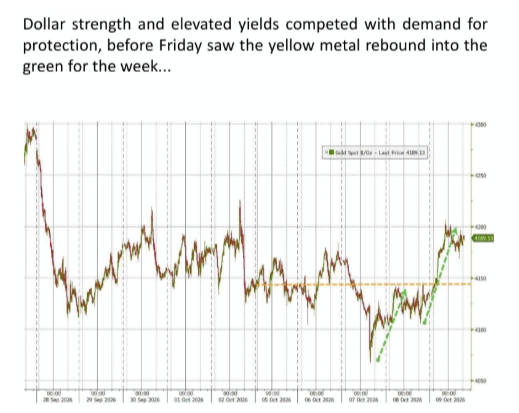
Gold held its footing as yields stabilised.
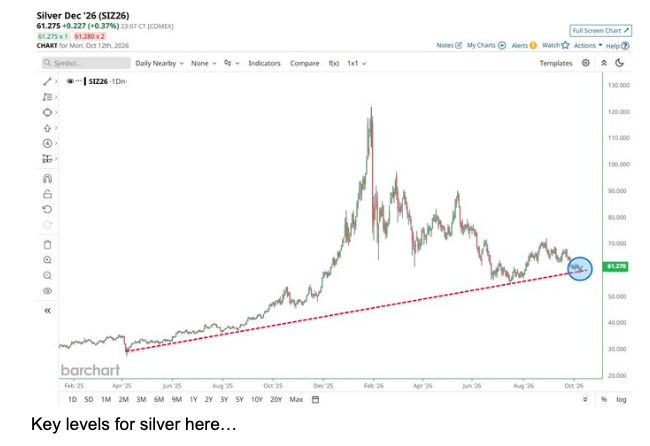
Silver sits at a technical decision point.
Crypto: Digital assets struggled through the liquidity freeze much as bonds did, finding relief only as yields steadied, a pause in the pressure rather than proof that liquidity has returned. Sentiment did get a lift from Citi raising its 12-month bitcoin target to $113,000 from $82,000, and its Ethereum forecast to $3,028 from $2,240, citing activity, macro, and ETF flows.
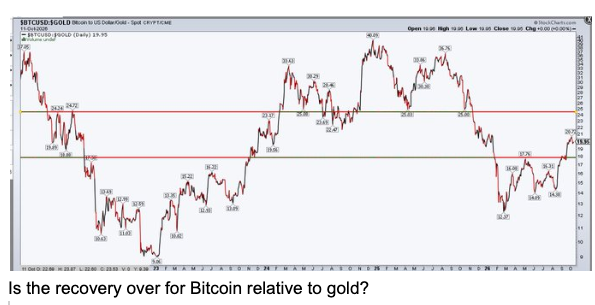
Crypto found relief only as yields steadied.
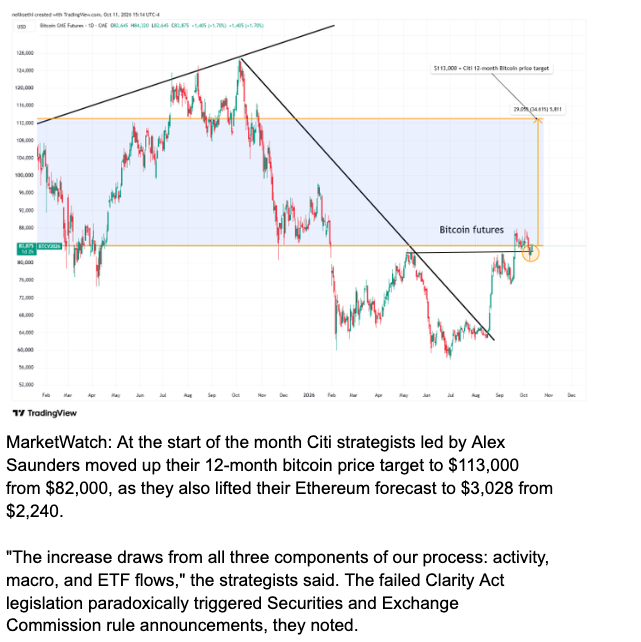
Citi lifted its 12-month bitcoin and ether targets.
Oil: Energy firmed on renewed Hormuz tensions and Houthi aggression, though Trump's comments and coordinated global measures may stall the move short term. Goldman estimates Persian Gulf exports, including dark flows, have recovered to 22 to 23 million barrels a day, broadly in line with the 2025 average, and nudged its December Brent forecast up to $90 from $85 while still seeing an $80 average in 2027.
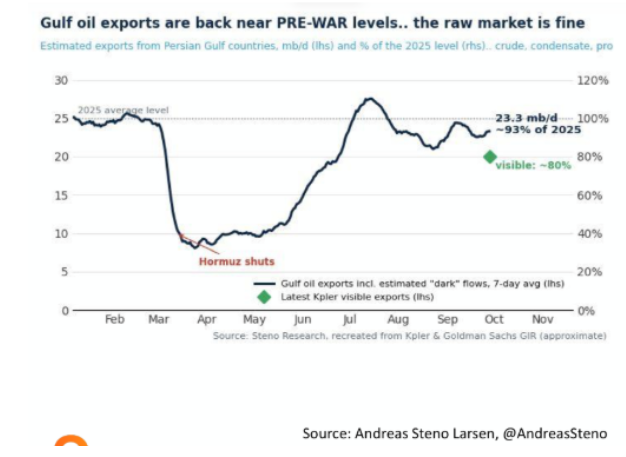
Oil firmed on Hormuz tensions and Houthi attacks.
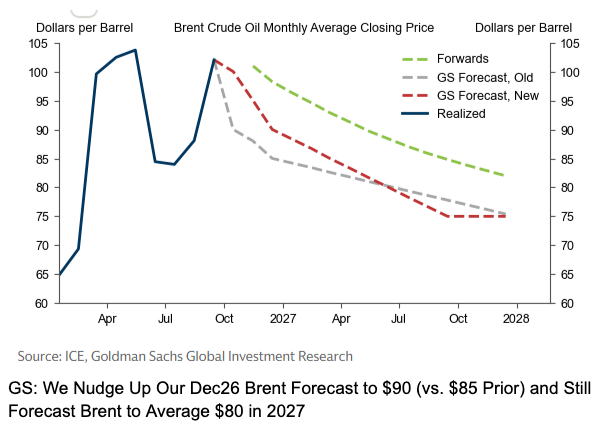
Goldman on Gulf exports and a higher December Brent forecast.
The Week Ahead: Key Data and Market-Moving Signals
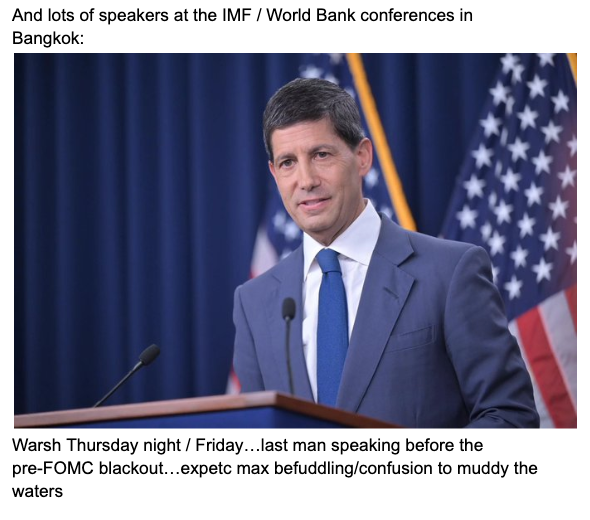
This week is all about CPI, Warsh, and bank earnings, with a few tech bellwethers on board too, and a heavy slate of speakers at the IMF and World Bank conferences in Bangkok. The large banks open the new earnings season as the clearest read on credit quality, while ASML and TSMC test whether the AI investment cycle still justifies elevated expectations. Watch Warsh most of all, speaking Thursday night into Friday as the last voice before the pre-FOMC blackout, where maximum befuddling is all but guaranteed to muddy the waters.
Monday, October 13
- Brazil: Our Lady of Aparecida Day (Holiday)
- Canada: Thanksgiving Day (Holiday)
- Japan: Sport Day (Holiday)
- India: CPI (Sep)
- Russia: Trade Balance (Aug)
- Germany: 6- & 12-Month BUBILL Auctions
- France: 3-, 6- & 12-Month BTF Auctions
- UK: BoE Breeden & Mann Speak
- US: IMF Meetings
Tuesday, October 14
- UK: BRC Retail Sales Monitor (Sep)
- Japan: PPI (Sep)
- Australia: NAB Business Confidence (Sep)
- Germany: CPI & HICP (Sep)
- US: NFIB Small Business Optimism (Sep)
- US: ADP Employment Change Weekly
- US: Existing Home Sales (Sep)
- US: Federal Budget Balance (Sep)
- Australia: RBA Meeting Minutes
- US: Fed Waller Speaks
- US: OPEC Monthly Report
- UK: BoE MPC Member Dhingra Speaks
- US: Fed Barkin & Collins Speak
Wednesday, October 15
- Singapore: GDP (Q3)
China: CPI & PPI (Sep)
- India: WPI Inflation (Sep)
- Spain: CPI & HICP (Sep)
- US: MBA Mortgage Applications & 30-Year Mortgage Rate
- US: CPI & Core CPI (Sep)
China: Imports, Exports & Trade Balance (Sep)
- US: Cleveland CPI (Sep)
- US: US Leading Index
- US: Beige Book
- US: API Weekly Crude Oil Stock
- Germany: 30-Year Bund Auction
- UK: 5-Year Gilt Auction
- UK: BoE Gov Bailey & Pill Speak
- Canada: BoC Gov Macklem Speaks
- EU: ECB President Lagarde Speaks
- US: IEA Monthly Report
- US: Fed Bowman & Barkin Speak
Thursday, October 16
- Australia: Employment & Unemployment (Sep)
- Japan: Industrial Production (Aug)
- Korea: Trade Balance & Exports (Sep)
- UK: GDP (Aug)
- France: CPI & HICP (Sep)
China: New Loans & M2 (Sep)
- EU: Industrial Production (Aug)
- US: Retail Sales (Sep)
- US: PPI & Core PPI (Sep)
- US: Initial Jobless Claims
- US: Philadelphia Fed & NY Empire State Manufacturing (Oct)
- US: Atlanta Fed GDPNow (Q3)
- US: Natural Gas Storage
- US: Crude Oil Inventories
- US: Fed Bowman Speaks
- UK: BoE Woods & Pill Speak
- Canada: BoC Senior Deputy Governor Rogers Speaks
- Switzerland: SNB Chairman Schlegel Speaks
Friday, October 17
- Korea: Unemployment Rate (Sep)
- Singapore: Non-Oil Exports (Sep)
- Japan: Foreign Bonds & Stocks Flows
- Italy: HICP & CPI (Sep)
- Eurozone: CPI & Core CPI (Sep)
- US: Import & Export Prices (Sep)
- US: Industrial Production (Sep)
- US: Baker Hughes Rig Count
- US: CFTC Net Positions
- US: TIC Net Long-Term Transactions (Aug)
- UK: BoE Gov Bailey Speaks
- Germany: Buba President Nagel Speaks
- US: Fed Chair Warsh Speaks
- Canada: BoC Gov Macklem Speaks
- US: IMF Meetings
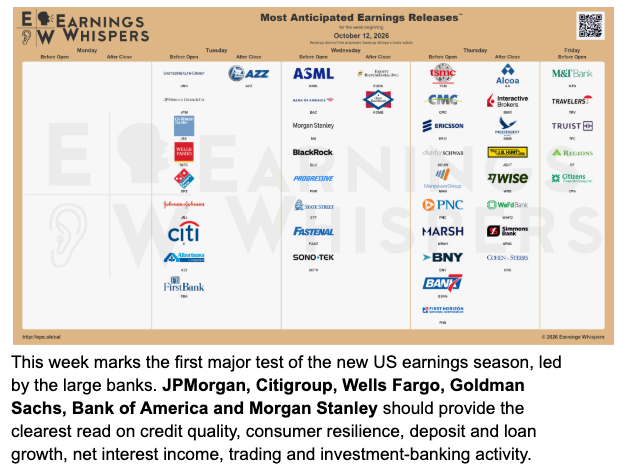
The week ahead: CPI, Warsh, and the start of bank earnings.
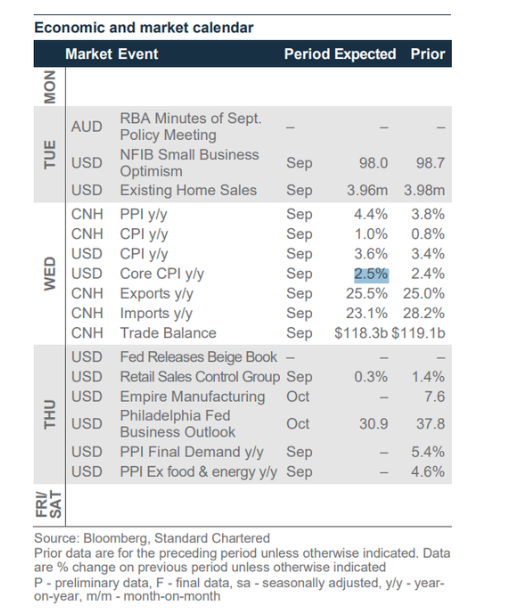
IMF and World Bank meetings add a heavy speaker slate.
ASML and TSMC test whether the AI capex cycle still holds.
Alpha Takeaway: The Signals Have Turned, the Tape Still Has to Confirm
The breadth triggers are firing, and the seasonals favour the bulls, but the rally rests on defensive leadership and light volume. Trade the confirmation, not the narrative.
Equities: Treat 7800 as the binary filter, the top of the range that has held since August. Reclaiming and holding it turns the breadth signals into a trend; failing there keeps this range-bound. The cleaner tell is Technology recovering without Utilities, Staples and Energy handing back their gains. The buy signals argue against shorting into strength, but defensive leadership is not the stuff of durable breakouts.
Gold & Silver: Stay constructive. The relentless central-bank bid, led by China's 23rd straight month of buying, remains the structural support. Silver sits at a decision point where the technical levels decide the next move, so let them confirm before adding.
Crypto: Treat the bounce as a pause in the liquidity squeeze, not proof it has lifted. Bitcoin found relief only as yields steadied, and the near-term question is whether it can resume its recovery against gold. Citi's upgraded $113,000 target frames the upside, but positioning stays contingent on yields staying calm.
Macro: A December hike looks more plausible than an October one. Watch the CPI split, a hot headline on oil and diesel against a more benign core, and let Warsh's pre-blackout remarks and the French budget debate frame the risk. Bond volatility, not the VIX, remains the signal that matters.
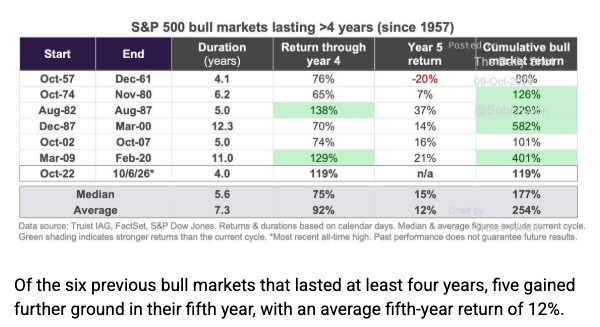
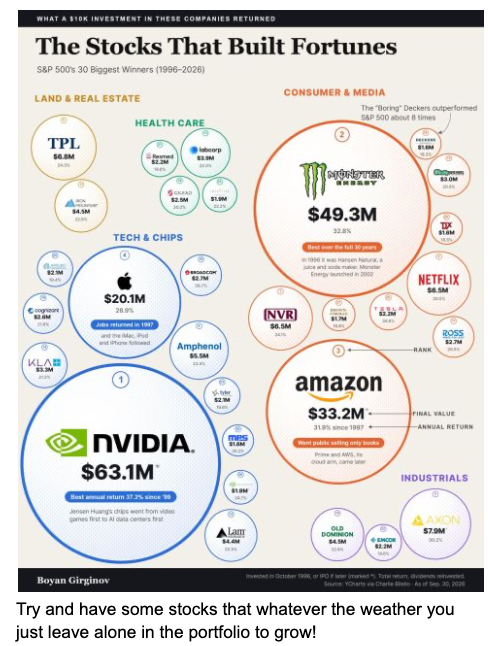
The old line about being right and being early never being the same trade is exactly where this market sits. The reverse-indicator alarms may be flashing bullish, tempting as that is, but defensive leadership on light volume is a reminder that a rally nobody commits to can unwind just as quietly as it climbed. So hold the quality names you can leave alone to compound, and let 7800 and a Tech recovery, not the narrative, decide when caution gives way to conviction... so stay nimble, keep your discipline, and trade carefully.
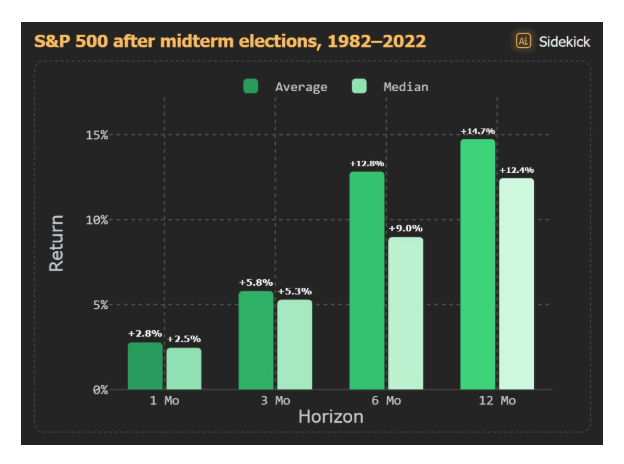
Equities: 7800 as the binary filter on the August range.
Gold, silver and crypto still hang on the yield backdrop.
Trade confirmation, not the narrative.
Charts and figures are from the 12 October 2026 weekly pack. This is a recap of that tape. It is not a personal recommendation, and nothing in it is guaranteed.