


Bad News Is Good News Again, Hedge Funds Fade the Squeeze, Earnings Keep Carrying the Tape
Markets slipped back into an old, comfortable reflex this week: a weak jobs print read as a green light rather than a warning. A soft NFP miss sparked an all-out melt-up and delivered the 26th all-time high of the year for the S&P 500, while September rate-cut odds slipped back from near-certain to around 40%. Liquidity was ample enough to chase the tape higher, participation broadened well beyond mega-cap leadership, and it was the best week for the S&P 500, Nasdaq, and Dow since April.
Beneath the tape, the positioning story is doing the real talking. After the biggest short squeeze since 2020, hedge funds have already started to fade stocks again, and the question worth sitting with is whether that is simple profit-taking or the first hint of a new down-leg. Earnings and breadth still justify a constructive stance, and the caution here is one of timing and crowding, not thesis. August rarely rewards the gung-ho.
Market Overview: A Squeeze Resolves Into a Broad-Based Breakout
The week was defined by the force of flow. The rebound rode the sharpest short squeeze since 2020, and the follow-through was broad: the S&P 500 gained 3.6%, the Nasdaq Composite 5.2%, the Dow nearly 3.0%, and the Russell 2000 3.5%. A last-hour rally on Friday took the S&P to a new record close, with the Nasdaq up 1.3% on the day, the Russell up 1.1%, and semiconductors and software rebounding sharply after July's weakness.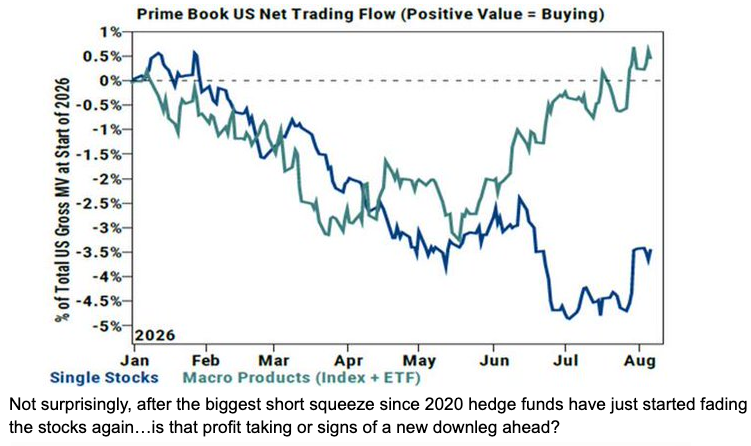
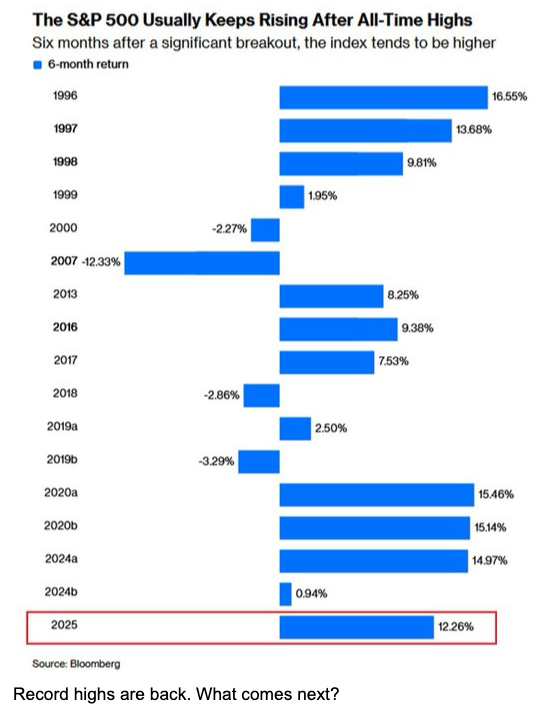
The breakout sits in a reassuring place on the longer arc. This bull market is up 116.9% since it began on October 12th, 2022, ranking fifth of the eight bull markets since 1966, squarely in the middle of the record. Bull markets do not die of old age or accumulated gains; they usually die when earnings roll over, and by that measure, the index looks stretched but not extreme, running 3.5% above its 50-day and 9.8% above its 200-day. Those who believe the market has run too far should look at what running too far can actually look like.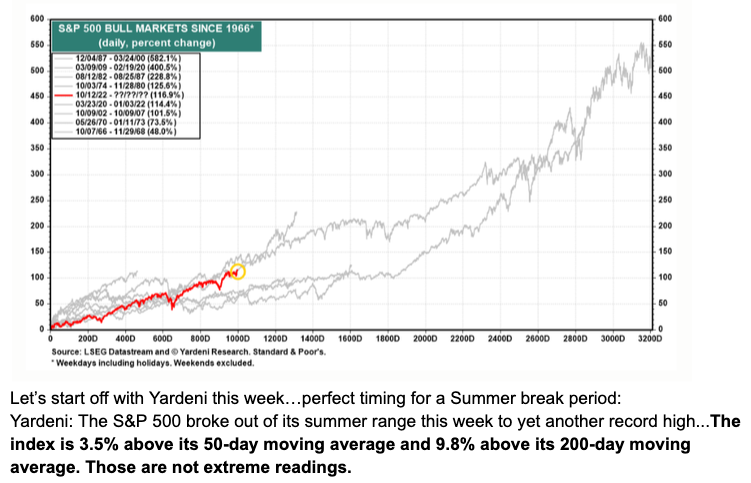
The driver underneath the resilience is a labour market soft enough to ease bond-yield angst without yet flashing recession. That let breadth carry the load, with the equal-weighted S&P up 0.7% on the day and pressing the brink of its own all-time high. The flows confirmed conviction was following the earnings, not fighting them.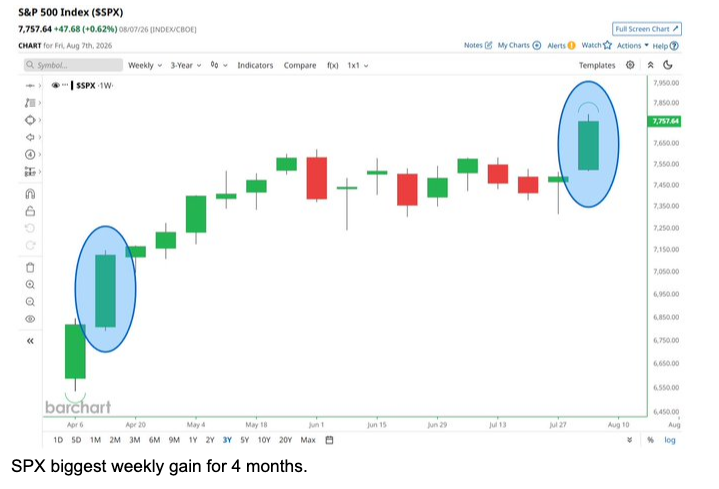
The 26th all-time high of 2026 is also a reminder that the index has kept moving higher regardless of which party holds the White House, at least most of the time. It follows 39 record closes in full-year 2025 and 57 in 2024, so this is a market that has spent two years making a habit of new highs rather than an isolated spike.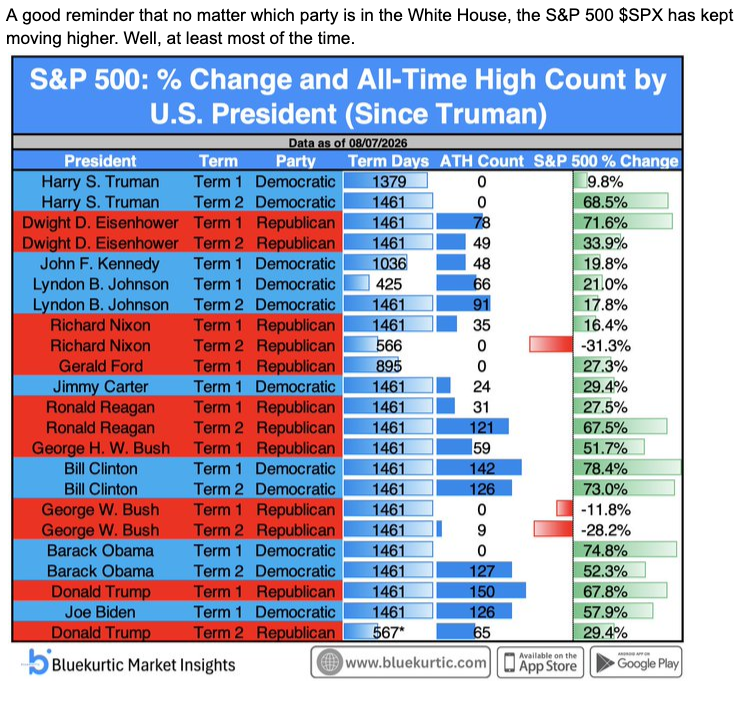
Macro & Policy Watch: A Softer Labour Market Buys the Fed Time
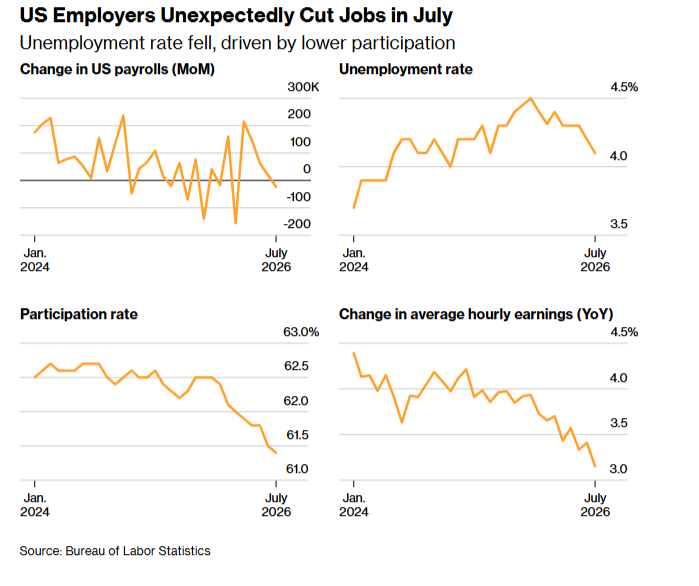
The jobs report was the clearing event. Nonfarm payrolls unexpectedly fell by 23,000 in July against expectations for a gain, while May and June were revised down by a combined 103,000. The unemployment rate slipped to 4.1%, but that came from another decline in participation rather than strength, and wage growth slowed.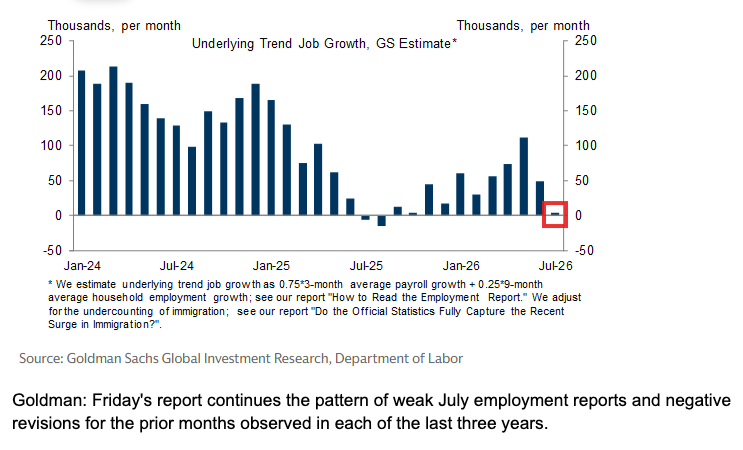
The three-month average of payroll growth now stands at just 20k, down from 111k prior to the report, with the underlying pace of job growth estimated at around 5k versus 74k before. It continues a pattern of weak July reports and negative back-month revisions seen in each of the last three years.
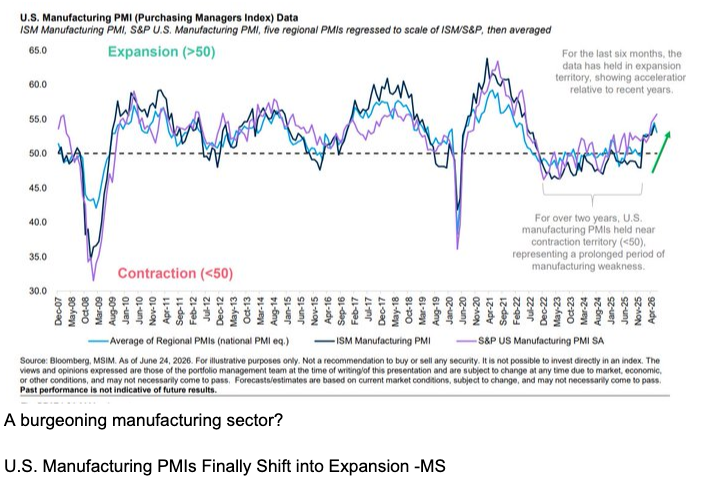
The rest of the data set was more two-sided. Q2 GDP trackers came in a touch high, with the Atlanta Fed essentially on the money after a midweek adjustment and Morgan Stanley and BofA just two tenths too high, while US manufacturing PMIs finally shifted into expansion.
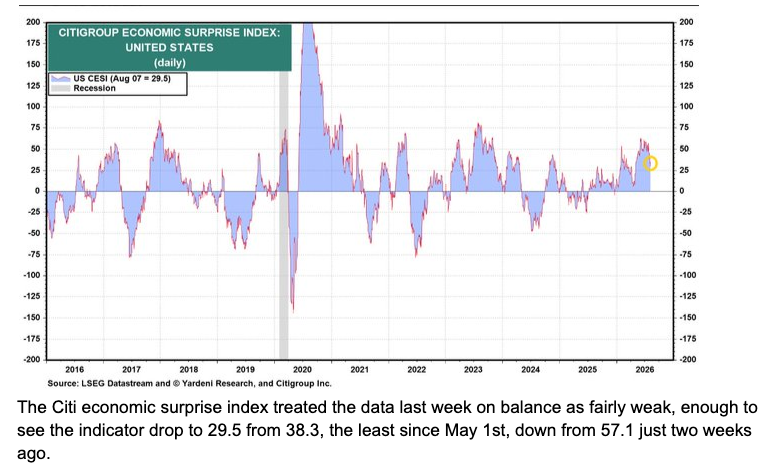
Against that, the Citi economic surprise index treated last week's data on balance as fairly weak, dropping to 29.5 from 38.3, the least since May 1st and down sharply from 57.1 only two weeks earlier.
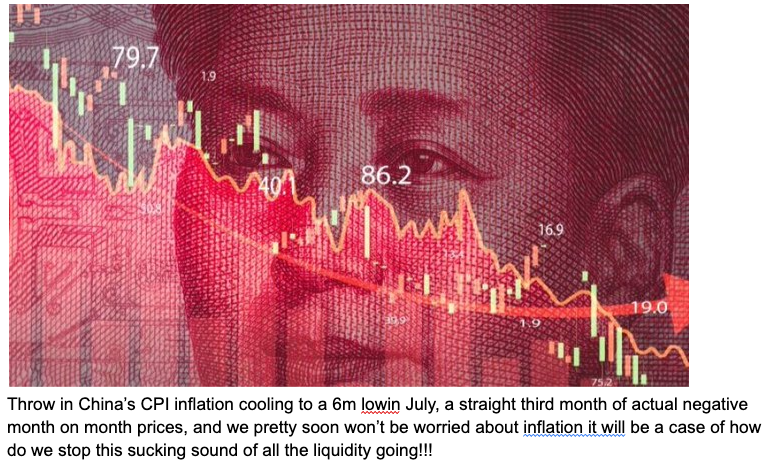
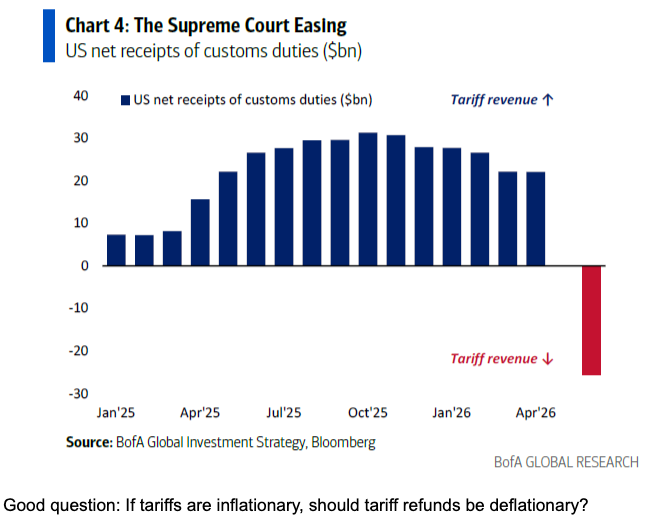
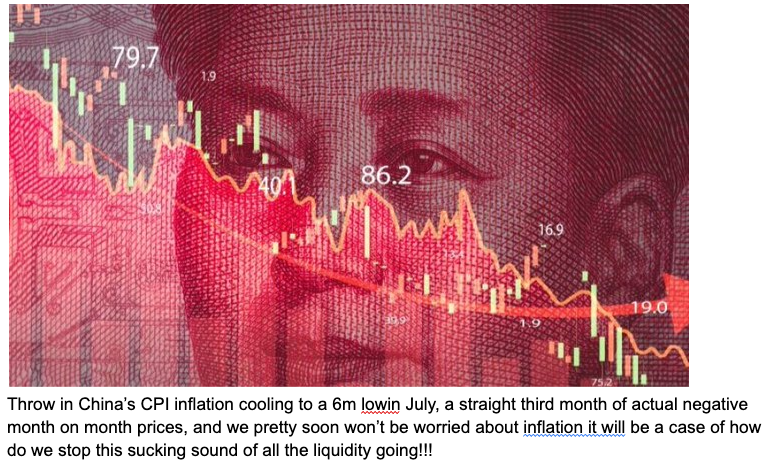
The disinflation story is gaining a global tint. China's CPI cooled to a six-month low in July, a third straight month of negative month-on-month prices, raising the possibility that the worry soon flips from inflation to how you stem the outflow of liquidity. It also poses a neat framing: if tariffs are inflationary, tariff refunds ought to be disinflationary.
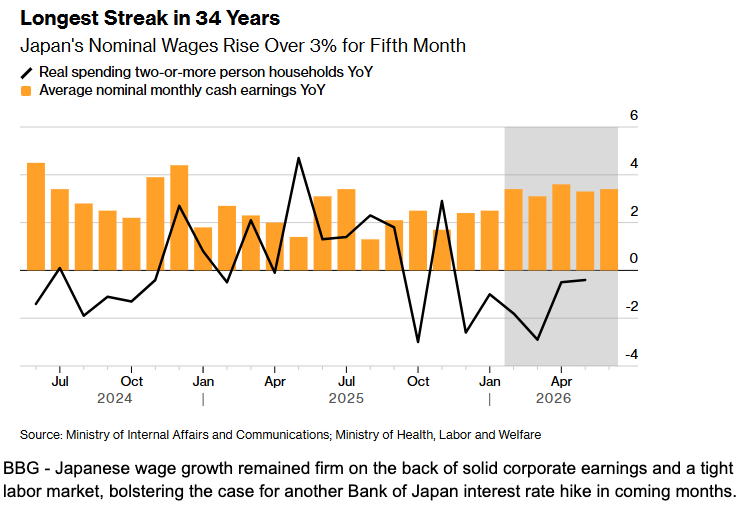
Japan runs the other way firmly. Nominal wages climbed 3.4% in June, extending the run of gains above 3% to five months, the longest such streak in 34 years, while real wages rose for a sixth straight month. That trend should push up underlying inflation and keep the Bank of Japan on track to reduce stimulus.
It sits alongside a dramatic unwind in yen positioning, with leveraged funds cutting net short bets by 74,440 contracts to 63,600 over the five weeks to August 4th, one of the sharpest reductions since 2008. It followed authorities buying roughly $85 billion of yen on July 30th and 31st, the largest two-day intervention since 2011 and the first coordinated US-Japan action in fifteen years.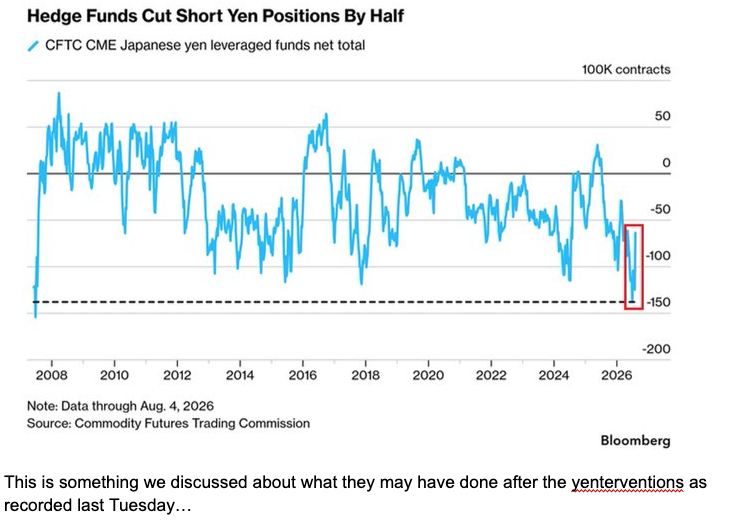
That leaves an awkward policy conundrum: how can the Fed hike when the Treasury is actively propping up another major currency? The tension shows in the dollar, which fell even with US yields near multi-year highs, with yen intervention cited as a key reason.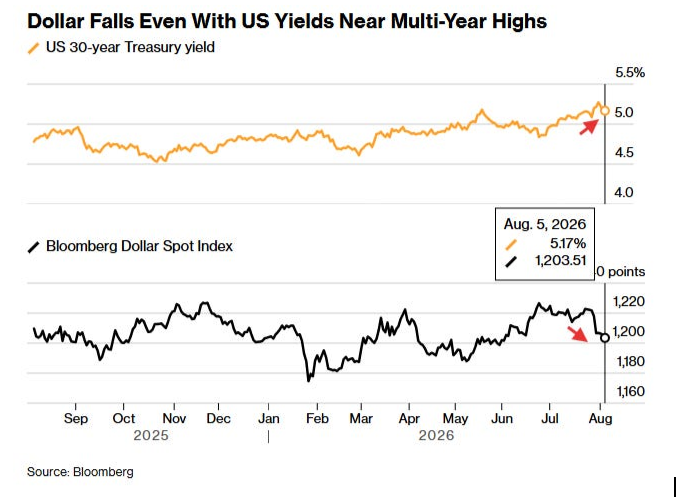
Rates remain the pressure point. Real 10-year yields are elevated across developed markets, and the rule of thumb is that a 2.0 standard-deviation move in nominal 10-year yields inside a month is when stocks feel the pinch, roughly a little above 5% by mid-August, or 2.75% in TIPS where the equity relationship is more severe.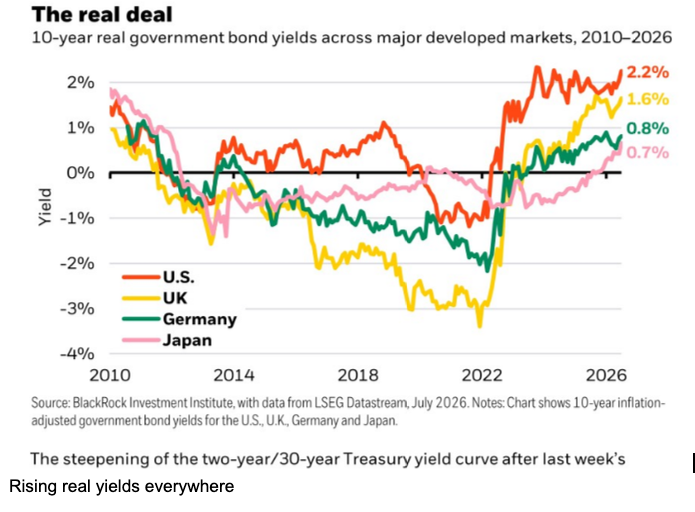
For now, inflation breakevens are in check at 2.2% on the 5-year and 2.3% on the 5y5y, suggesting the market still trusts the Fed's credibility. In the background, the AI build-out is reshaping credit, with strategists expecting hyperscalers to fund 35% of 2027 capex with debt, roughly $400 billion of global issuance, while consensus implies $1.1 trillion of hyperscaler capex will exceed operating cash flow by $150 billion in 2027 before free cash flow turns positive in 2028.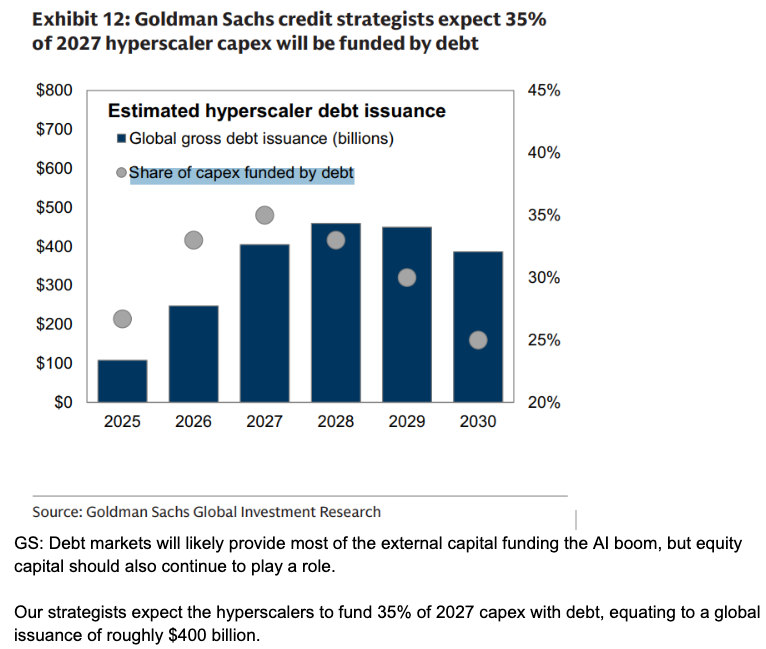
Technical & Sentiment Breakdown: Supportive, but Increasingly Fragile
The structural read is genuinely healthy. SPX, RUT, and the equal-weighted SPXE all printed new weekly all-time highs, with the SPX turning its weekly MACD more positive and the RUT back to neutral, while the equal-weight remains the best weekly chart of the bunch.
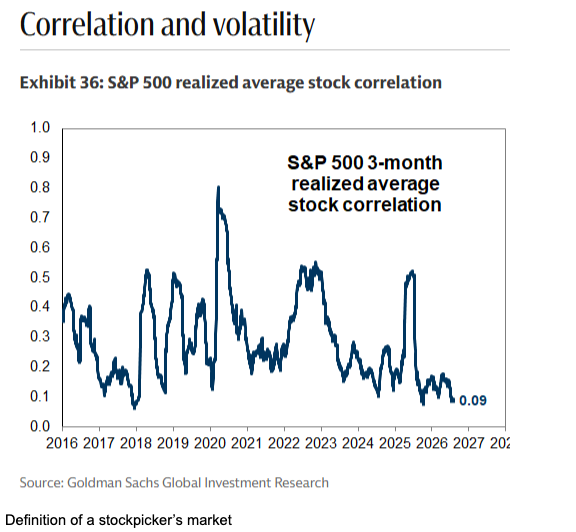
Breadth is no longer the concern it was. For the first time in over a year, more than 73% of S&P 500 stocks trade above their 200-day, 38 names gained more than 10% on the week, the most since the rebound off the March low, and 57% of constituents are outperforming the index, the highest reading in ten years.
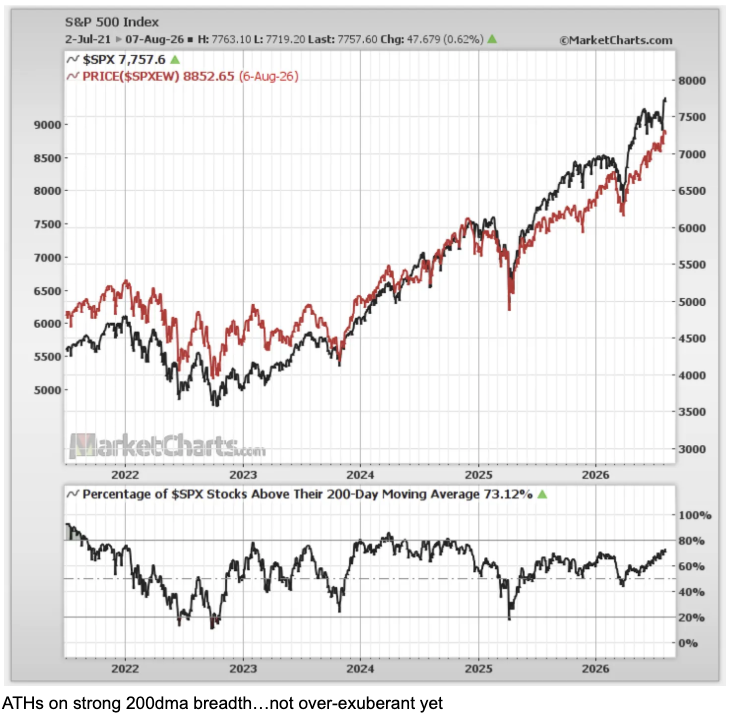
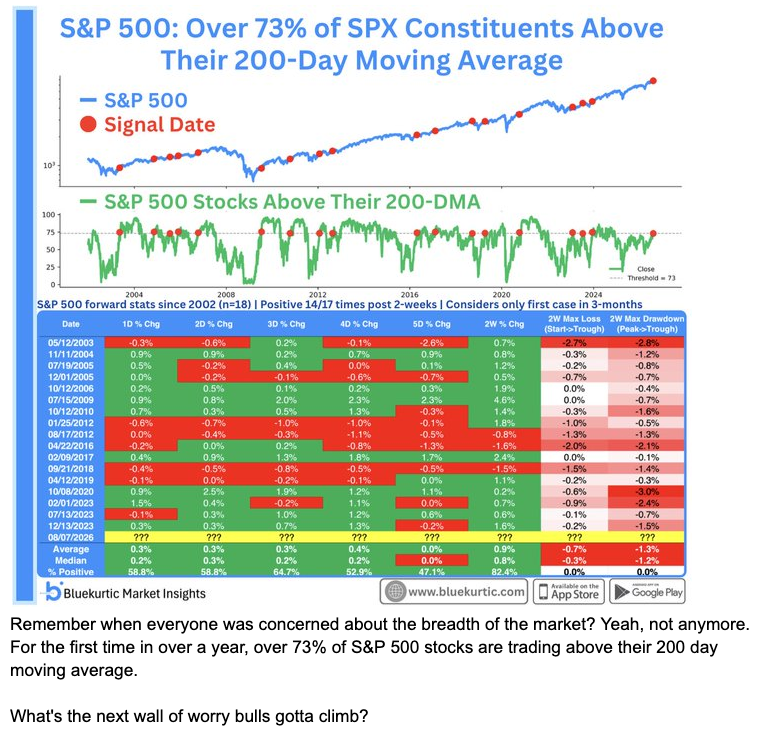
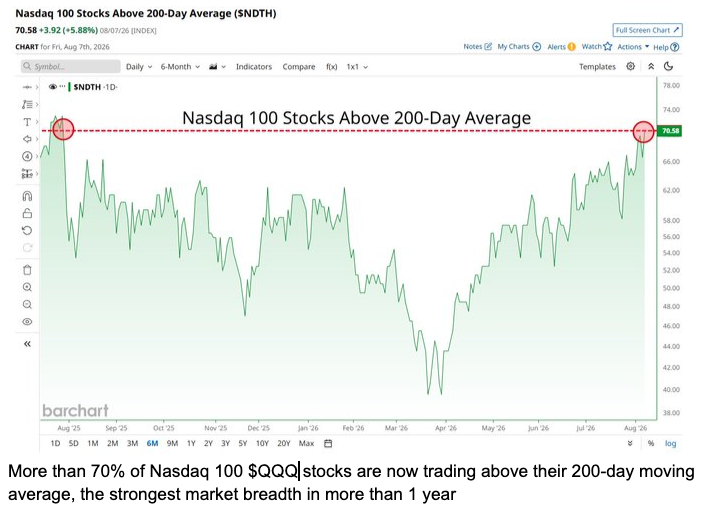
More than 70% of Nasdaq 100 stocks now sit above their 200-day too, the strongest market breadth in more than a year, with the percentage of stocks above 200-DMAs for both the NYSE and Nasdaq around the highest since April.
The upswing is global in scope, with roughly 40% of 70 tracked countries at new 52-week highs and none at new lows, which for now points the line of least resistance higher. The fragility is one of positioning, with investors scrambling into tech at a record pace and record-high allocations.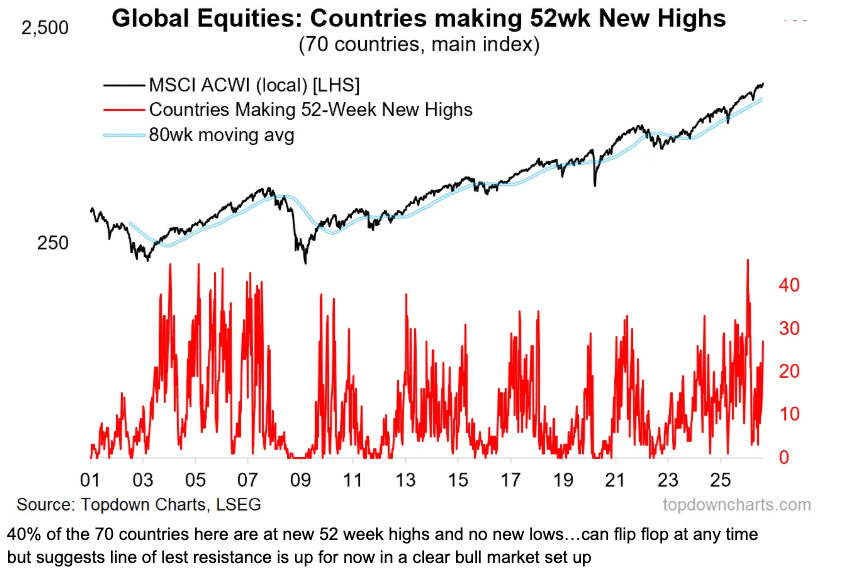
The consensus risk is where the caution earns its keep. BofA's Sell Side Indicator inched up to 56.5%, its highest since February 2025 and about a point from a Sell signal, five times closer to Sell than to Buy; historically, when here or higher, next 12-month returns were negative 33% of the time versus 18% overall since 1985.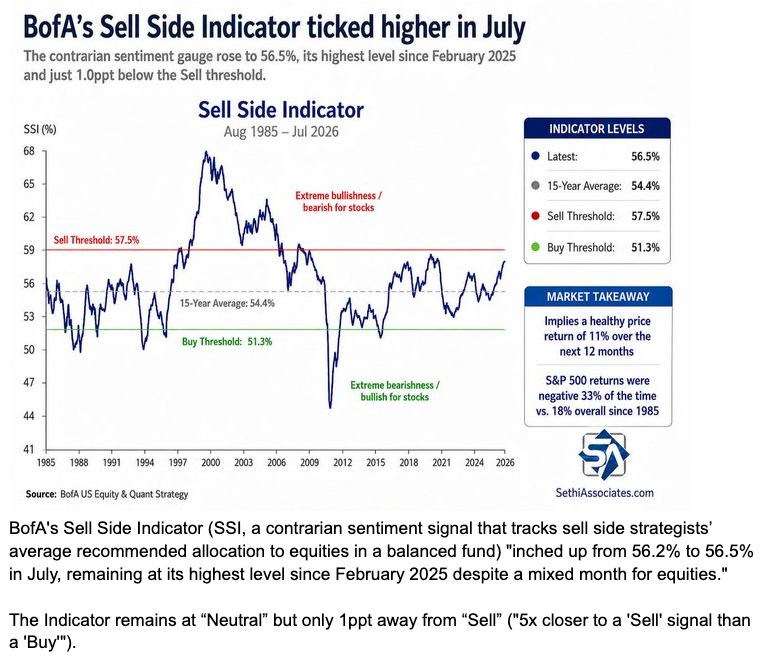
Volatility behaviour is the near-term hinge. Goldman's Panic Index fell to the least since pre-2024, its panic model swinging from the 90th percentile to essentially zero in a single week. VIX seasonality has been brushed aside so far, out of sync during a Trump mid-term year, but still counsels staying alert to Q3 surprises.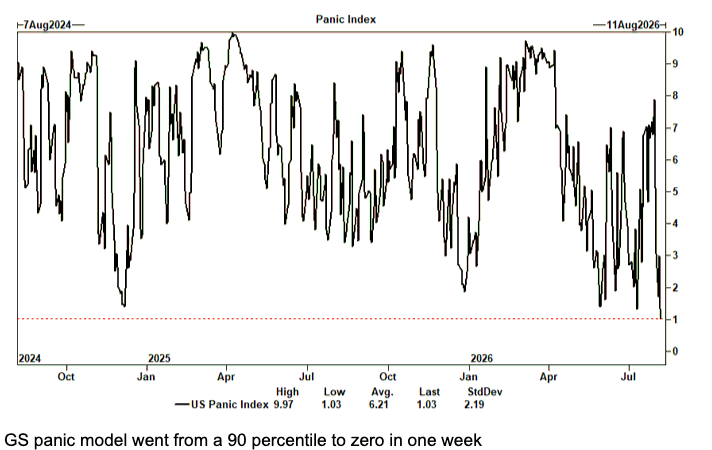
Last Week's Recap: Softer Jobs, Stellar Earnings, and a Broad Push Higher
A weak labour print took the edge off bond-yield anxiety, earnings continued to impress, and the indices jumped across the board on strong breadth without yet looking excessive. Global performance and flows kept outpacing, and after such a sharp move, it was no surprise to see hedge funds fade a little.
Key Highlights:
- Macro: The soft headline masked a labour market cooling on several fronts, echoing a pattern of weak July reports seen each of the last three years. Participation-led improvement in unemployment and slowing wages left hiring looking thin, enough to pull September hike odds back toward 40%.
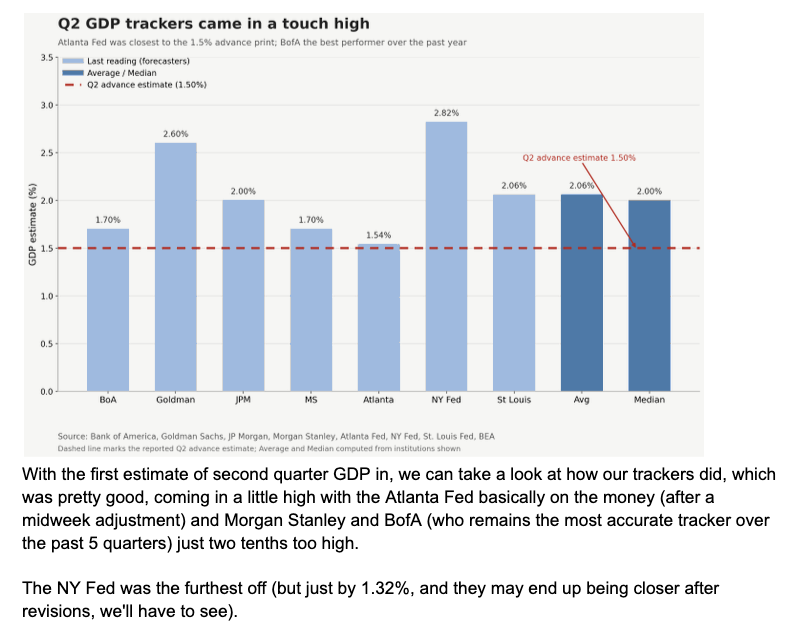
- China: China's disinflation deepened, with CPI at a six-month low and a third straight month of negative month-on-month prices. That persistent weakness shifts the conversation away from inflation and toward the drain on liquidity, and may yet check the broader reflation narrative.
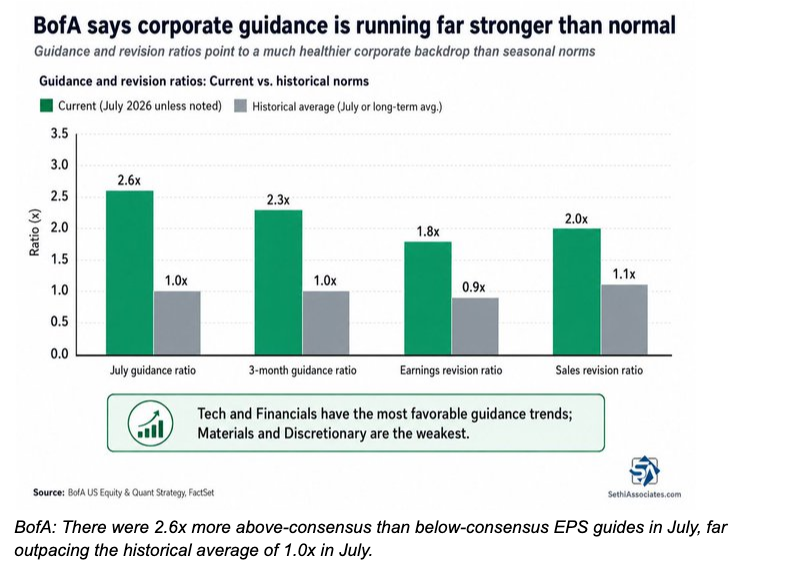
- Earnings: The season was a straight-up momentum tape, with the best companies lifting guidance and expanding backlogs. July saw 2.6x more above-consensus than below-consensus guides against a 1.0x average, 76% of SPX components beat, and Q2 revenue growth expectations were lifted to +15.0%. Reactions turned selective, with beats rewarded by just 10bp the next day and misses punished harder than usual.
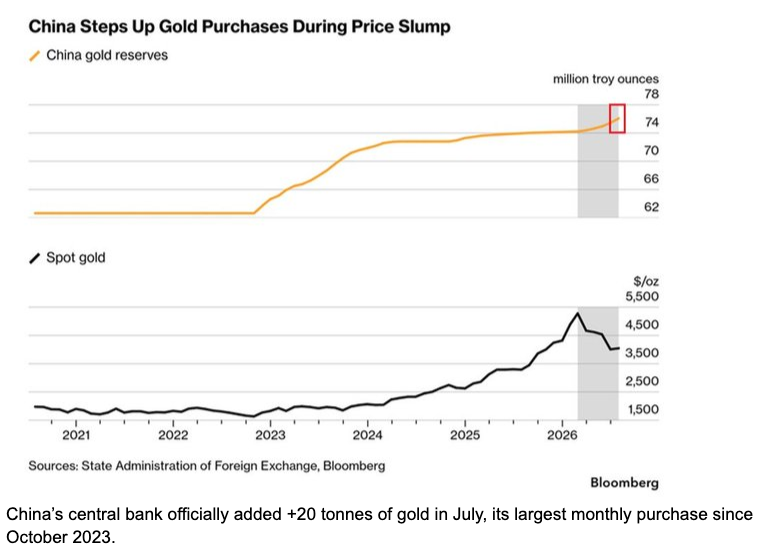
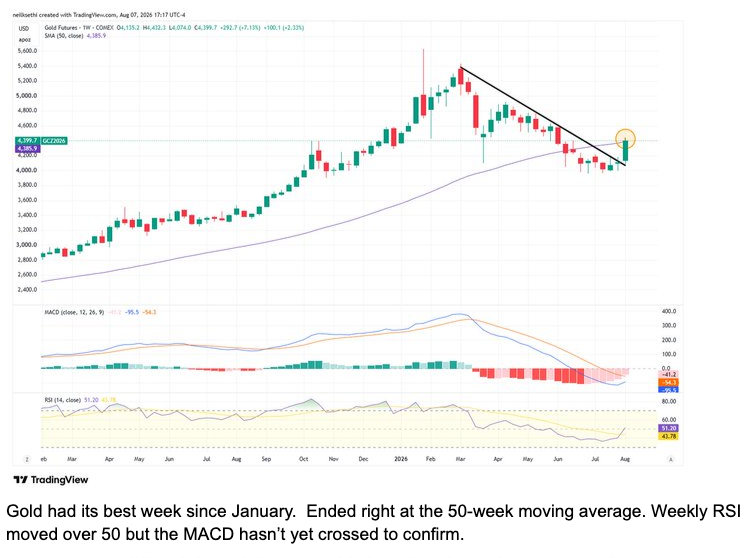
- Commodities: Gold posted its best week since January, ending right at its 50-week moving average, with RSI back above 50 but MACD not yet confirming. The bid stayed structural, with China adding 20 tonnes in July, a 21st consecutive monthly increase, taking holdings to a record 2,366 tonnes, and UBS calling for $5,000 in H1 2027.
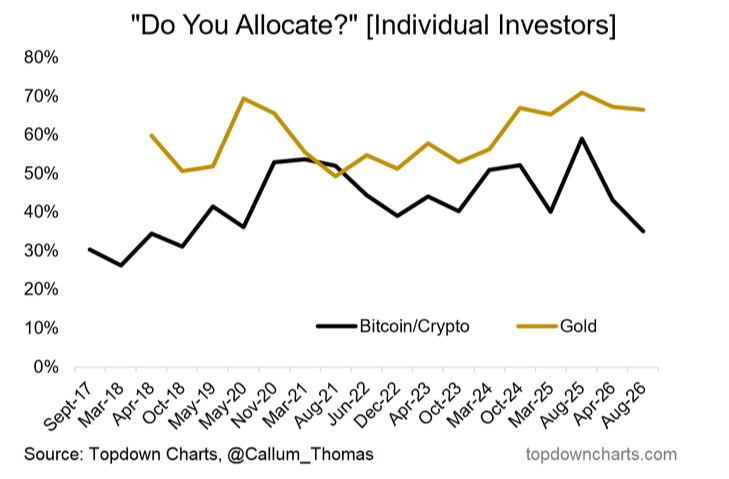
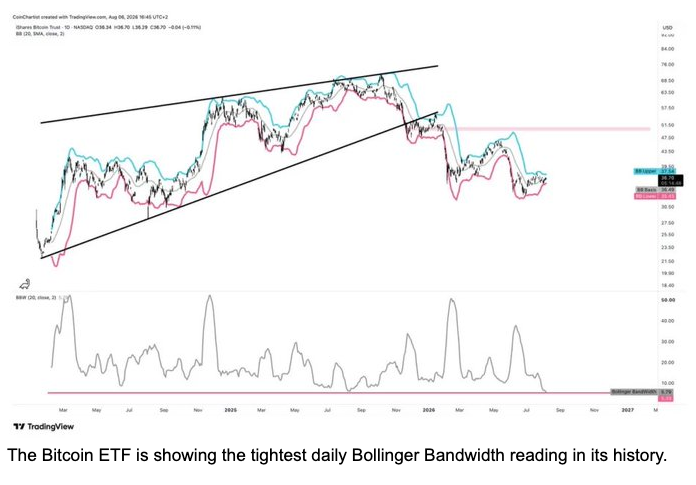
- Crypto: Crypto sat out of the spotlight even as risk appetite improved, with surveys showing investors still favouring gold. The set-up is coiled, with the Bitcoin ETF showing the tightest daily Bollinger Bandwidth reading in its history, pointing to a big move ahead with direction unknown.
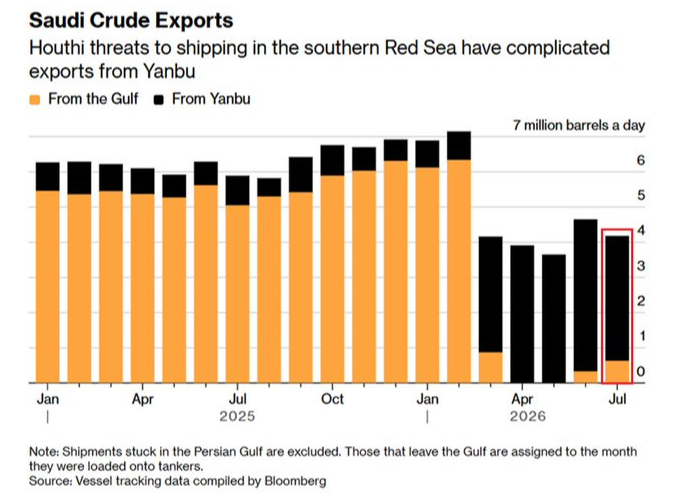
- Oil: Oil stayed heavy despite a Friday bounce, with WTI down more than 9% on the week, its largest decline in six weeks, as traders watched for a US-Iran deal to reopen the Strait of Hormuz. Supply stayed complicated, with Houthi threats disrupting Saudi crude flows from Yanbu, though oil's volatility gauge remains well below prior spikes.
The Week Ahead: Key Data and Market-Moving Signals
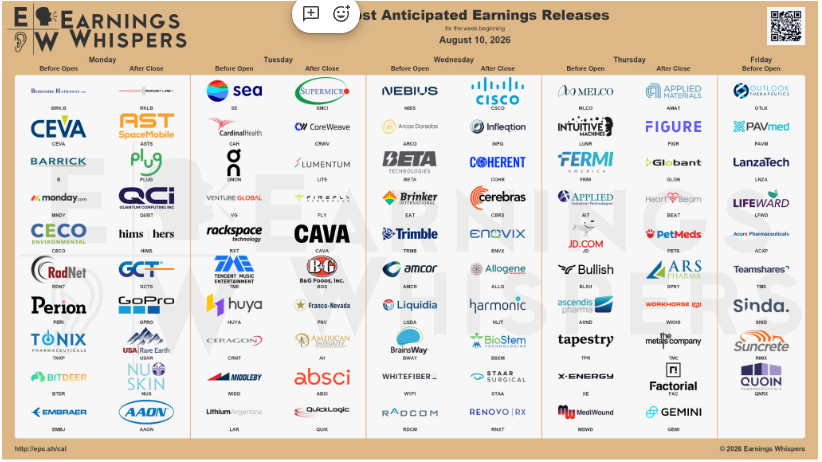
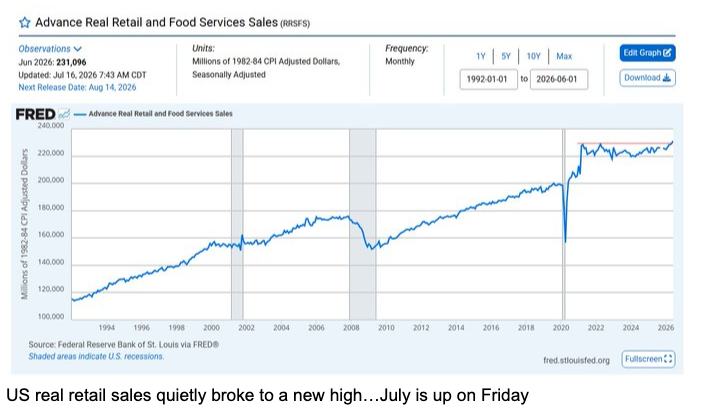
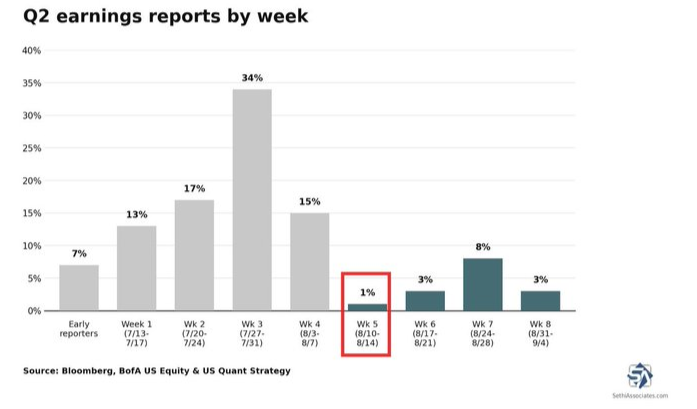
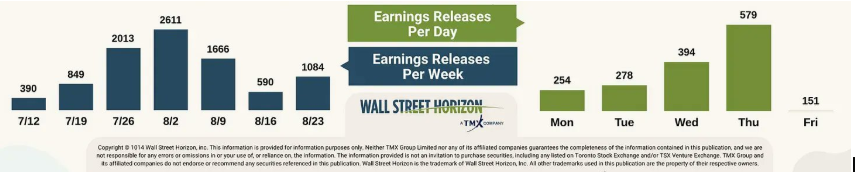
This is a high-voltage earnings week where AI infrastructure, space, chips and consumer names all collide, with the market split between genuine momentum stories and hype stocks now being stress-tested. US data lightens up, but two top-tier reports headline in July CPI on Wednesday and retail sales on Friday, with just 1% of the SPX reporting by weight yet over 1,600 companies in total, and CSCO and AMAT the only names above $100bn.
Monday, August 10
- Singapore: National Day Holiday
- South Africa: Women's Day Holiday
- Japan: Current Account
- Japan: BoJ Summary of Opinions
- Japan: Economy Watchers Current Index
- Eurozone: Sentix Investor Confidence
- Germany: Buba Monthly Report
- US: CB Employment Trends Index
- US: 3-Month & 6-Month Bill Auctions
Tuesday, August 11
- Japan: Mountain Day Holiday
- Australia: RBA Interest Rate Decision
- Australia: RBA Monetary Policy Statement
- Australia: NAB Business Confidence
- UK: BRC Retail Sales Monitor
- South Africa: Unemployment Rate (Q2)
- Brazil: CPI
- US: NFIB Small Business Optimism
- US: ADP Employment Change (Weekly)
- US: Existing Home Sales
- US: EIA Short-Term Energy Outlook
- US: 3-Year Note Auction
- US: API Weekly Crude Oil Stock
Wednesday, August 12
- Korea: Unemployment Rate
- Japan: M2 & M3 Money Supply
- Singapore: GDP (QoQ)
- Germany: German CPI
- Italy: Italian CPI
- India: CPI
- US: CPI
- US: Core CPI
- US: Cleveland CPI
- US: IEA Monthly Report
- US: OPEC Monthly Report
- US: WASDE Report
- Russia: CPI
- US: Crude Oil Inventories
- US: 10-Year Note Auction
- US: Federal Budget Balance
Thursday, August 13
- UK: RICS House Price Balance
- Japan: PPI
- Japan: Machine Tool Orders
- UK: GDP (Q2)
- UK: Industrial & Manufacturing Production
- Switzerland: PPI
- Spain: Spanish CPI
- China: New Loans
- China: M2 Money Stock
- China: Total Social Financing
- Eurozone: Industrial Production
- US: PPI
- US: Core PPI
- US: Initial Jobless Claims
- US: Fed's Barkin Speaks
- US: 30-Year Bond Auction
- New Zealand: Business NZ PMI
Friday, August 14
- Australia: RBA Gov Bullock Speaks
- India: WPI Inflation
- France: French CPI
- Switzerland: GDP (Q2)
- Hong Kong: GDP (Q2)
- Eurozone: GDP (Q2)
- Eurozone: Employment Change
- US: Michigan Consumer Sentiment
- US: Michigan 1-Year & 5-Year Inflation Expectations
- US: Atlanta Fed GDPNow (Q3)
- US: Baker Hughes Rig Counts
- US: CFTC Speculative Net Positions
- Canada: Manufacturing & Wholesale Sales
Alpha Takeaway: The Bull Rages On, but Mind the Crowding
Softer jobs data took away some of the bond-yield angst, and earnings continued to be stellar, now justifying long equity positioning, so with supportive-benign macro, the path of least resistance is likely higher, even as sentiment edges toward stretched.
- Equities: The fundamentals tell you the market wants to be long here. It is a global uptrend with earnings beating raised expectations significantly, and some banks are starting to believe hyperscaler capex is rational and not forever, with free cash flow expected back in 2028. The bear case is peak earnings at the end of 2026, but on current revision momentum, the only way looks up.
- Gold & Silver: Gold shrugged off the yield story for its best week since January, backed by relentless Chinese physical buying, and has started testing its 50-day again. The structural central-bank bid and a $5,000 medium-term call keep the tilt constructive, with weakness toward $4,000 framed as an opportunity.
- Crypto: Crypto remains out of vogue, with investors still favouring gold, but the Bitcoin ETF's record-tight volatility bands mean a breakout is coming, hopefully to the upside. Until it resolves, the coiled range keeps it lower-conviction than equities.
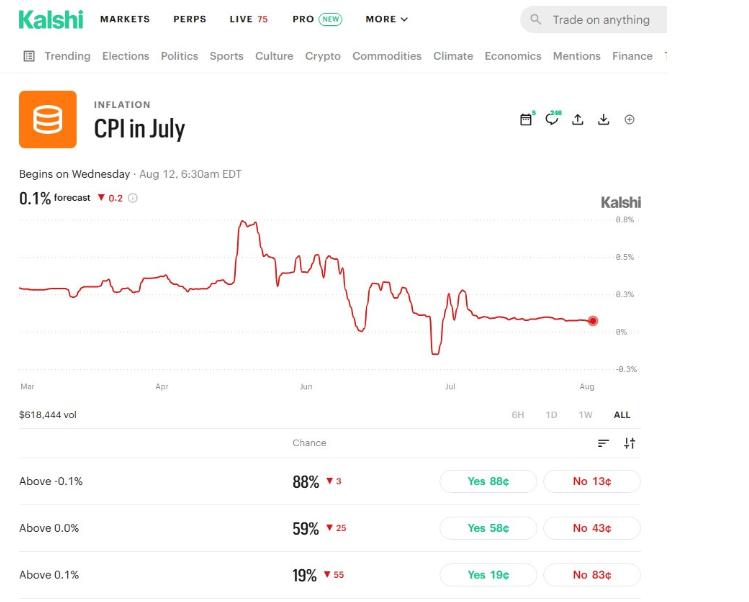
- Macro: Oil is stuck in its range with volatility subdued, the dollar is soft after the yen intervention, and breakevens still trust the Fed even as real yields globally stay elevated. China's continued deflation may yet check that, with July CPI on Wednesday the near-term swing factor and a low print not out of the running.
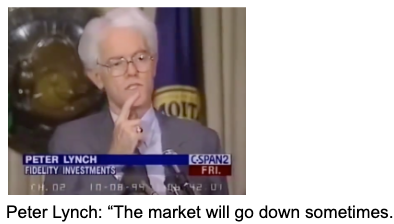
After a big jump back, it is not surprising to see hedge funds just fade a little, and as Peter Lynch reminds us, pullbacks are meant to be a good thing if you are ready for them. Start allowing for thinner markets over August, where less capital tends to mean wider ranges, and resist going all-in too early….Trade carefully, but don't fight a tape this broad.
CTA: https://docs.google.com/document/d/1pUkzCv4uuTtgdIwmQADodmVISBU3K2ntCVirJc9N90s/edit?usp=sharing


