


The AI Trade Faces Its First Real Test, Rotation and Geopolitics Set the Tone
Markets enter a pivotal week with investors questioning the durability of the AI infrastructure trade for the first time this cycle. A surprise breakthrough from a Chinese AI startup, softer inflation data and a renewed breakdown in the US and Iran ceasefire all have the potential to reshape leadership, reset positioning and determine how markets balance strong earnings against stretched valuations.
Despite a sharp sell-off in semiconductors and renewed geopolitical tensions, risk appetite has held up better than feared, with the equal-weight S&P 500 closing at a record high even as the Nasdaq 100 fell. However, leadership has narrowed sharply toward AI infrastructure and energy beneficiaries, positioning remains stretched, and volatility signals are becoming more fragile beneath the surface. With several major catalysts arriving together, markets enter the week testing whether AI valuations, bond yields and geopolitical inflation risk can all coexist without a larger volatility event.
Market Overview: Rotation Takes Centre Stage
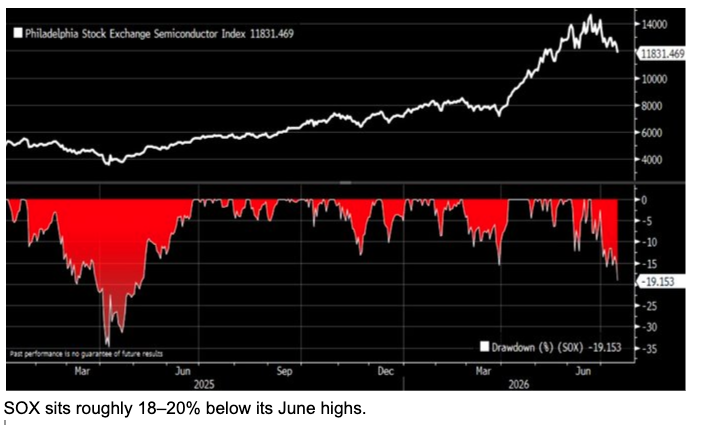
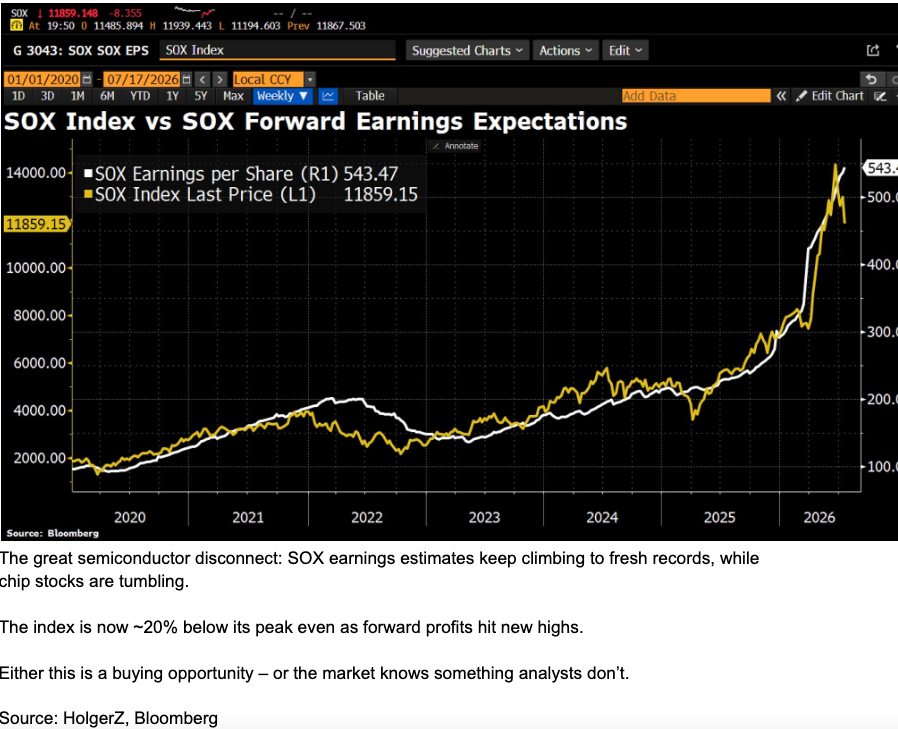
US equities sold off on the week, led lower by chips. The S&P 500 fell 1.6%, the Nasdaq 2.9% and the Dow 0.9%, while the VanEck Semiconductor ETF dropped almost 9%, its third weekly decline in four weeks, leaving the SOX roughly 18 to 20% below its June highs. The report notes that the damage was heavily concentrated in Tech rather than spread broadly across the market.
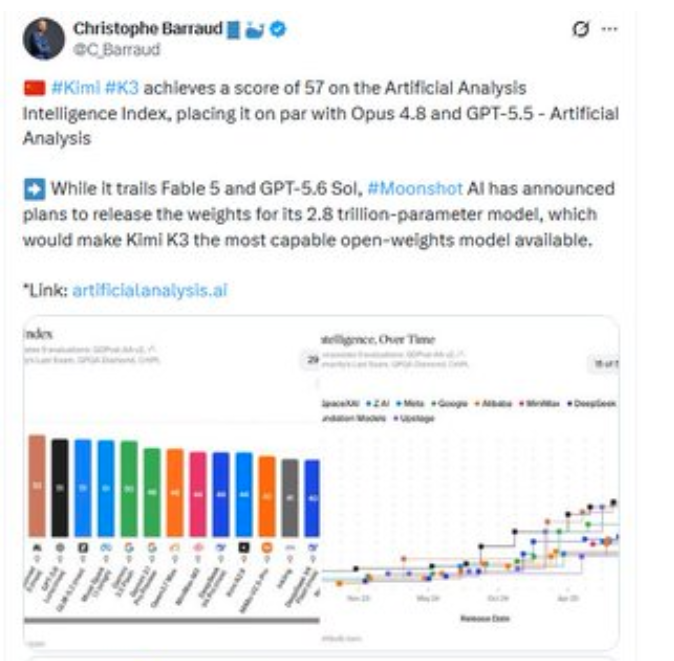
The trigger was a Chinese AI shock. The report highlights a surprise breakthrough from Beijing-based startup Moonshot AI, whose Kimi K3 model, a 2.8-trillion-parameter open-weight model, reached the top of the Arena coding benchmark, surpassing Claude Fable 5 and trailing only a small handful of leading US models. The concern is that open-source Chinese models could compress future compute economics, placing direct pressure on the AI-capex beneficiaries.
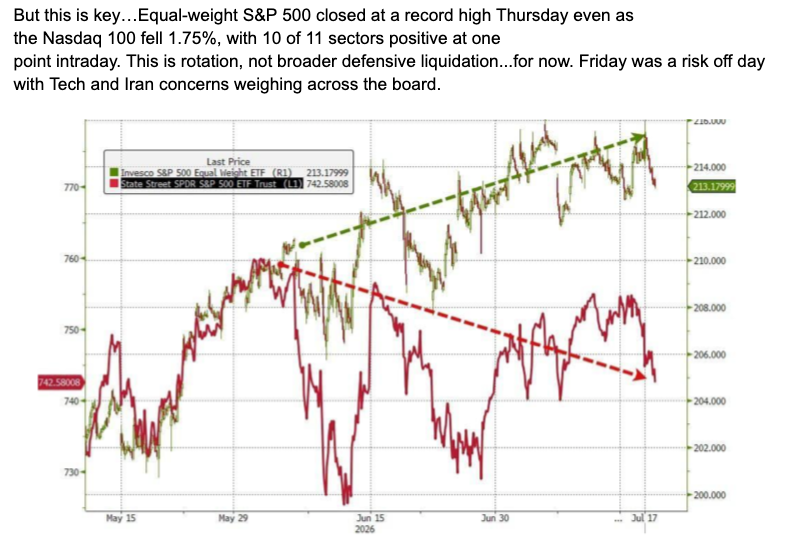
The internals, however, argue against panic. The report suggests this is a rotation rather than broader defensive liquidation, with the equal-weight S&P 500 rising 1% on Thursday to a new all-time closing high even as the Nasdaq 100 fell 1.75%. Everything that has worked year-to-date is now going the wrong way, while value is up and only those still positioned in Tech are feeling the pain.
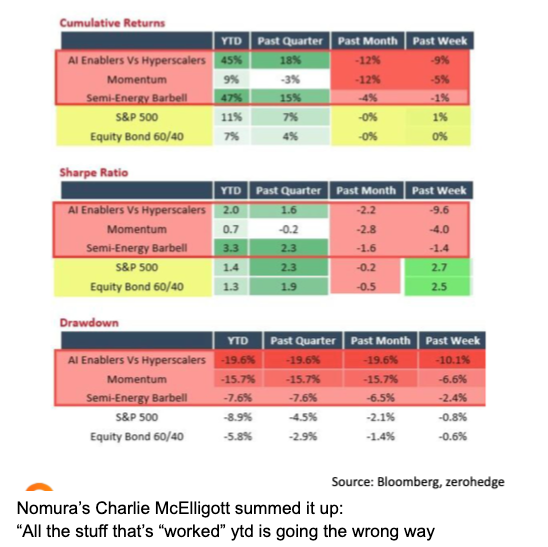
The important split sits within technology itself. The report notes that platform and distribution winners still found support, with Apple addressing its issues head-on and passing NVDA this week to become the most valuable company, while semiconductors and AI-capex names de-rated. A clear theme of buying hyperscalers versus selling semis is emerging through July.

Macro & Policy Watch: Inflation Cools as Geopolitics Returns to the Spotlight
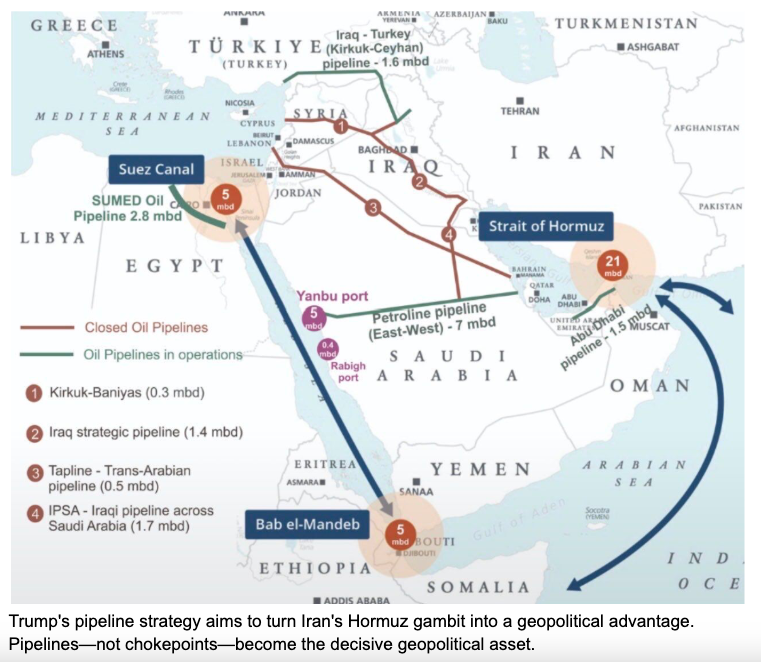
Geopolitics was the dominant macro overlay this week. The report notes that the US and Iran ceasefire effectively broke down, pushing the market back into a Hormuz-risk framework, with crude spiking, inflation breakevens firming, and bond yields rising. The equity market's ability to absorb the shock was notable, but leadership narrowed sharply toward AI infrastructure and energy beneficiaries.

Running beneath the headlines is a longer-term energy strategy. The report describes a plan to back alternative export routes through Iraq, Turkey and Syria to reduce Iran's leverage, with the broader target being China's energy security. The underlying thesis is that future energy dominance will depend less on controlling oil fields than on controlling the infrastructure that moves them, with pipelines rather than chokepoints becoming the decisive geopolitical asset.
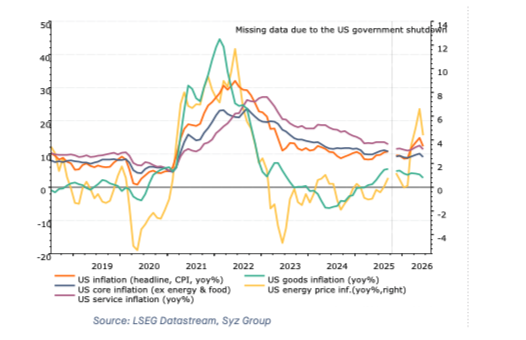
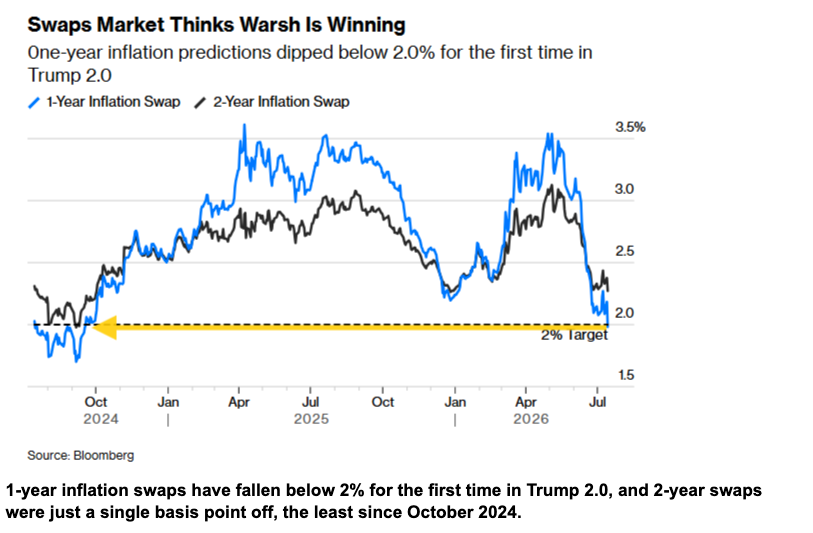
The inflation data leaned friendly. Headline consumer prices fell 0.4% month-on-month, the largest decline since April 2020, reducing annual inflation from 4.2% to 3.5%, driven mainly by energy. Core CPI was unchanged on the month and eased to 2.6% year-on-year from 2.9%, with the report noting that the softness was broad-based across motor-vehicle insurance, communication, apparel and shelter.
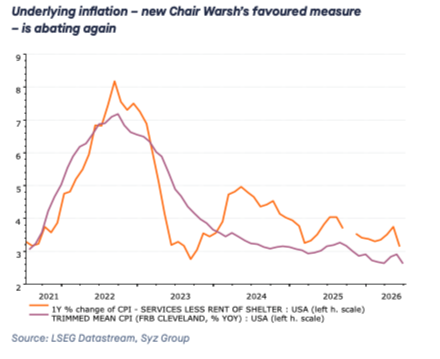
The report suggests that new Chair Warsh's favoured underlying measure is turning down again, which may embolden him at the next meeting to try and soften the committee's hawkish tendencies.
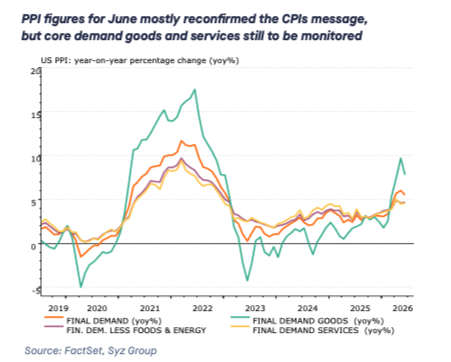
PPI reinforced the same message but with a caveat. Headline PPI fell 0.3% month-on-month in June, below expectations, with the decline concentrated in final-demand goods. Even so, annual producer inflation remained elevated, with headline PPI at 5.5% year-on-year and the core measure at 5.1%. The report argues that pipeline pressure has eased rather than disappeared, and that renewed Middle East fighting likely keeps the longer-term inflation debate alive.
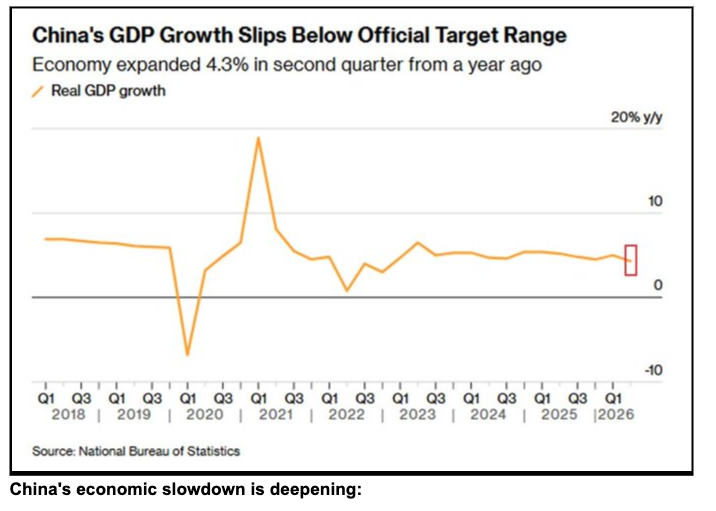
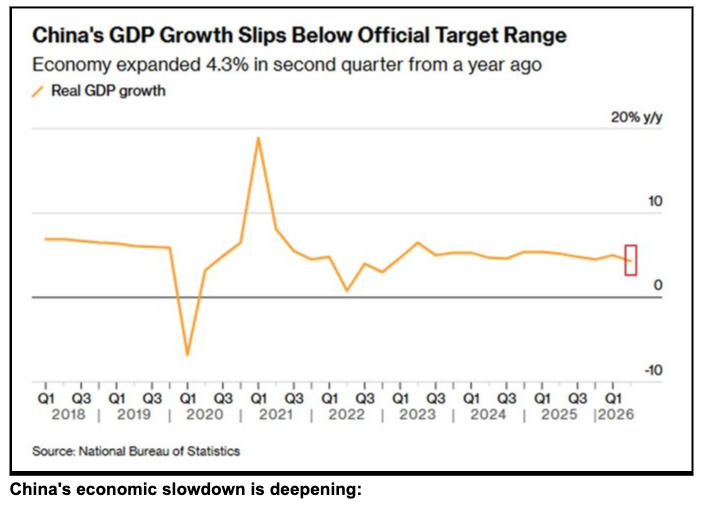
China remains the global disinflation offset. The report highlights that GDP grew just 4.3% year-on-year in Q2 2026, the slowest pace since Q4 2022 and below the official target range of 4.5% to 5.0%, with property investment plunging 18%, the largest drop on record dating back to 1992. Weak domestic demand and export deflation should help cap Western core goods inflation, and the report suggests that without AI, China would be facing a hard-landing type economy.
Technical & Sentiment Breakdown: Supportive, but Increasingly Fragile
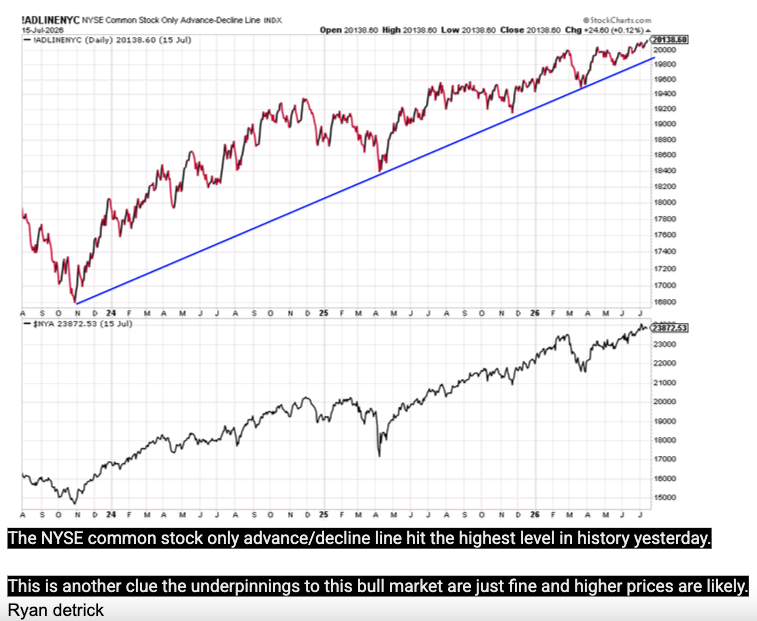
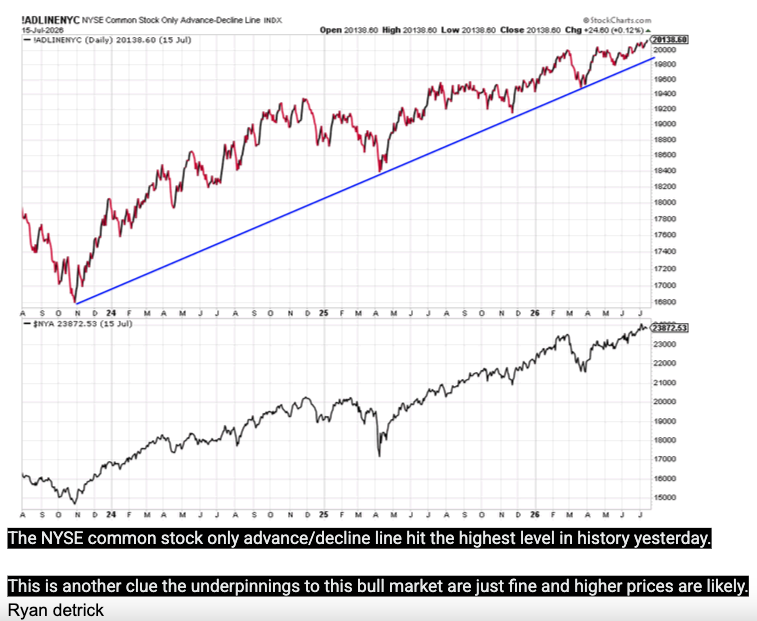
The structural backdrop still leans constructive, although momentum is clearly slowing. The report highlights that the NYSE common-stock-only advance/decline line hit the highest level in its history, viewed as a clue that the underpinnings of this bull market remain intact and that higher prices are possible. The equal-weight S&P 500 printing a new closing high reinforces the view that breadth was not as narrow as feared.
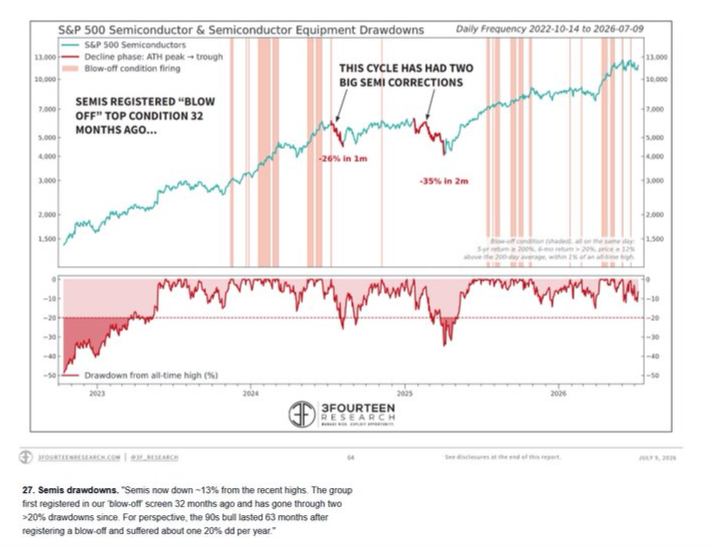
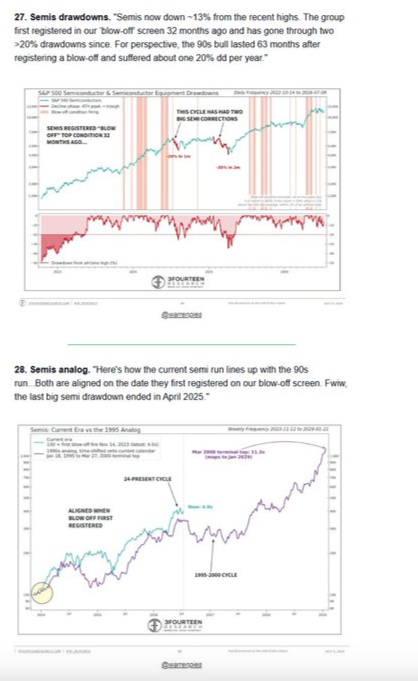
The momentum picture is where the stress shows. The report notes that semis are now down around 13% from recent highs, and that the group, which first registered in the blow-off screen 32 months ago, has already been through two drawdowns of more than 20% since.
For perspective, the 1990s bull lasted 63 months after registering a blow-off and suffered roughly one 20% drawdown per year, an analogue the report frames as more of an opportunity to buy the dip than a signal the cycle is over.
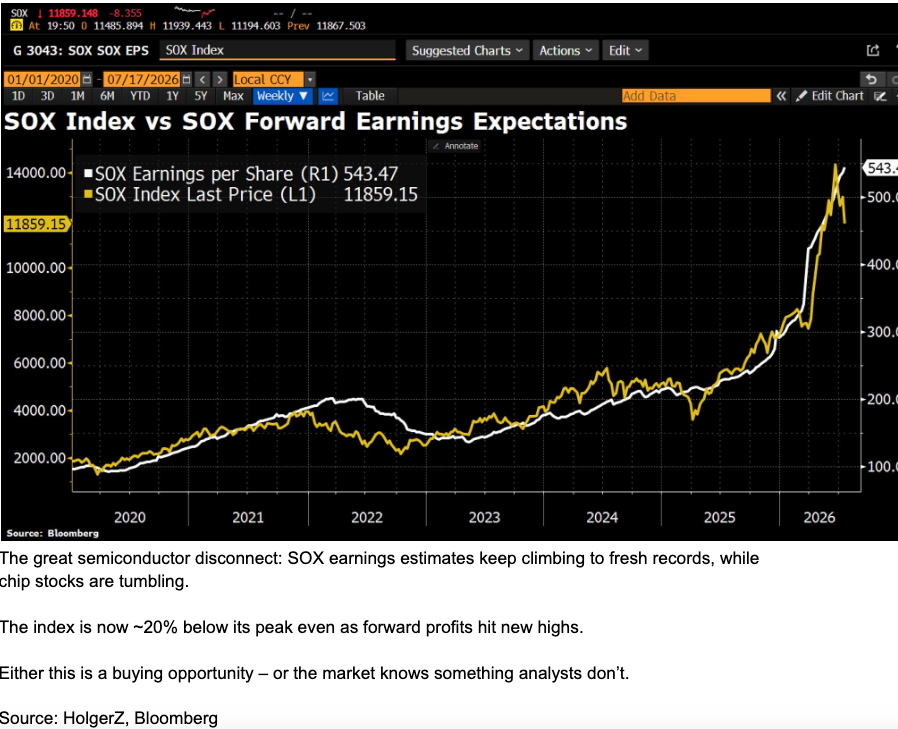
The great semiconductor disconnect sits at the heart of the debate. The report highlights that SOX forward earnings estimates keep climbing to fresh records even as chip stocks tumble, leaving the index roughly 20% below its peak while forward profits hit new highs. The report frames the choice starkly, as either this is a buying opportunity, or the market knows something analysts do not.
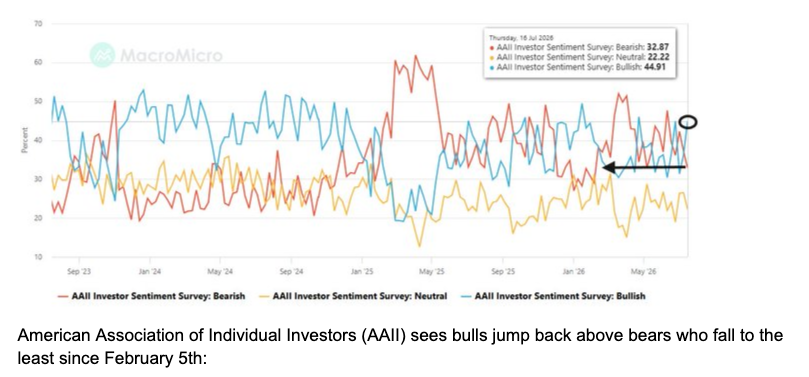
Sentiment has swung back toward optimism. The report notes that AAII bulls jumped to 44.91% from 36.3%, moving back above bears for only the second time in eight weeks, while the NAAIM managers' exposure index rose to 95.64%, more bullish though not quite at extreme levels. This leaves less of a cushion if earnings or macro data disappoint.
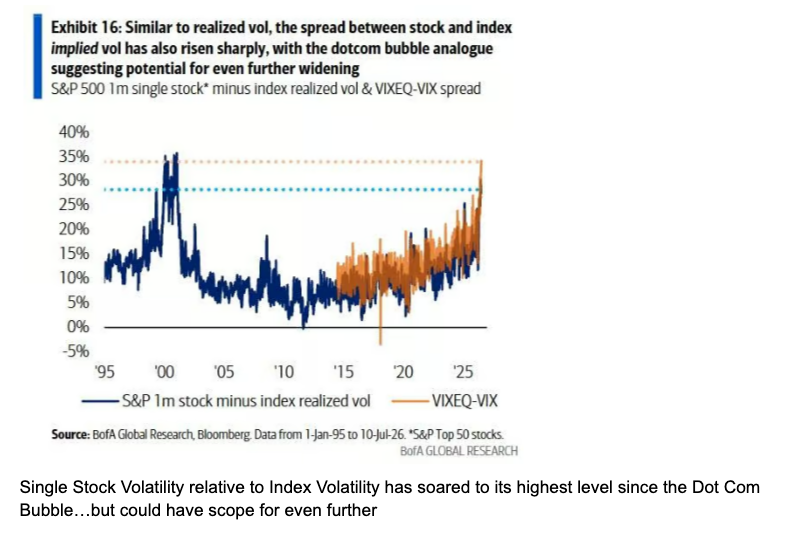
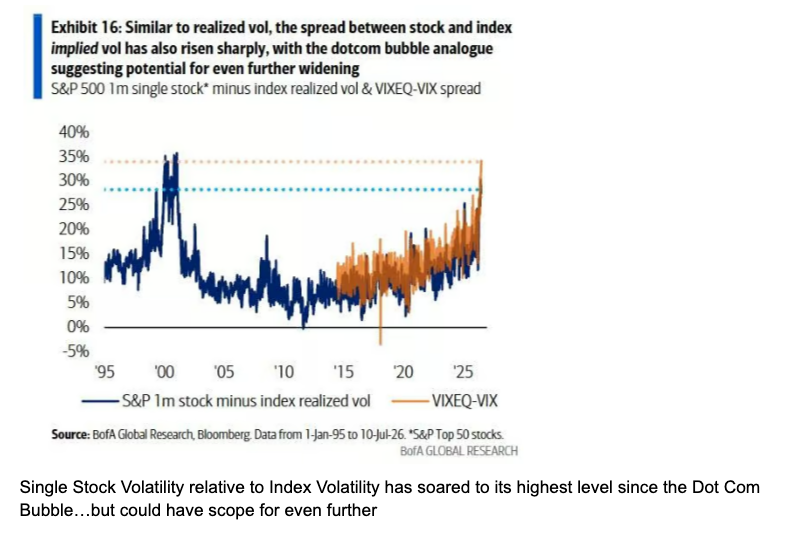
Volatility remains the key tell. The report highlights that the spread between single-stock implied volatility and index implied volatility reached a record high while implied correlations stay near record lows. Rather than hedging broad market beta, investors are hedging specific sectors, factors and single names, particularly in the momentum complex. This remains a market defined by stock selection rather than broad macro risk, though single-stock volatility relative to index volatility has now soared to its highest level since the Dot Com Bubble.
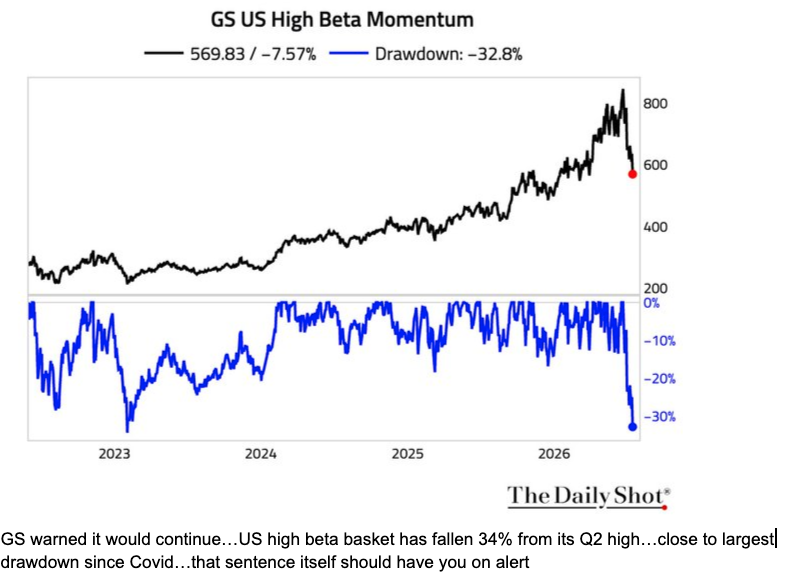
The warning signs are also accumulating. The report notes that a record 16 Hindenburg Omens have triggered for Nasdaq stocks in the past two months, while the GS US high-beta basket has fallen 34% from its Q2 high, close to its largest drawdown since Covid. The report views this as a signal that should keep investors alert even as the broader trend holds.
Last Week's Recap: Rotation Runs Hard as the AI Narrative Cracks
The past week exposed how fragile the tech narrative had become, while confirming that risk appetite ran broader than the mega-cap complex alone. Strong bank earnings and resilient breadth pulled against a semiconductor de-rating and renewed geopolitical inflation risk, leaving a two-sided tape into Friday's risk-off close.
Key Highlights:
Macro:
A softer CPI print argued for disinflation, with headline prices posting their largest monthly decline since April 2020 and core easing to 2.6% year-on-year. The report notes that renewed Iran fighting, higher oil and the coming FOMC debate kept the 10-year yield biased higher, with the Fed now in blackout and offering little to calm or challenge market pricing.
China:
China's slowdown deepened, with Q2 GDP at 4.3% year-on-year and property investment down a record 18%. The report highlights that weakness is spreading across the world's second-largest economy, reinforcing its role as a global disinflationary force as it keeps exporting its way out of trouble.
Earnings:
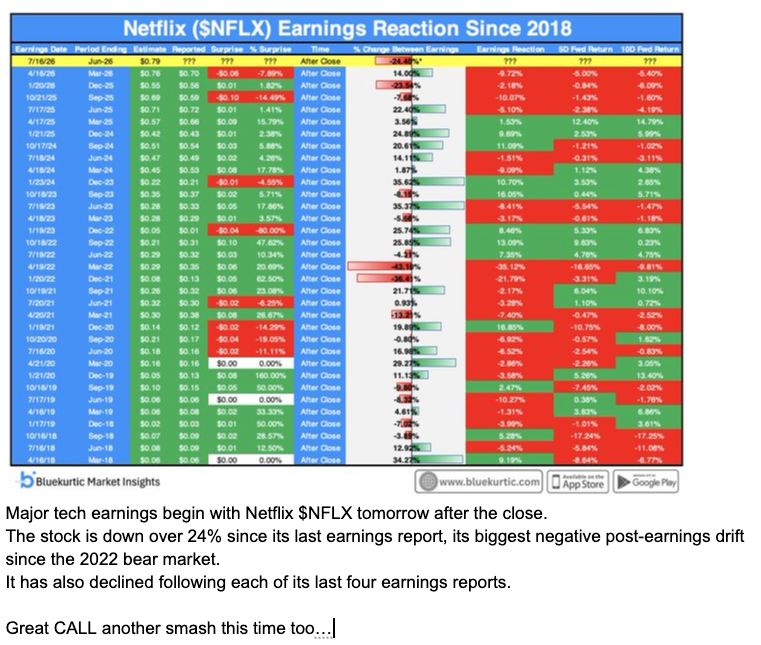
Q2 reporting delivered punishment beatings, with the report noting that in-line results or a miss were sold hard. ASML and TSMC both delivered strong AI-linked updates, but the bar had become so high that both faded, with TSMC's ADR falling around 4% to 5% on valuation and capex concerns. Netflix fell sharply after Q3 guidance missed, proving that at stretched valuations merely fine results plus softer guidance were enough to trigger a de-rating.
Commodities:
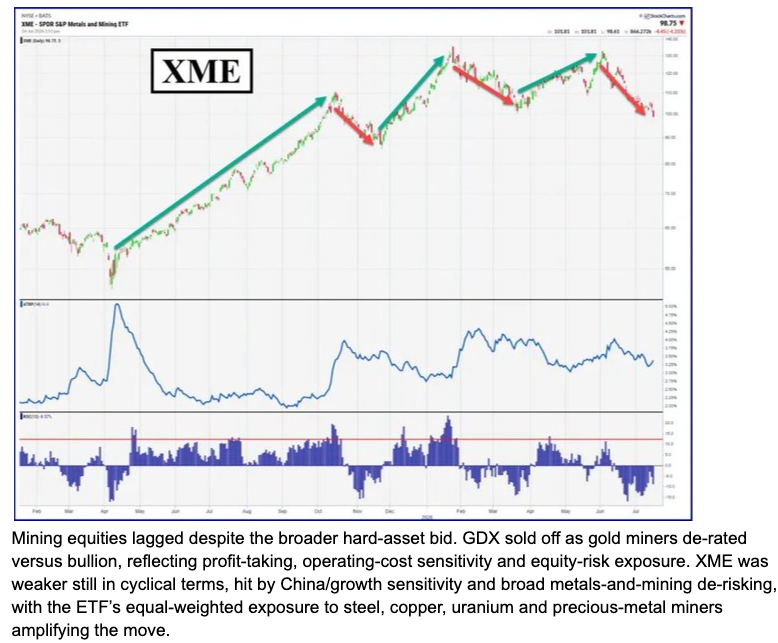
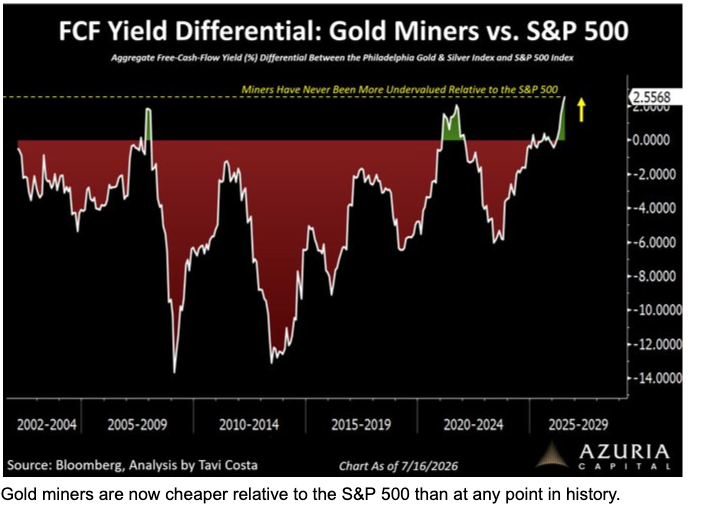
Metals and mining stocks reflected the weak Chinese data and sold off markedly, with XME hit hardest by China and growth sensitivity. Gold struggled to hold the $4,000 area as yields rose on Iran risk, with the report noting that GS suggested buying the dip and that miners are now cheaper relative to the S&P 500 than at any point in history.
Oil:
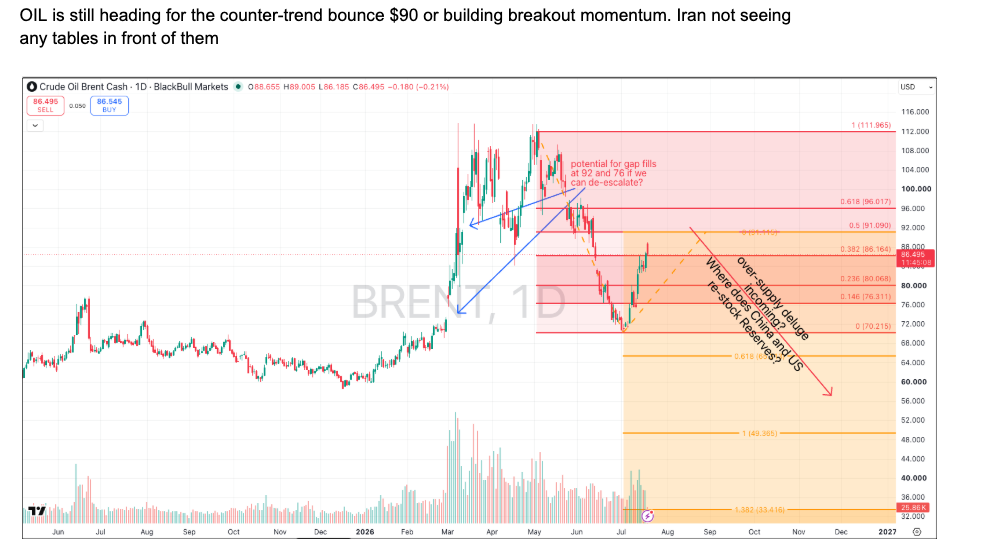
Oil remained driven by geopolitical developments. The report suggests it is heading for either a counter-trend bounce toward $90 or building breakout momentum, with Iran seeing no tables to negotiate at. Price has already taken out the 38.2 fib with the 50 fib retracement close by, a classic counter-trend rally zone.
The Week Ahead: Key Data and Market-Moving Signals
The week looks event-heavy and sentiment-sensitive, moving from last week's earnings-are-good but tech-positioning-is-fragile setup into a stretch dominated by mega-cap tech earnings, the ECB, European and UK PMIs, and UK inflation, labour and retail data. The report frames the key question as whether upcoming results can broaden confidence beyond banks and selected mega-cap platforms, or whether strong numbers again get sold because positioning and valuations are stretched.
Monday, July 20
- UK: Rightmove House Price Index
- China: Loan Prime Rate 5Y
- China: PBoC Loan Prime Rate
- Germany: PPI
- Eurozone: Construction Output
- Canada: CPI & Core CPI
- US: Leading Index
- New Zealand: CPI
Tuesday, July 21
- UK: Unemployment Rate
- UK: Average Earnings Index
- UK: Claimant Count Change
- Switzerland: Trade Balance
- Eurozone: ECB Bank Lending Survey
- Germany: ZEW Economic Sentiment
- US: ADP Employment Change
- US: API Weekly Crude Oil Stock
- Korea: PPI
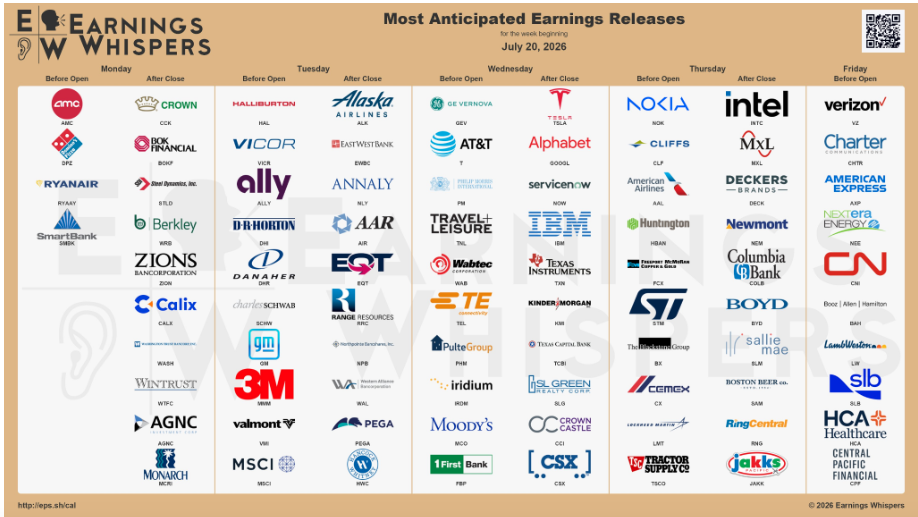
- Earnings: 3M, General Motors, Lockheed Martin, Novartis
Wednesday, July 22
- Japan: Trade Balance, Exports & Imports
- UK: CPI & Core CPI
- UK: PPI & RPI
- South Africa: CPI
- US: MBA Mortgage Applications
- US: 20-Year Bond Auction
- Russia: Industrial Production & PPI
- Earnings: Alphabet, Tesla, IBM, Texas Instruments, ServiceNow
Thursday, July 23
- Korea: GDP
- Australia: Unemployment Rate & Employment Change
- UK: CBI Industrial Trends Orders
- Eurozone: ECB Interest Rate Decision & Press Conference
- US: Initial Jobless Claims
- US: Continuing Jobless Claims
- US: Chicago Fed National Activity
- Canada: Retail Sales
- South Africa: Interest Rate Decision
- Eurozone: Consumer Confidence
- US: 10-Year TIPS Auction
- Earnings: Intel, Roche, Nestlé, SAP
Friday, July 24
- Australia: Flash PMIs
- UK: GfK Consumer Confidence
- Japan: National Core CPI
- Japan: Flash PMIs
- India: HSBC Flash PMIs
- UK: Retail Sales
- Germany: Flash PMIs
- France: Flash PMIs
- Eurozone: Flash PMIs
- UK: Flash PMIs
- Russia: Interest Rate Decision
- US: Building Permits
- Earnings: American Express, Verizon
Alpha Takeaway: Fundamentals Now Need to Broaden
Markets enter the week with underlying strength, but the focus is shifting. While resilient breadth and strong bank earnings continue to support equities, the report suggests the next stage depends on whether upcoming mega-cap results can justify stretched valuations, or whether strong numbers are again sold on positioning.
Equities:
The broader trend remains constructive despite narrower leadership. The report argues that if a tech crash from Chinese competition does not materialise, this is a healthy rotation beneath the surface rather than a liquidity sell-off, though semis and AI-capex names stay under pressure until Alphabet, Tesla, Texas Instruments and Intel validate AI demand without increasing capex anxiety.
Gold & Silver:
Gold is struggling to hold the $4,000 area as yields rise again on Iran risk. The report notes that physical demand may remain structurally supported, but leveraged paper demand is being deliberately curtailed by Beijing, leaving the key question of whether a physical demand surge from Chinese investors can kick-start price action.
Macro:
Inflation, Federal Reserve policy and geopolitics remain closely connected. Softer CPI argued for disinflation, but the report notes that renewed Iran fighting, higher oil and the July FOMC keep the 10-year yield biased higher, with the Fed in blackout offering nothing to settle the debate.
As markets move into one of the busiest weeks of the quarter, the balance between good earnings and a more uncertain macro backdrop will become increasingly important. The report frames the durable takeaway as nuanced, with earnings still good and breadth holding up better than feared, but the market now defined by stock selection rather than broad macro exposure.
CTA: https://docs.google.com/document/d/1z69ngr_OWY_ZS46oJLceywSbxxH6FvIukyPqoXAF3eg/edit?tab=t.0


