


संक्षेप में: एक तरलता स्वीप तब होता है जब कीमत एक स्पष्ट उच्च या निम्न पर जाती है, वहां मौजूद स्टॉप लॉस को छू जाती है, फिर नकारता है और वापस आता है। हमारा Alpha Capital आपके लिए इंतजार करने वाले मूल्यांकन और अस्वीकृति। एक ऐसा विक जो लगातार बढ़ता रहता है, अक्सर एक संरचना का टूटना, एक स्वीप नहीं। यदि रियल स्वीप के बाद स्टॉप अभी भी शेष दैनिक नुकसान के लिए बहुत चौड़ा है, तो आप पास हो जाते हैं। हम यह पसंद करेंगे कि आप लंदन को मिस कर दें बजाय इसके कि आप दिन को "यह एक स्टॉप हंट था" दे दें।
संक्षिप्त परिभाषा: लीक्विडिटी स्वीप क्या है?यह पेज लम्बी योजना है।
सामान्य शिक्षा, सिग्नल नहीं, व्यक्तिगत वित्तीय सलाह नहीं। हमारे मूल्यांकन और योग्य खाते उपयोग प्रतिनिधित्वित निधिप्रतिरूपित परिणाम वास्तविक व्यापार परिणामों को दर्शाते नहीं हैं। प्रदर्शन शुल्क प्रदर्शन-आधारित होते हैं। कुछ भी गारंटी नहीं है।
हम Sweep, ICT, या किसी ब्रांडेड प्लेबुक की आवश्यकता नहीं रखते हैं। आप एक सत्र सीमा और एक कठोर 1% नियम के साथ पास कर सकते हैं। यह उन व्यापारियों के लिए है जो पहले से ही समान उच्चों का शिकार करते हैं और एशिया के नीचे हर डिप पर खरीदते रहते हैं।
भी ट्रेडिंग मूल्यांकन क्या है? · प्रतिनिधित्वित निधि क्या हैं?
आप वास्तव में क्या चिह्नित कर रहे हैं
स्टॉप्स उबाऊ जगहों पर जमा हो जाते हैं:
- समान निम्न / स्पष्ट समर्थन
- ऊपर समान उच्च / स्पष्ट प्रतिरोध
- एशियाई सीमा से परे
- पिछले दिन के उच्च या निम्न से परे
- एक साफ डबल टॉप या डबल बॉटम जो हर कोई आसानी से देख सकता है
दाम उस स्तर से गुजर सकता है, उन ऑर्डर को पूरा कर सकता है, फिर उलट सकता है। लोगों इसे स्वीप या स्टॉप हंट कहते हैं।
यहाँ रोमांटिक नहीं है। चार्ट साबित नहीं कर सकता उद्देश्ययह यह साबित नहीं कर सकता कि बैंक ने ऐसा किया। यह दिखा सकता है: स्तर लिया गया, फिर अस्वीकार कर दिया गया। आपका काम यह परिभाषित करना है ले लिया गया और अस्वीकृत तो दो लोग एक ही चार्ट को एक ही तरह से चिह्नित करते हैं।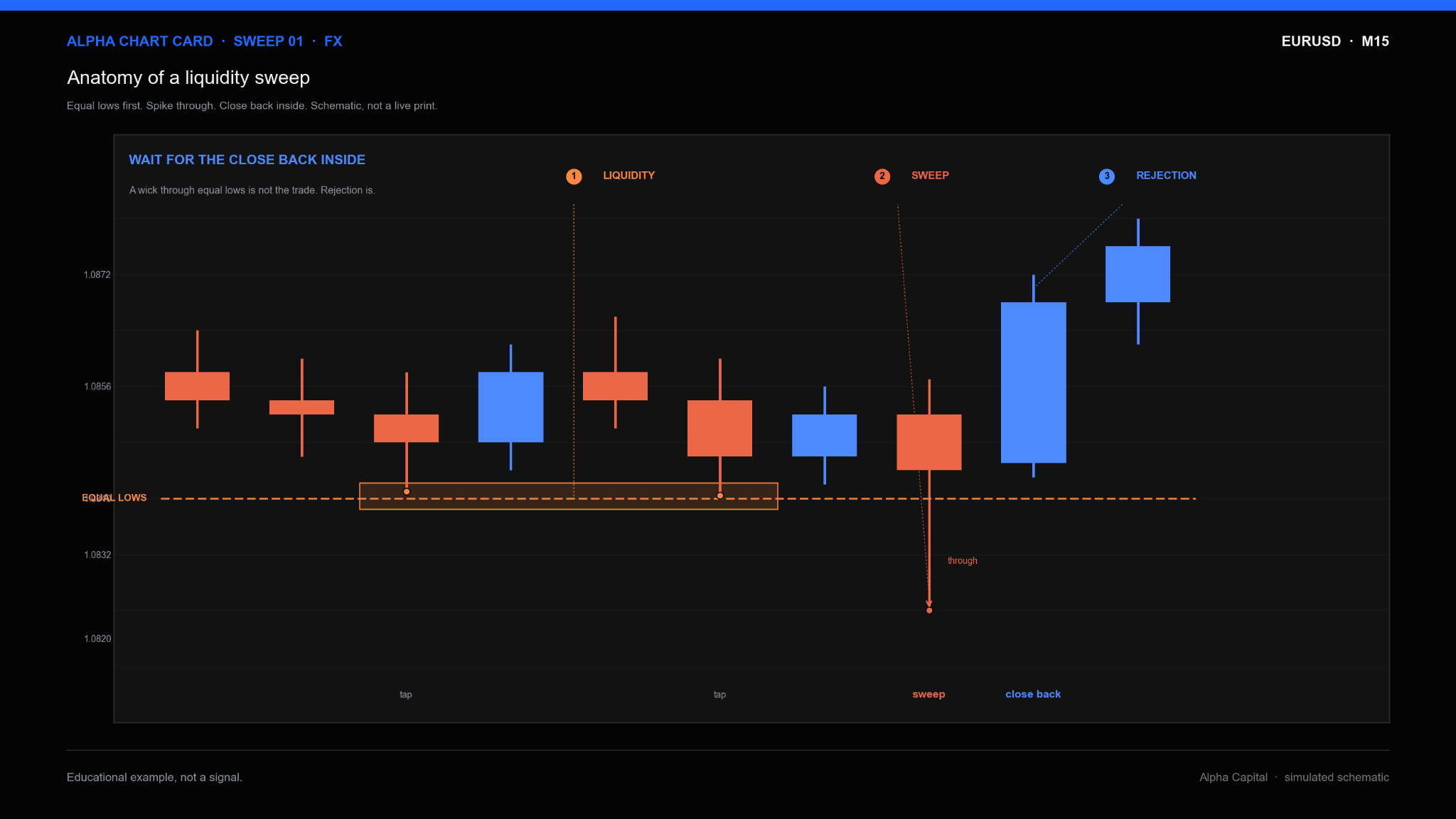
स्ट्रक्चर का स्वीप बनाम ब्रेक (यह पूरा खेल है)
यदि आप इस पृष्ठ से केवल एक तालिका याद रखते हैं, तो इस तालिका को याद रखें।
क्या छपा | यह कैसा दिखता है | हम इसे कैसे पढ़ेंगे |
|---|---|---|
स्वीप | विक या संक्षिप्त व्यापार स्तर से परे, फिर अंदर वापस बंद होना | संभावित जाल, फिर उलटफेर |
BOS | बॉडी क्लोज़ लेवल से परे जो पकड़ता है | समापन नहीं, जाल नहीं |
यदि आप समान निचले स्तरों के नीचे हर गिरावट को खरीदते हैं, जिसमें कोई वापसी नहीं होती है, तो आप ब्रेकआउट को कमजोर कर रहे हैं और इसे स्मार्ट मनी कह रहे हैं। यह एक रणनीति हो सकती है। यह हमारी रणनीति नहीं है। लिखें कि आप किसको परीक्षण कर रहे हैं।
पूर्ण BOS स्पष्टीकरण: स्ट्रक्चर ब्रेक (BOS) क्या है?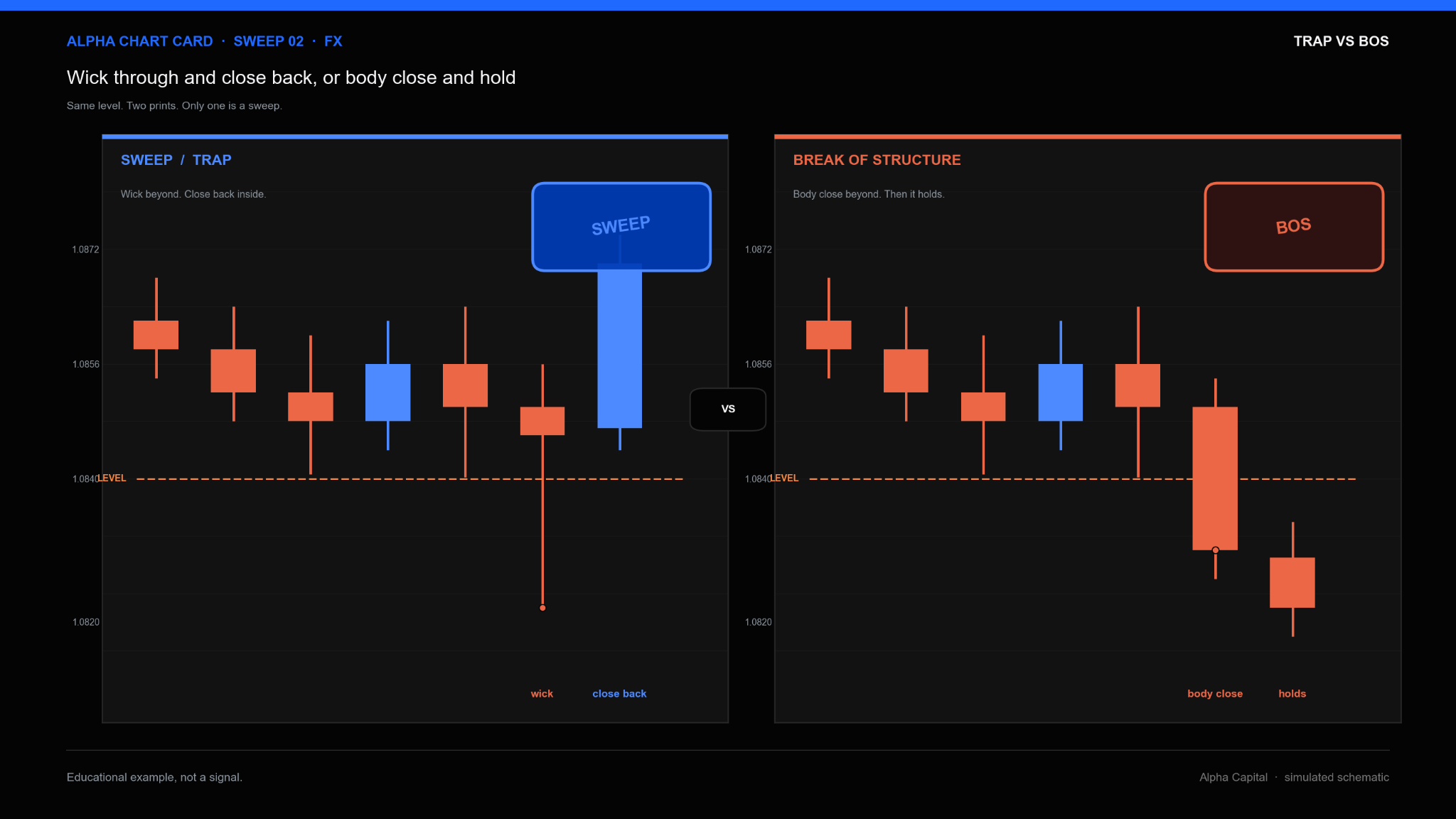
सत्र से पहले तरलता चिह्नित करें, स्पाइक के बाद नहीं
यदि आप केवल तभी स्तर खींचते हैं जब कीमत पहले से ही उससे गुजर चुकी हो, तो आपको हर मोमबत्ती में एक स्वीप मिलेगा। यह पिछली घटना का विश्लेषण है।
लंदन से पहले (या आप जो सत्र ट्रेड करते हैं उससे पहले)
- कल का उच्च और निम्न
- एशिया उच्च और निम्न यदि आप उस सीमा का उपयोग करते हैं
- स्पष्ट रूप से दिखाई देने वाले H1 या M15 पर समान उच्च / समान निम्न
- अगर आपने पिछले हफ्ते पहले ही इन संख्याओं का इस्तेमाल किया है, तो केवल उनका उपयोग करें, यह इसलिए नहीं कि यह 1.1000 है और यह खास लगता है।
फिर उन्हें अकेला छोड़ दें। दाम उस स्तर पर आने दें जिस पर आपकी पहले ही रुचि थी।
एक योजना जिसे आप जर्नल में डाल सकते हैं
सत्र फ़िल्टर
एक सामान्य FX संस्करण: लंदन (या लंदन/NY ओवरलैप) के लिए प्रतीक्षा करें ताकि एशियाई चरम को पकड़ा जा सके।
यह जादू नहीं है। यह एक फ़िल्टर है ताकि आप टोक्यो में हर विक को न ट्रेड करें। यदि आपका परीक्षण योजना एशिया है, तो ठीक है। लिखें। हार के बाद एक नया "किल ज़ोन" न बनाएँ।
2. क्या "ग्रैब" माना जाता है
एक चुनें और रखें:
- एक विक पर स्तर से परे
- अपने निष्पादन समय सीमा पर स्तर के माध्यम से एक व्यापार
"किस्म से गुजरा" एक नियम नहीं है।
3. अस्वीकृति क्या है (एक चुनें)
- M15 पर रेंज के अंदर वापस बंद करें
- मजबूत विस्थापन स्वीप स्तर से दूर
- वैकल्पिक अतिरिक्त: एक न्यायसंगत मूल्य अंतर उस विस्थापन द्वारा छोड़ा गया, वापसी प्रवेश के रूप में उपयोग किया गया
बंद होने के बिना विस्थापन अभी भी एक BOS हो सकता है। दोनों को न मिलाएं क्योंकि आप अंदर होना चाहते हैं।
4. अमान्यता
अक्सर:
- एक बंद वापस स्वीप किए गए चरम से परे
- अपने प्रवेश क्षेत्र (FVG या पुनः प्राप्त स्तर) के विपरीत पक्ष से एक बंद
नहीं: "यह फिर से बढ़ सकता है, मैं इसे जगह दूंगा।"
हमारे मूल्यांकन में आकार
स्टॉप लॉस दूरी × पिप मूल्य × लॉट्स व्यक्तिगत कैप के अंदर होना चाहिए अंदर आपके कार्यक्रम पर दैनिक नुकसान
स्वीप एंट्री सर्जिकल लगती हैं जब तक आप स्टॉप को वहाँ नहीं रखते जहाँ थीसिस वास्तव में मर जाती है। यह अक्सर विक की दूसरी तरफ होता है, न कि गोल संख्या जो हर कोई इस्तेमाल करता है।
यदि वह स्टॉप 28 पिप्स है और आपका 1R केवल आपके द्वारा चाहे गए आकार पर 14 पिप्स की अनुमति देता है, पासस्टॉप को स्वीप विक पर छिपाएं "ताकि यह फिट हो" न करें। यह एक अलग व्यापार है जिसमें एक नकली निष्क्रियता है।
हम प्रोग्राम नियम अलग से प्रकाशित करते हैं। वे बदल सकते हैं। यह गाइड आपका लाइव नियम शीट नहीं है। आंकड़ों की जाँच करें। आपका मूल्यांकन
लक्ष्य निर्धारित करें, इससे पहले कि आप प्रवेश करें
रेंज के विपरीत पक्ष, समान उच्च/निम्न विपरीत, या उस सत्र के स्तर पर जो आपने आज सुबह चिह्नित किया था। यदि लक्ष्य 8 पिप्स है और स्टॉप 28 है, तो शायद आज पास हो जाए, भले ही स्वीप "पाठ्यपुस्तक" हो।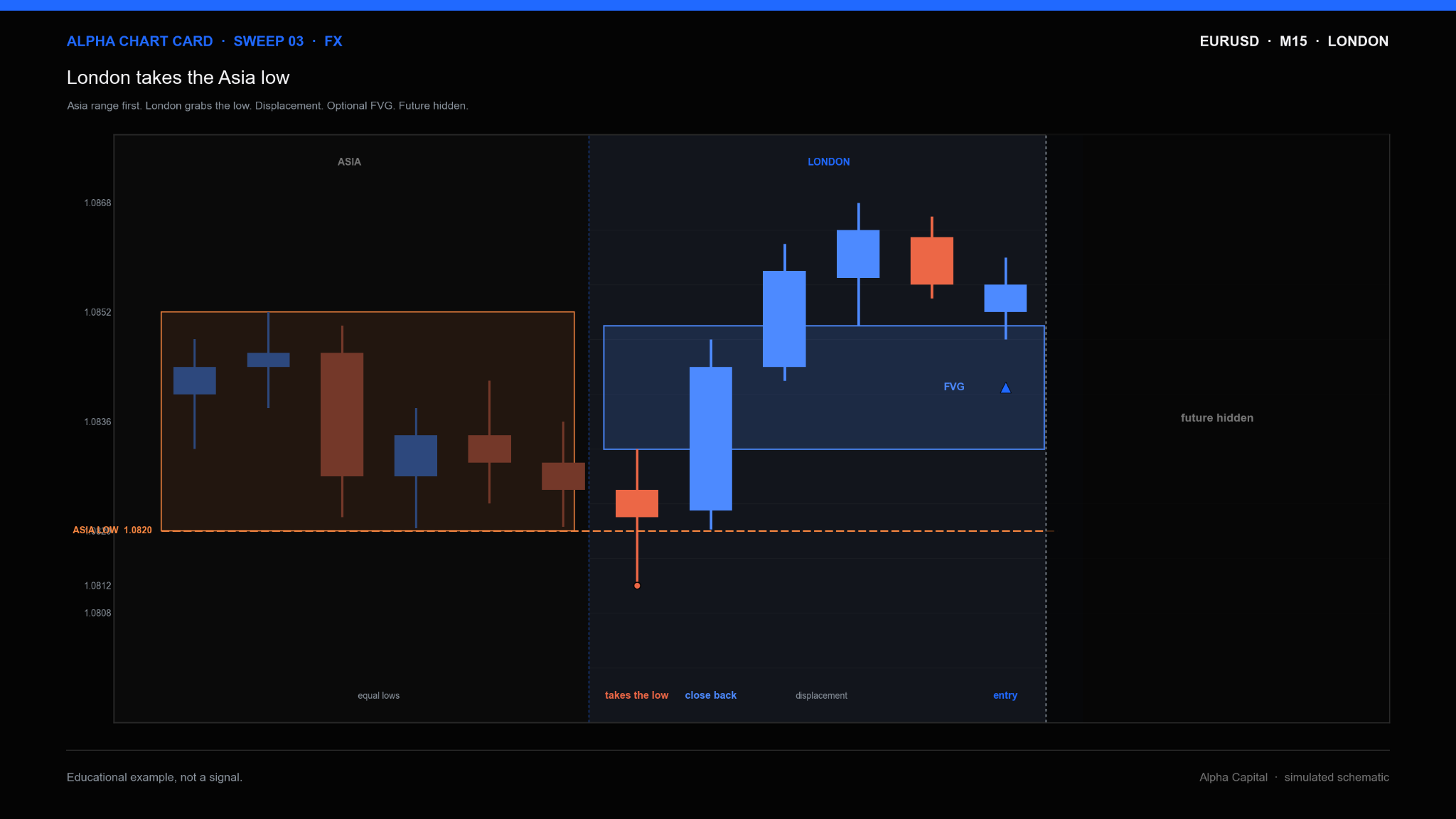
लंदन उदाहरण, फिर पास
उदाहरण के लिए।
EURUSD एशिया में 1.0820 पर समान निचले स्तर पर पार्क करता है। लंदन खुलता है, 1.0812 तक बढ़ जाता है, फिर M15 1.0820 से ऊपर एक मजबूत ऊपर की मोमबत्ती के साथ वापस बंद हो जाता है। इस योजना में, यह वापसी पुष्टिकरण है।
सावधानीपूर्वक प्रवेश: विस्थापन FVG में वापसी का इंतजार करें। स्टॉप 1.0808 के नीचे। लक्ष्य: एशिया उच्च।
यदि वह स्टॉप 28 पिप्स है और व्यापारी की कैप केवल अनुमत आकार पर 14 पिप्स को धन देती है, पास.
पलटाव अभी भी एशियाई उच्च तक बिना आप के चल सकता है। हमारा मूल्यांकन कोई सोने का तारा नहीं भेजेगा। यह एक उल्लंघन भेजेगा यदि आप दैनिक नुकसान तक 28-पिप स्टॉप को मजबूर करते रहते हैं।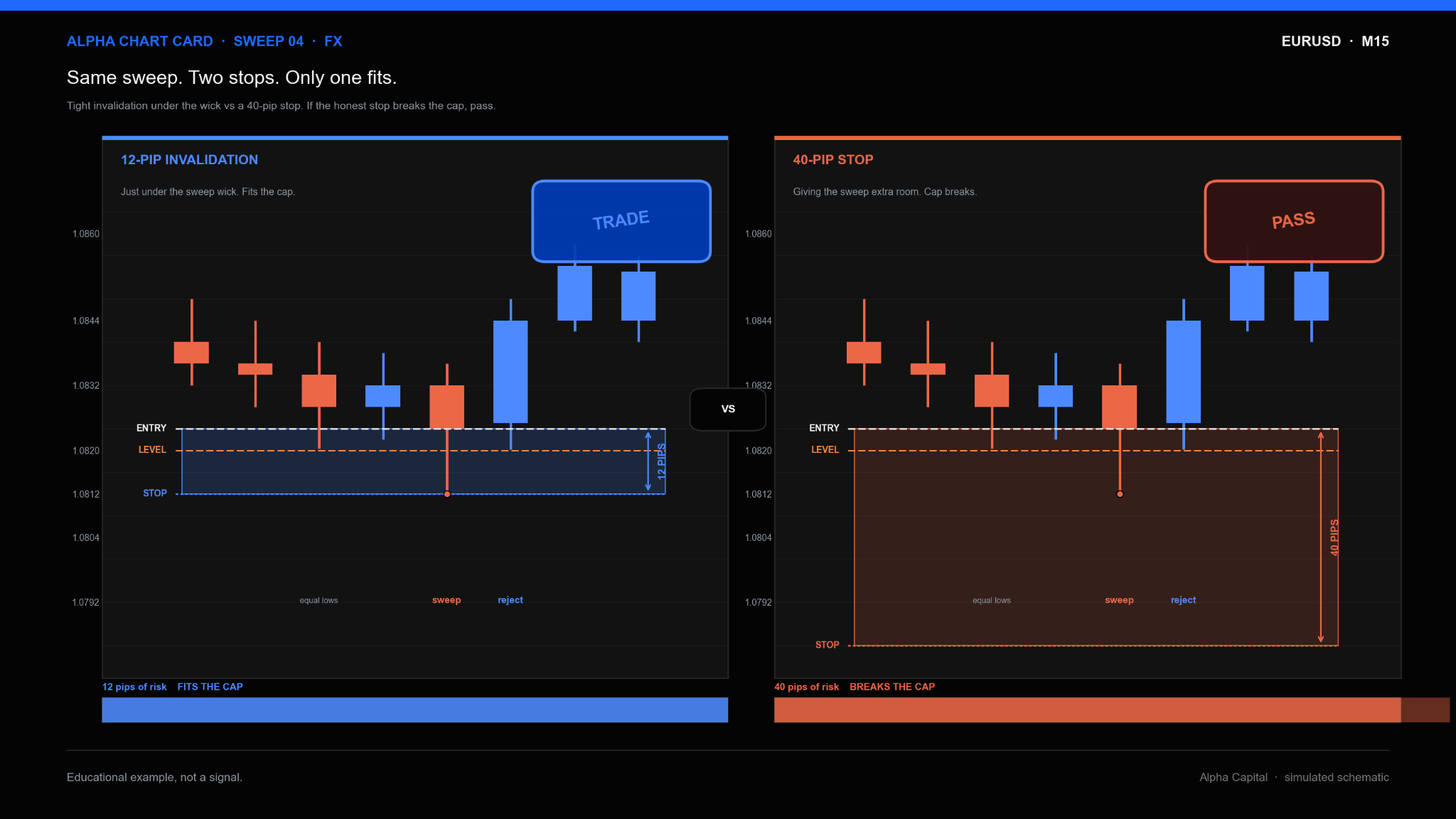
फ़िल्टर जो आपको हर विक पर ट्रेडिंग करने से रोकते हैं
इनका उपयोग चेकलिस्ट के रूप में करें, भाषण के रूप में नहीं:
- स्तर चार्ट पर था पहले यह लिया गया था
- यह समान उच्च/निम्न या एक वास्तविक सत्र चरम था, एक यादृच्छिक बार-अंदर स्पाइक नहीं।
- कब्जे के बाद विस्थापन हुआ, स्तर के माध्यम से धीमी रक्तस्राव नहीं।
- उच्च-समय-फ़्रेम दिशा सहमत है, या आपके पास एक लिखित काउंटरट्रेंड नियम है जो छोटे आकार का है (अधिकांश लोग मूल्यांकन पर ऐसा नहीं करते हैं)।
- Spread उस जोड़ी और सत्र के लिए सामान्य है।
- अगले कुछ मिनटों में लाल फ़ोल्डर प्रिंट नहीं होगा जब तक कि खबर स्पष्ट और परीक्षण किए गए योजना का एक अभिन्न अंग न हो।
यदि आप उन पर टिक नहीं लगा सकते, तो आपके पास स्वीप ट्रेड नहीं है। आपके पास एक विक है।
युग्म और सत्र नोट्स
- EURUSD / GBPUSD: लंदन अभी भी कई स्पष्ट रेंज ब्रेक करता है। इसका मतलब यह नहीं है कि हर लंदन ओपन ट्रेड करने योग्य है।
- XAUUSD: स्वीप्स बहुत बड़े हैं और व्यिक्स भी बहुत बड़े हैं। अगर सोने का "टाइट" स्टॉप 40 डॉलर है, तो सोने जैसी ही साइज करें या छोड़ दें। 10-पिप यूरो प्लान को सोने पर न लाएं।
- NY सत्र: यूएस डेटा एक स्वीप को एक BOS में बदल सकता है। आपकी न्यूज़ रूल ही रणनीति है।
समय को एक समय क्षेत्र में लिखें। हमें कोई फर्क नहीं पड़ता कि यह लंदन या न्यूयॉर्क है। हमें यह मायने रखता है कि आप दबाव में परिवर्तन नहीं कर रहे हैं।
असफलताओं का परीक्षण करें, मोंटेज़ नहीं
कम्युनिटी लॉक
- एक जोड़ी
- आप किस तरलता को चिह्नित करते हैं (एशिया, PDH/PDL, समान H/L)
- wick vs close के लिए "ले लिया गया"
- क्या अस्वीकृति के रूप में गिना जाता है
- प्रवेश मॉडल
- स्टॉप और टारगेट
- खबर नियम
- अधिकतम प्रयास
कीमत ने लेवल को कितनी बार छुआ चलता रहाये महंगे होते हैं। अगर वे स्प्रेडशीट में नहीं हैं, तो आपका विन रेट एक ट्रेलर है, फिल्म नहीं।
देखें:
- जीत और हार का आकार
- श्रृंखलाएँ (मूल्यांकन श्रृंखलाओं पर समाप्त होते हैं, न कि जीत दर पर)
- छूटे हुए व्यापार
- लंदन बनाम न्यूयॉर्क परिणाम अलग-अलग
फिर सिमुलेशन में फॉरवर्ड-टेस्ट करें, इससे पहले कि आप इसे हमारे साथ पेड इवैल्यूएशन में लगाएं।
हम जो बार-बार देखते हैं गलतियाँ
हर चमक तरलता की सफाई है
कुछ विक्स बस विक्स होते हैं।
मूल्य अभी स्टॉप्स को रन करते समय प्रवेश करना
आप ही तरलता हैं। अस्वीकृति का इंतजार करें।
स्तर के माध्यम से एक बॉडी को बंद करना एक स्वीप
यह अक्सर BOS होता है। अलग व्यापार।
स्टॉप को सही ठहराने के लिए स्वीप का उपयोग करना जो दैनिक नुकसान का उल्लंघन करता है
पैटर्न हमारे नियमों से ऊपर नहीं है। कुछ भी नहीं।
पाँच ICT लेबल एक कैंडल पर
यदि हर परिणाम को जीत के रूप में वर्णित किया जा सकता है, तो आप डायरी में हार नहीं सकते। आप अभी भी मूल्यांकन हार सकते हैं।
समान निम्न स्तरों पर बदला
एक असफल स्वीप का मतलब यह नहीं है कि अगला प्रयास "और भी अधिक तरल" होगा। फिर से प्रवेश की परिभाषा बनाएँ या हट जाएं।
प्रवेश के बाद समय-सीमा बदलना
M1 हमेशा आपको थोड़ा सा कारण बने रहने के लिए दिखाएगा। योजना में समय सीमा का प्रबंधन करें।
प्रश्नोत्तर
क्या लिक्विडिटी स्वीप ब्रेकआउट के समान है?
कोई ब्रेकआउट जो टिके रहता है वह संरचना को जारी रखता है। एक स्वीप स्पष्ट स्टॉप पर एक दौड़ है जो फिर विफल हो जाती है।
क्या मुझे ICT भाषा की आवश्यकता है?
नहीं, आपको एक स्तर, एक पकड़, एक अस्वीकृति, एक स्टॉप और एक आकार की आवश्यकता है। शब्दावली वैकल्पिक है।
सबसे अच्छा समय-अवधि?
जिसको आपने परीक्षण किया है। H1 स्तरों को चिह्नित करने के लिए, M15 की पुष्टि करने के लिए, एक सामान्य विभाजन है। यह एक नियम नहीं है।
क्या मैं इसका उपयोग कर सकता हूँ? Alpha Capital मूल्यांकन?
हाँ, एक विवेकपूर्ण तरीके के रूप में, यदि यह प्रकाशित नियमों के अंदर रहता है प्रतिनिधित्वित निधिहम आपके स्वीप्स का मूल्यांकन नहीं करते हैं। हम खाते का मूल्यांकन करते हैं। मूल्यांकन उद्देश्य
क्या यह शब्दकोश पृष्ठ को बदल देगा?
नंबर। शब्दकोश = "क्या है"। यह पृष्ठ = "हम इसे मूल्यांकन पर कैसे वास्तव में व्यापार करेंगे"। उनको लिंक करें। उन्हें मिलाएं नहीं।
अगला कदम
पढ़ें लीक्विडिटी स्वीप क्या है? अगर आप अभी भी इसे BOS के साथ भ्रमित करते हैं।
फिर एक जोड़ी, एक सत्र, एक परिभाषा - पकड़ो और अस्वीकार करो। व्यापारों के एक समूह के लिए प्रत्येक उम्मीदवार को जर्नल में दर्ज करें, जिसमें वे जो आप छोड़ देते हैं वे भी शामिल हैं। इसका अभ्यास सिमुलेशन में करें इससे पहले कि आप हमारे साथ मूल्यांकन के लिए भुगतान करें।
→ शुरू करें Alpha Capital मूल्यांकन · तरलता स्वीप क्या है?
सामान्य जानकारी है, व्यक्तिगत वित्तीय सलाह नहीं। सिमुलेटेड ट्रेडिंग परिणाम वास्तविक ट्रेडिंग परिणामों को दर्शाते नहीं हैं। लाइव प्रोग्राम नियमों की पुष्टि करें इससे पहले कि आप ट्रेड करें।


