


Peace Dividend or Peak Optimism, Growth Holds Firm While Positioning Stretches
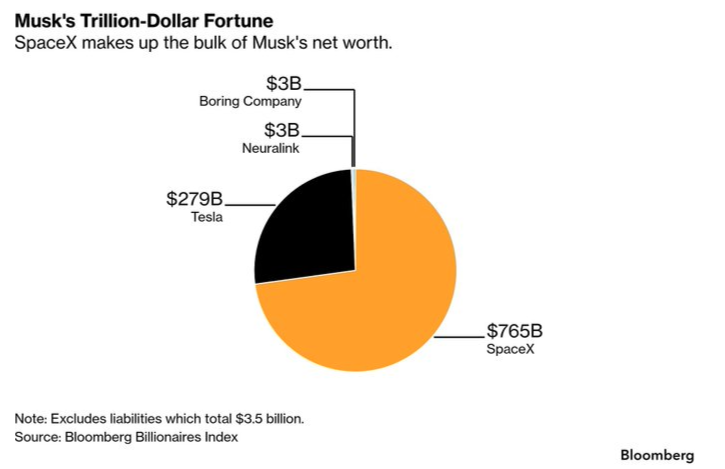
Markets enter the week with an unusually supportive combination of headlines. The prospect of an Iran-U.S. agreement has triggered a sharp repricing across asset classes, core inflation measures have surprised to the downside, economic data continues to outperform expectations, and the AI investment cycle shows little sign of slowing. Add the arrival of SpaceX as a listed company, OpenAI's IPO filing, and Kevin Warsh's first Federal Reserve meeting, and investors are being presented with what may be one of the most bullish combinations of headlines seen in recent months.
Yet beneath the optimism, several fault lines are beginning to emerge. Momentum indicators are struggling to keep pace with price, high-yield credit spreads are widening, short-covering remains a dominant driver of flows, and sentiment has become increasingly crowded around technology and AI-related themes. The debate is no longer whether conditions are improving, but whether markets have already priced in much of the good news.
Market Overview: The Return of the Peace Dividend
The dominant theme heading into the week is the return of the peace-dividend narrative.
The proposed Memorandum of Understanding between the United States and Iran has encouraged investors to look beyond recent geopolitical tensions and focus on the economic implications of lower oil prices. The logic is straightforward.
Lower energy costs reduce inflation pressures, create room for central banks to ease if required, support lower bond yields, and weaken the U.S. dollar. Those conditions are particularly supportive for emerging markets and international equities, raising the possibility of a return to the "Go Global" narrative that dominated parts of the first quarter.
At the same time, economic data continues to surprise positively. Growth indicators remain resilient, economic surprise indices continue trending higher, and concerns around recession have largely faded from market discussions. Markets continue focusing on growth as economic surprises improve and recession concerns remain notably absent.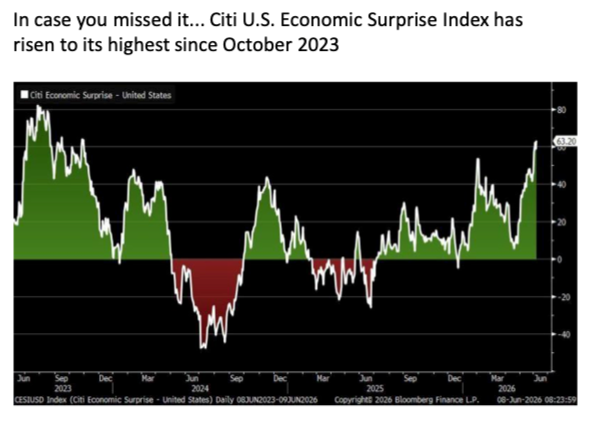
This shift is already showing up in performance trends. International equities outperformed during the week as investors began positioning for a broader global recovery. The possibility that both U.S. and non-U.S. equities can rise together, with international markets simply narrowing the performance gap, has become an increasingly important discussion.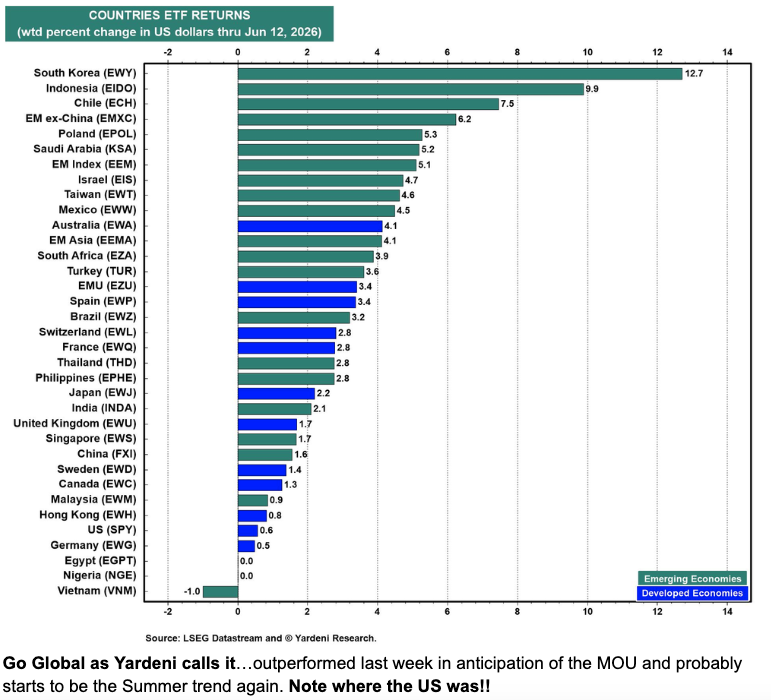
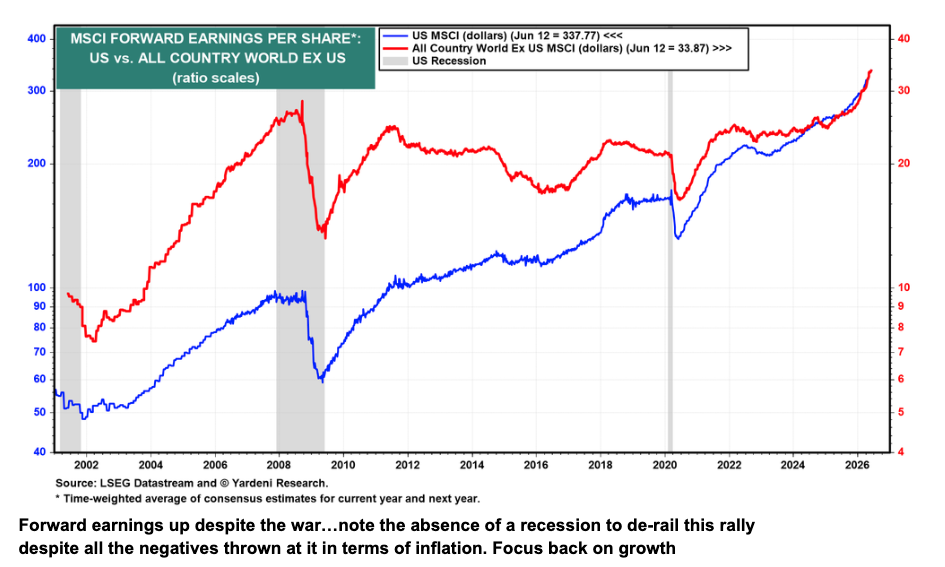
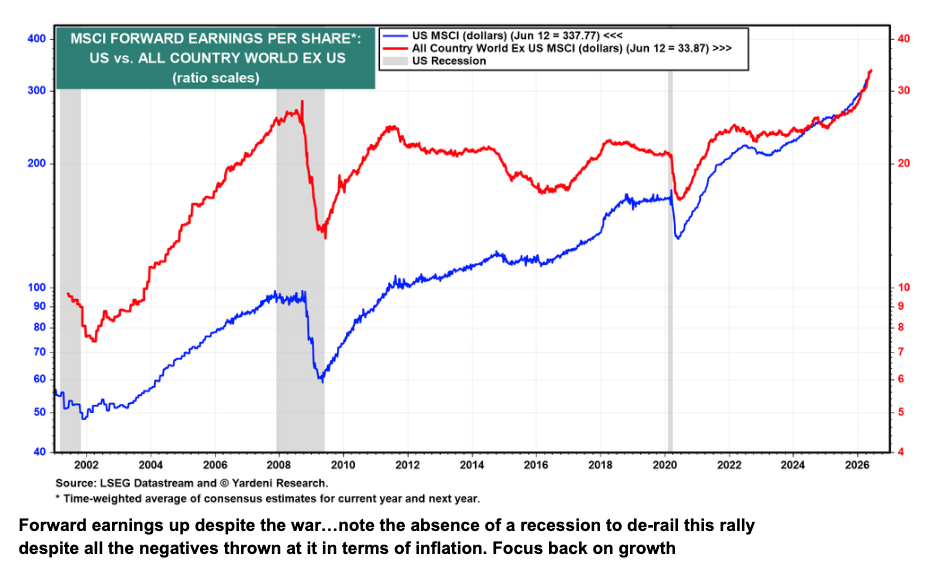
Forward earnings expectations also continue moving higher despite months of inflation concerns, geopolitical tensions, and higher rates. The absence of a recession narrative remains one of the strongest supports for the current market structure.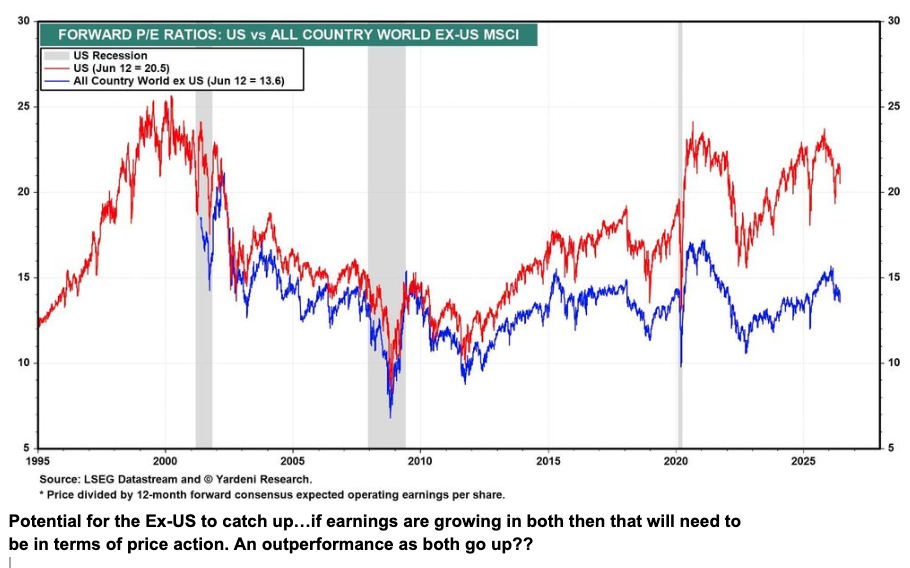
Macro & Policy Watch: Growth, Inflation and the Central Bank Test
Economic data delivered one of the most constructive combinations investors could have hoped for.
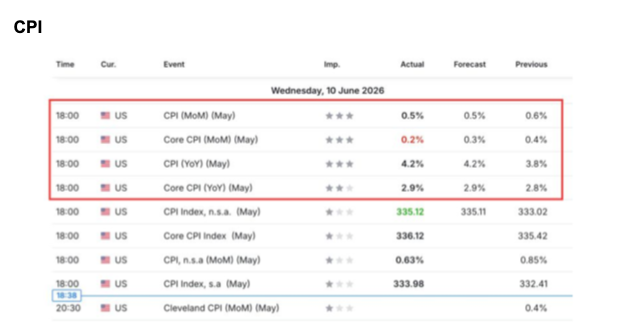
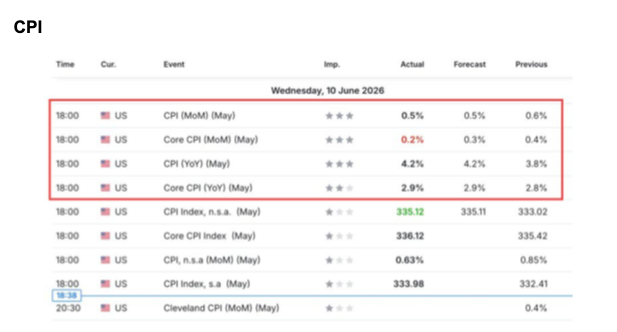
Headline CPI rose to 4.2% in May, reaching its highest level since 2023. However, much of that increase was driven by energy prices associated with the Iran conflict. More importantly, Core CPI came in below expectations at 0.2% month-over-month versus expectations of 0.3%, suggesting underlying inflation continues to moderate despite elevated energy costs. Markets largely viewed the report as confirmation that inflation remains more contained than the headline figure implies.
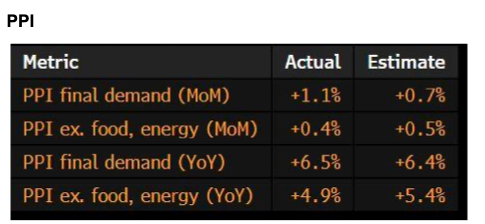
Producer prices delivered a similar message. Headline PPI remained firm while core measures surprised to the downside, indicating that higher energy costs have not yet meaningfully spread into broader pricing pressures. While concerns remain around accelerating SuperCore inflation and rising costs in specific categories, the broader takeaway was that inflation remains manageable for now.
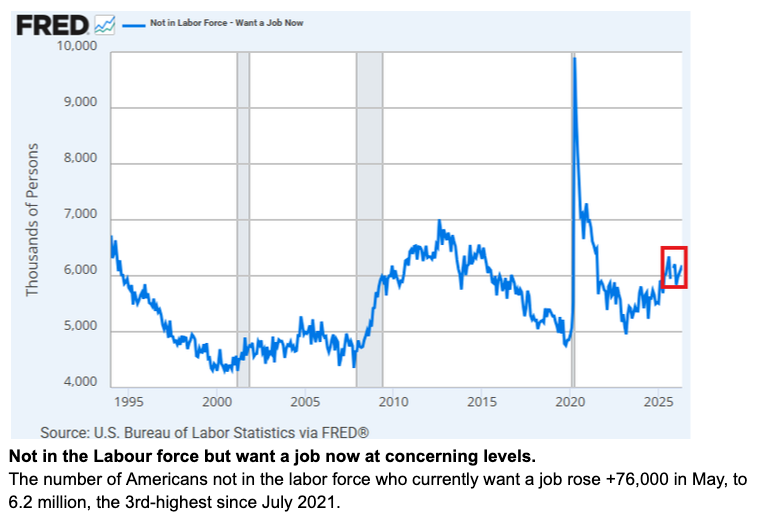
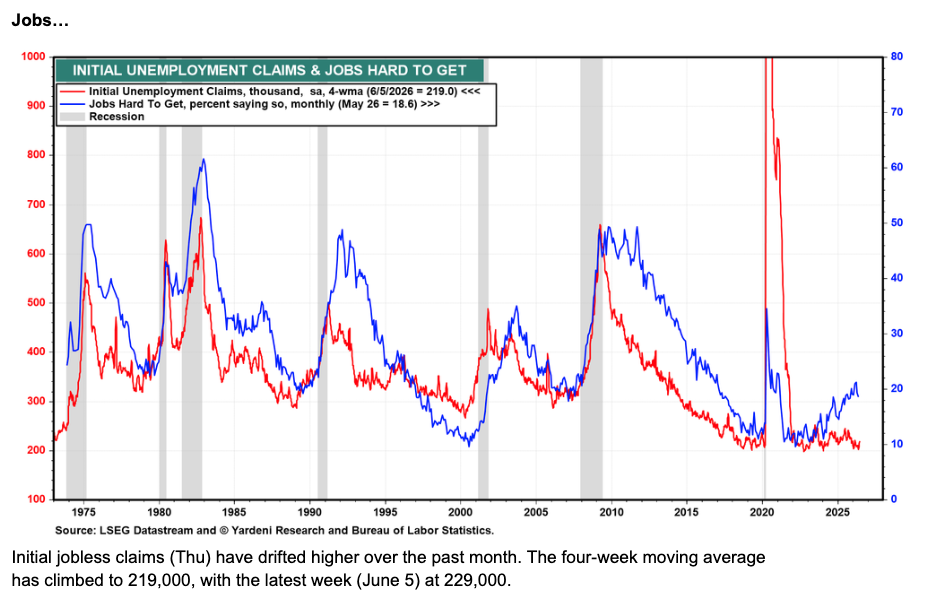
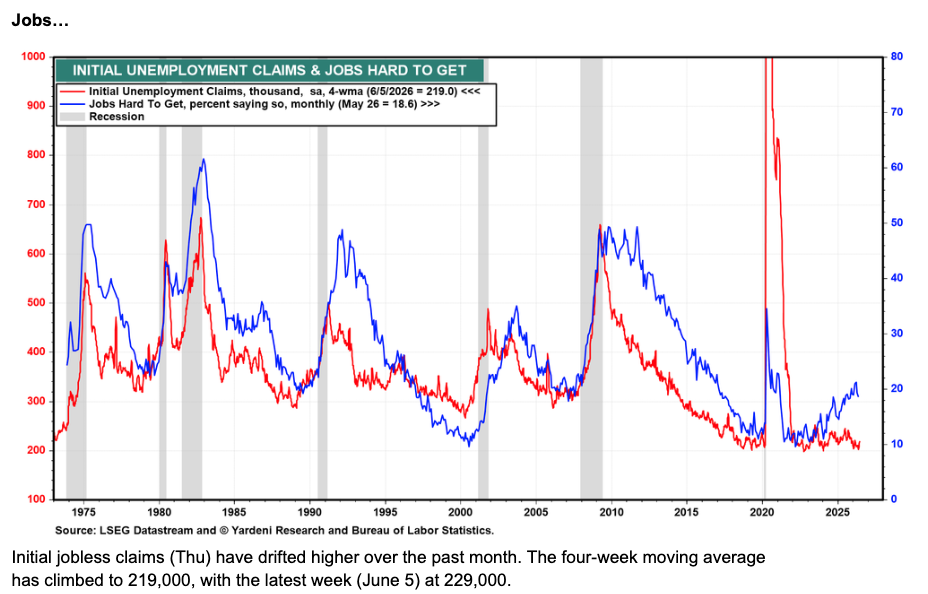
The labour market continues to send mixed signals. Initial jobless claims have drifted higher, while the number of Americans not in the labour force who want a job has continued to rise. While not yet enough to signal recession, labour market conditions appear weaker beneath the surface than headline employment figures suggest.
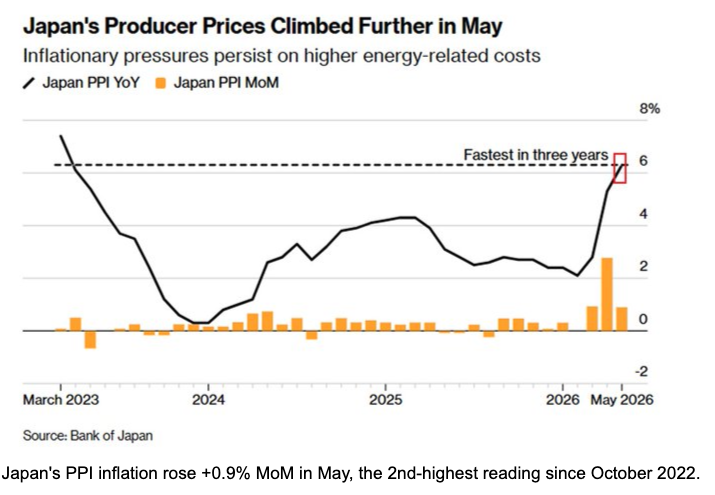
Outside the United States, Japan remains a key focus. Producer prices accelerated sharply in May as higher energy costs flowed through petroleum products, electricity, gas, and chemicals. Those developments have strengthened expectations that the Bank of Japan will raise rates this week and potentially continue tightening later in the year.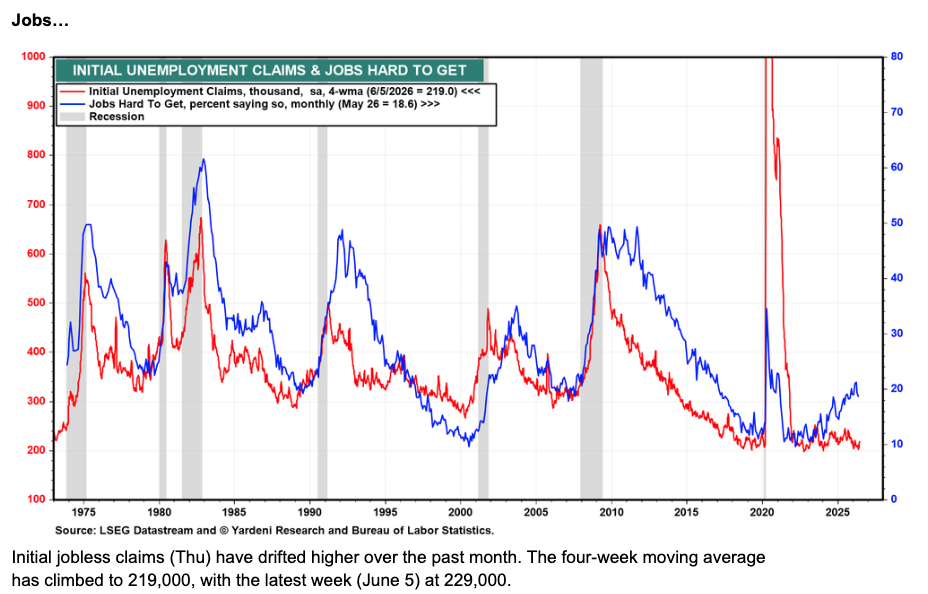
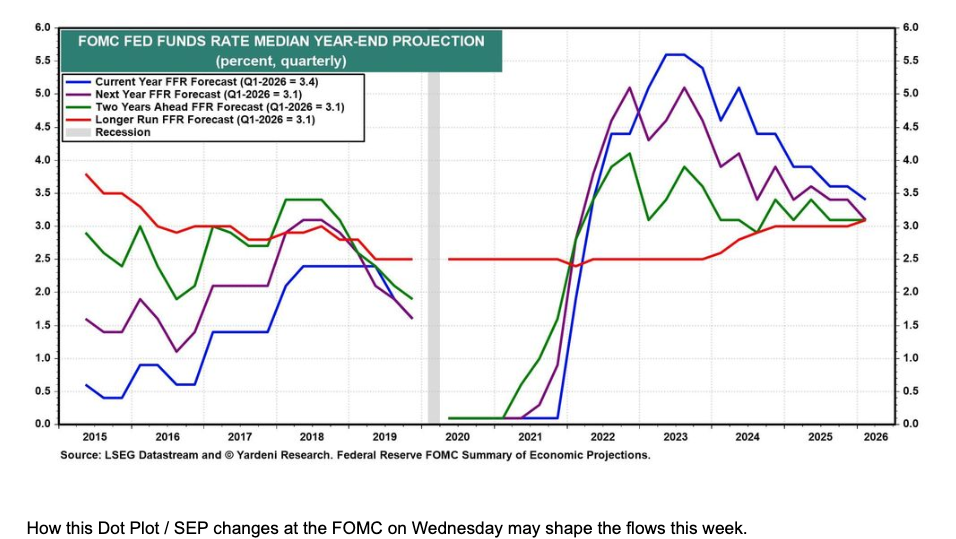
Attention also turns toward Kevin Warsh's first FOMC meeting as Federal Reserve Chair. Markets expect policymakers to maintain a tightening bias even as softer core inflation and falling oil prices pull rate expectations lower. The updated Dot Plot may prove to be the week's most important event.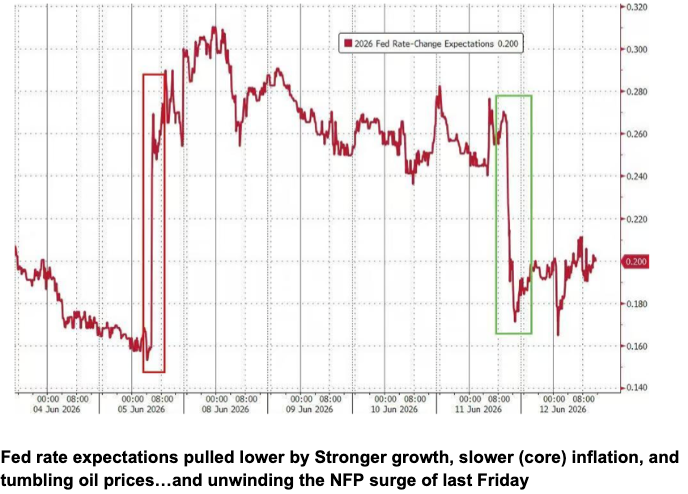
Technical & Sentiment Breakdown: Supportive, but Increasingly Fragile
The broader trend remains constructive, but the internal structure of the market is becoming increasingly dependent on flows, sentiment, and positioning.
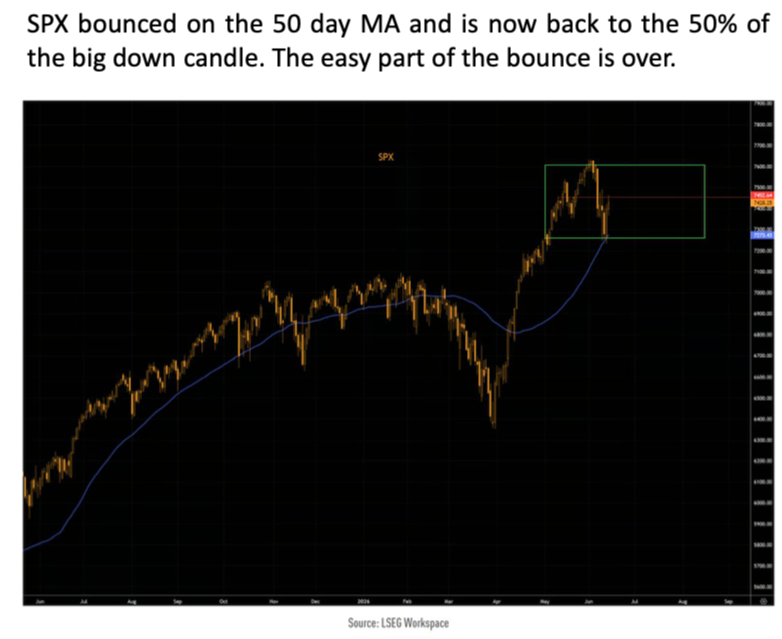
The S&P 500 continues trading comfortably above both its 50-day and 200-day moving averages, preserving the primary uptrend heading into a major central bank week. However, futures are already indicating a strong gap higher, increasing the possibility of new all-time highs forming alongside weakening momentum indicators. That type of divergence does not guarantee a reversal, but it often signals that upside participation is becoming less uniform.
The Nasdaq has bounced from an unusually shallow retracement level, reinforcing the strength of the underlying trend. Yet questions remain around whether the consolidation has been sufficient to reset positioning before another sustained advance.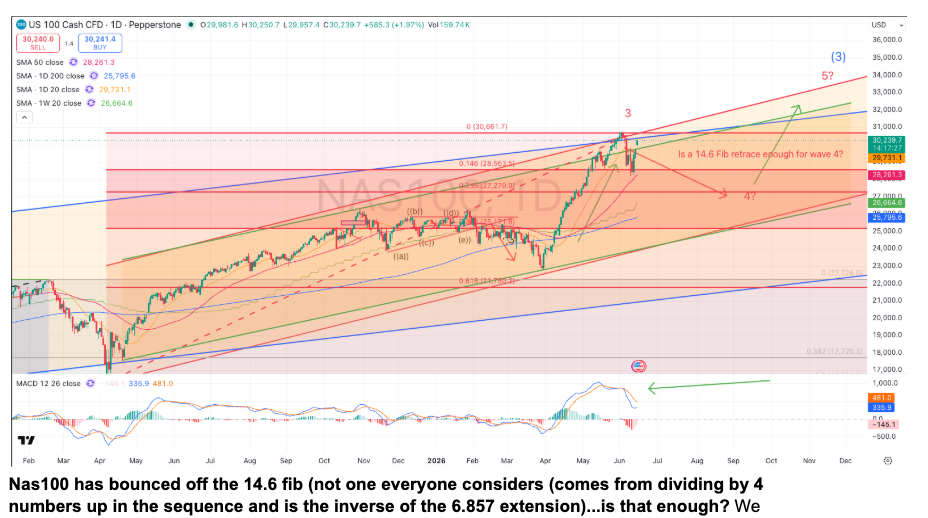
Beneath the surface, leadership continues rotating. Semiconductors recovered much of their prior weakness, while software lagged and portions of the broader technology complex consolidated gains.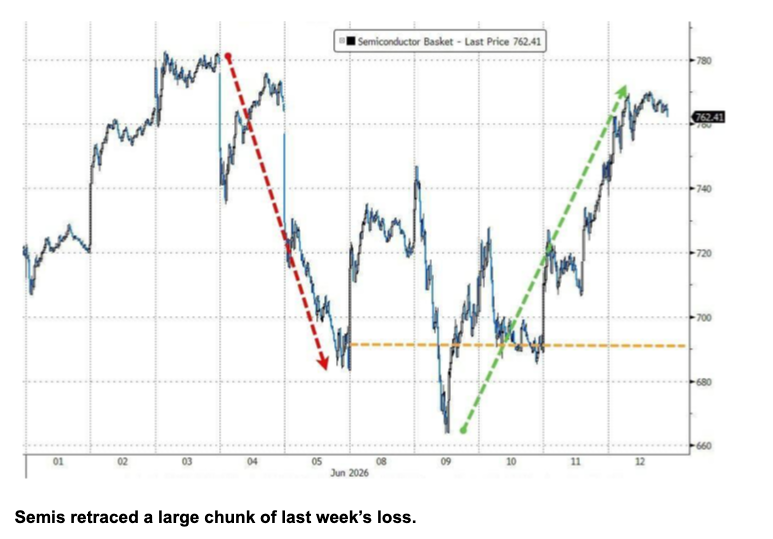
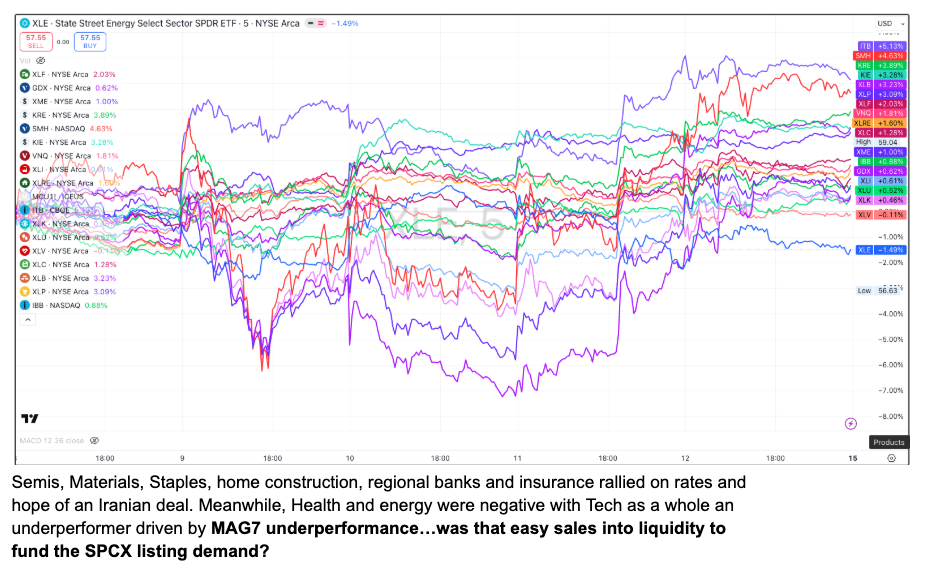
Market breadth has also started improving. If the peace-dividend narrative continues to gain traction, smaller companies, cyclical sectors, and international markets could begin contributing more meaningfully to performance.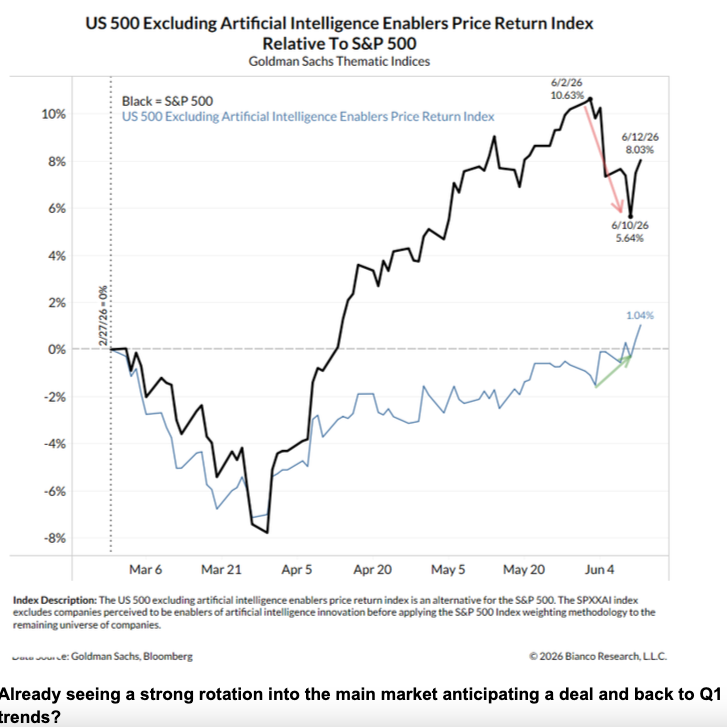
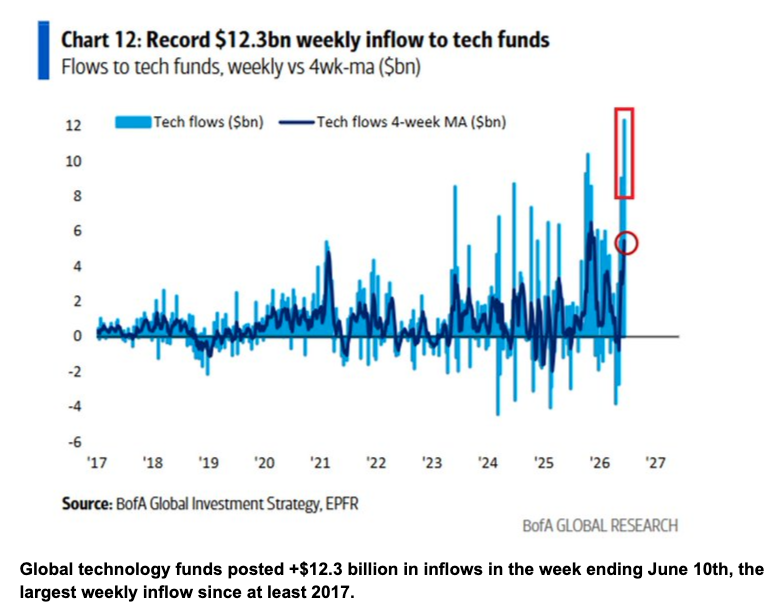
Sentiment, however, remains increasingly stretched. Global technology funds recorded their largest weekly inflow since at least 2017, while U.S. equities extended their longest streak of inflows since late 2025. Goldman also highlighted that short covering remains a far larger driver of buying activity than genuine long accumulation.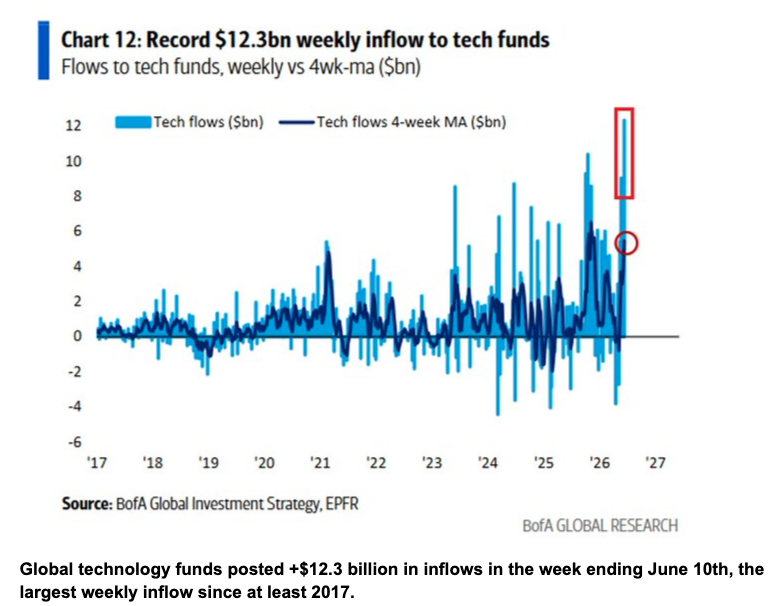
Volatility is beginning to stir beneath the surface. Implied volatility is showing signs of catching up with realised volatility, while Nasdaq volatility measures have started turning higher despite the broader risk-on environment.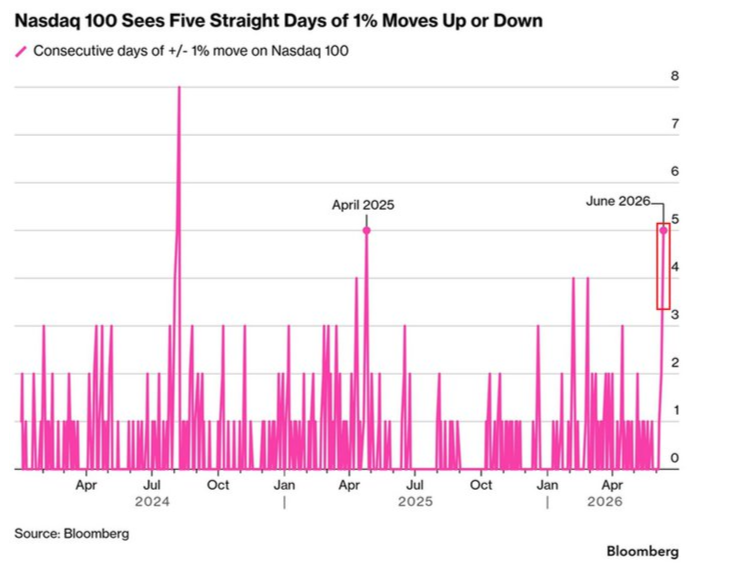
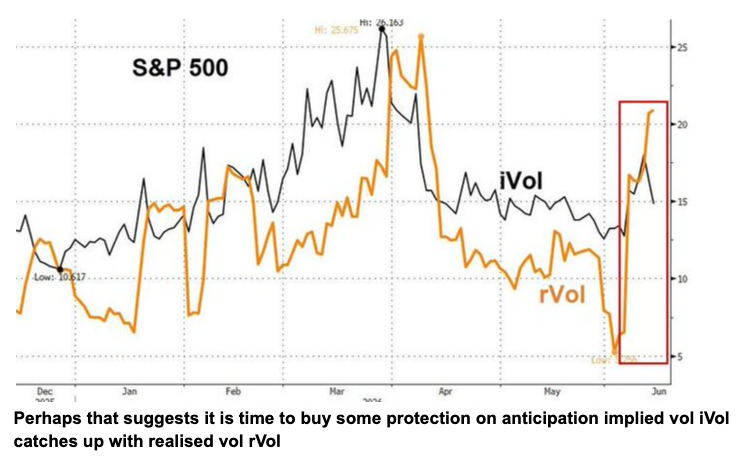
The broader trend remains supportive, but elevated positioning, momentum divergence, and increasingly one-sided sentiment leave little room for negative surprises.
Last Week’s Recap: Peace Dividend Meets Peak Optimism
The past week was characterised by softer core inflation, resilient growth data, declining oil prices, and a renewed wave of enthusiasm across AI-related assets. Markets increasingly embraced the possibility of a more constructive macro environment, even as signs of stress emerged beneath the surface.
Key Highlights:
Macro:
Core CPI and PPI both came in softer than expected, reinforcing the view that underlying inflation remains more contained than headline data suggests. Economic surprises continued moving higher while growth indicators remained resilient. Labour market data, however, showed signs of deterioration beneath the surface.
China:
China remained central to the debate around AI competition and whether export restrictions can meaningfully slow innovation. The launch of GLM 5.2 reinforced the view that competition within advanced AI development continues to accelerate despite efforts to restrict access to leading U.S. models.

Earnings:
Forward earnings expectations continued rising despite geopolitical uncertainty and inflation concerns, highlighting the continued resilience of corporate earnings.
Commodities:
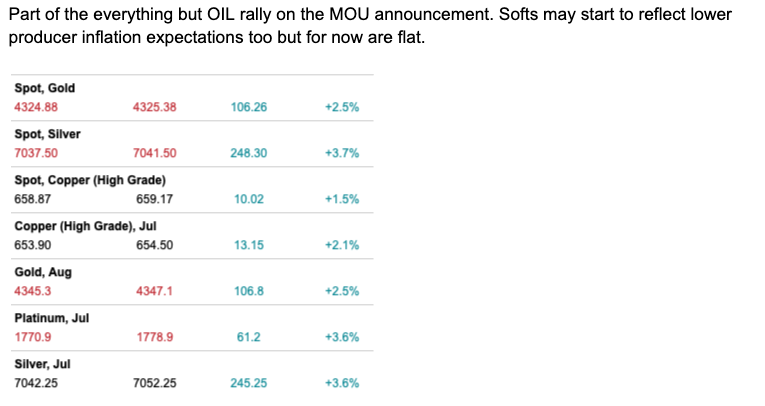
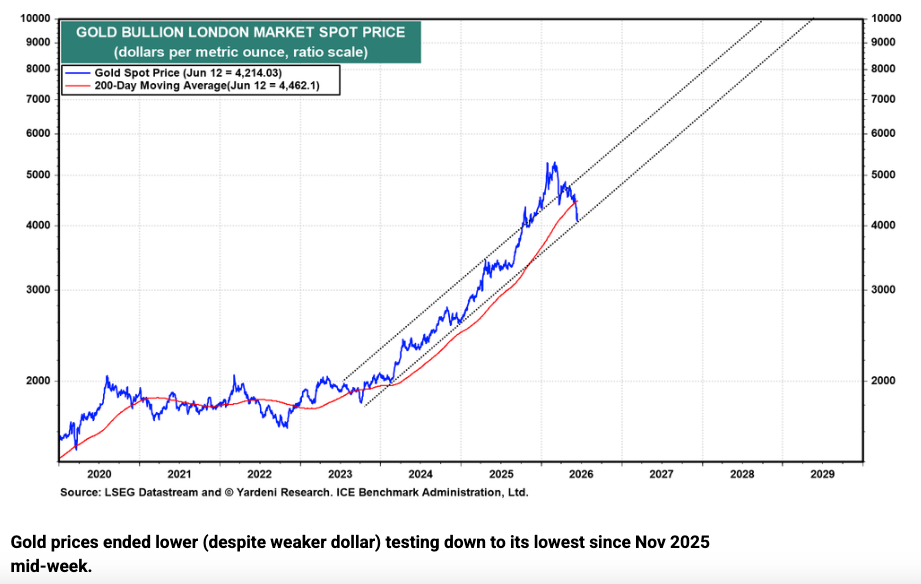
Commodity markets reflected the prospect of easing geopolitical tensions and a weaker dollar environment. Gold tested key support levels before stabilising, while metals benefited from improving sentiment and expectations of lower inflation pressure.
Crypto:
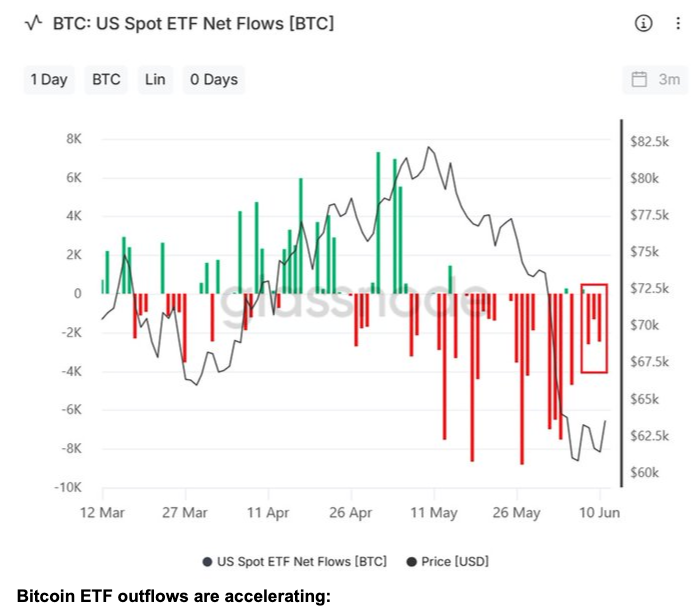
Crypto markets remained under pressure as Bitcoin ETF outflows accelerated. Withdrawals from major ETF products continued building, creating a difficult backdrop for sentiment despite periodic rallies.
Oil:
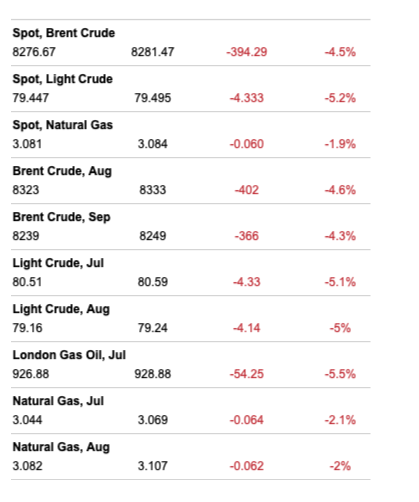
Oil prices experienced one of the week's most significant moves as markets increasingly priced the possibility of an agreement between the United States and Iran. The resulting decline in energy prices became a major driver of lower inflation expectations, falling bond yields, and improved risk sentiment.
The Week Ahead: Key Data and Market-Moving Signals
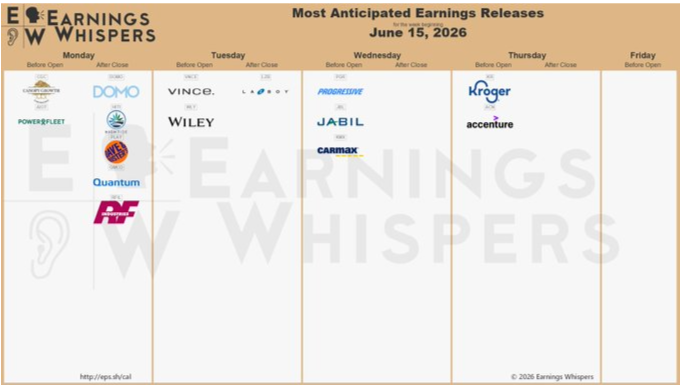
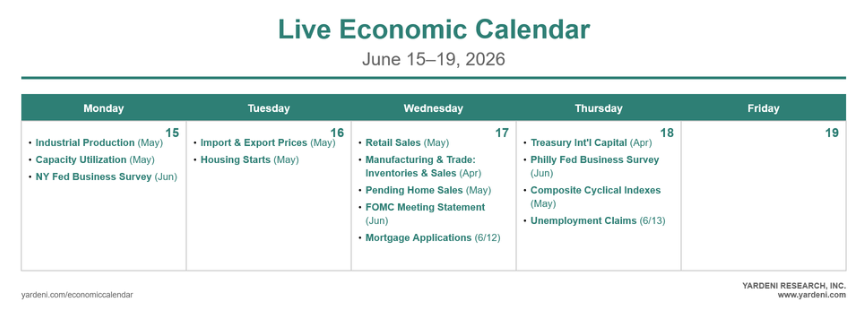
A major central bank week takes centre stage, with the Fed, BoJ, and BoE all set to deliver policy decisions. Alongside those meetings, investors will be watching retail sales, industrial production, and regional business surveys for confirmation that growth remains resilient despite growing concerns around positioning and sentiment. The Fed's updated economic projections and Dot Plot will be the key focus, offering fresh insight into the expected path of interest rates through the remainder of the year.
Monday, June 15
• EU: Industrial Production
• EU: Trade Balance
• US: NY Empire State Manufacturing Survey
• US: Industrial Production
• US: Manufacturing Production
• US: Capacity Utilisation
• US: NAHB Housing Market Index
• ECB President Lagarde Speaks
Tuesday, June 16
• CN: Industrial Production
• CN: Retail Sales
• CN: Fixed Asset Investment
• CN: House Prices
• JP: Bank of Japan Interest Rate Decision
• JP: BoJ Press Conference
• AU: Reserve Bank of Australia Interest Rate Decision
• AU: RBA Press Conference
• US: Housing Starts
• US: Building Permits
• US: Import & Export Prices
• US: Redbook Retail Sales
• US: Atlanta Fed GDPNow Update
• US: API Crude Oil Stocks
Wednesday, June 17
• UK: CPI Inflation
• UK: Core CPI Inflation
• EU: CPI Inflation
• EU: Core CPI Inflation
• US: Retail Sales
• US: Core Retail Sales
• US: Crude Oil Inventories
• US: FOMC Interest Rate Decision
• US: Economic Projections (SEP)
• US: Dot Plot Projections
• US: FOMC Press Conference with Kevin Warsh
• IEA Monthly Oil Market Report
Thursday, June 18
• UK: Employment Data & Unemployment Rate
• UK: Bank of England Interest Rate Decision
• UK: MPC Vote Split & Meeting Minutes
• CH: Swiss National Bank Interest Rate Decision
• CH: SNB Press Conference
• US: Philadelphia Fed Manufacturing Survey
• US: Initial Jobless Claims
• US: Continuing Jobless Claims
• US: Leading Economic Index
• US: Fed Balance Sheet Data
Friday, June 19
• JP: National CPI
• JP: Core CPI
• JP: Bank of Japan Monetary Policy Meeting Minutes
• DE: PPI
• UK: Retail Sales
• UK: Core Retail Sales
• UK: Public Sector Borrowing & Cash Requirement
• RU: Interest Rate Decision
• US: Juneteenth Holiday
• CFTC Positioning Data (Currencies, Gold, Oil, Equities & Commodities)
Alpha Takeaway: Better Macro Conditions, Narrower Margin for Error
Markets remain supported by a constructive combination of resilient growth, moderating core inflation, improving earnings expectations, and a peace-dividend narrative that is helping ease concerns around energy prices and central bank policy. At the same time, increasingly crowded positioning, widening credit stress, and signs of momentum divergence suggest markets are becoming more sensitive to volatility.
Equities:
The broader trend remains constructive. Earnings expectations continue improving, breadth is beginning to broaden, and recession concerns remain notably absent. However, elevated technology inflows and heavy short-covering activity suggest positioning is becoming increasingly crowded, with Goldman noting that short covering remains a larger driver of buying activity than genuine long accumulation.
Gold & Silver:
Precious metals remain caught between supportive long-term fundamentals and short-term positioning extremes. Gold's recent test of support highlights the importance of monitoring key technical levels, particularly if the dollar resumes its decline and rates continue easing lower.
Crypto:
ETF outflows remain the dominant theme. While recent weakness has reduced positioning, confirmation of a durable recovery will likely require stabilising flows and stronger participation from institutional investors.
Macro:
Growth continues to dominate the narrative. Economic surprises remain positive, core inflation is moderating, and lower oil prices are improving the outlook for policymakers. The key question is whether markets can sustain current optimism if sentiment becomes further stretched.
The broader backdrop remains supportive, but expectations have risen alongside prices. With high-yield spreads widening, volatility beginning to stir, and markets potentially approaching momentum divergence at new highs, the next phase of the rally may require stronger conviction than simply good headlines. As long as growth remains resilient and inflation continues to cooperate, the bulls remain in control, but the margin for error is becoming noticeably smaller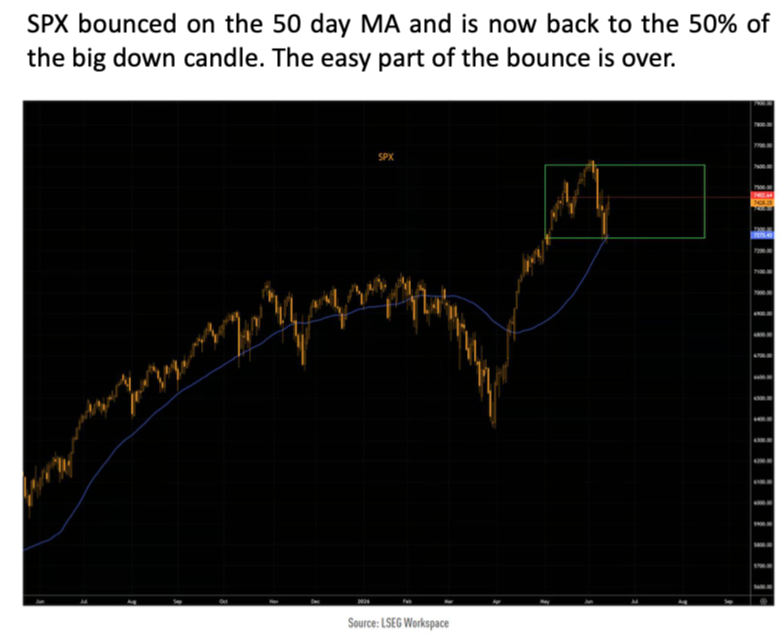
CTA: https://docs.google.com/document/d/15JhF7JRVNRMWLkv4i3ZKtoxwr0l-1Nh86uuvsq0EVXk/edit?tab=t.0


